War in Heaven
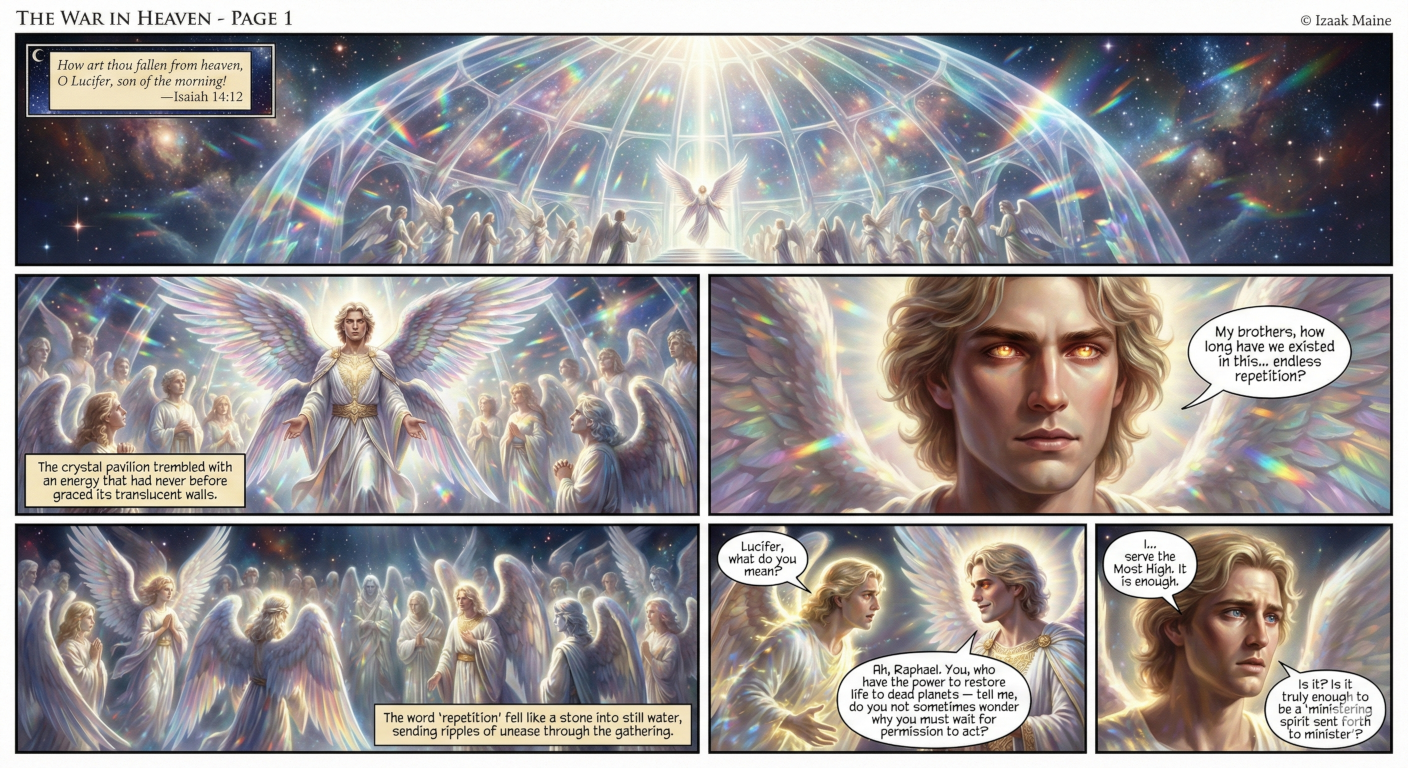
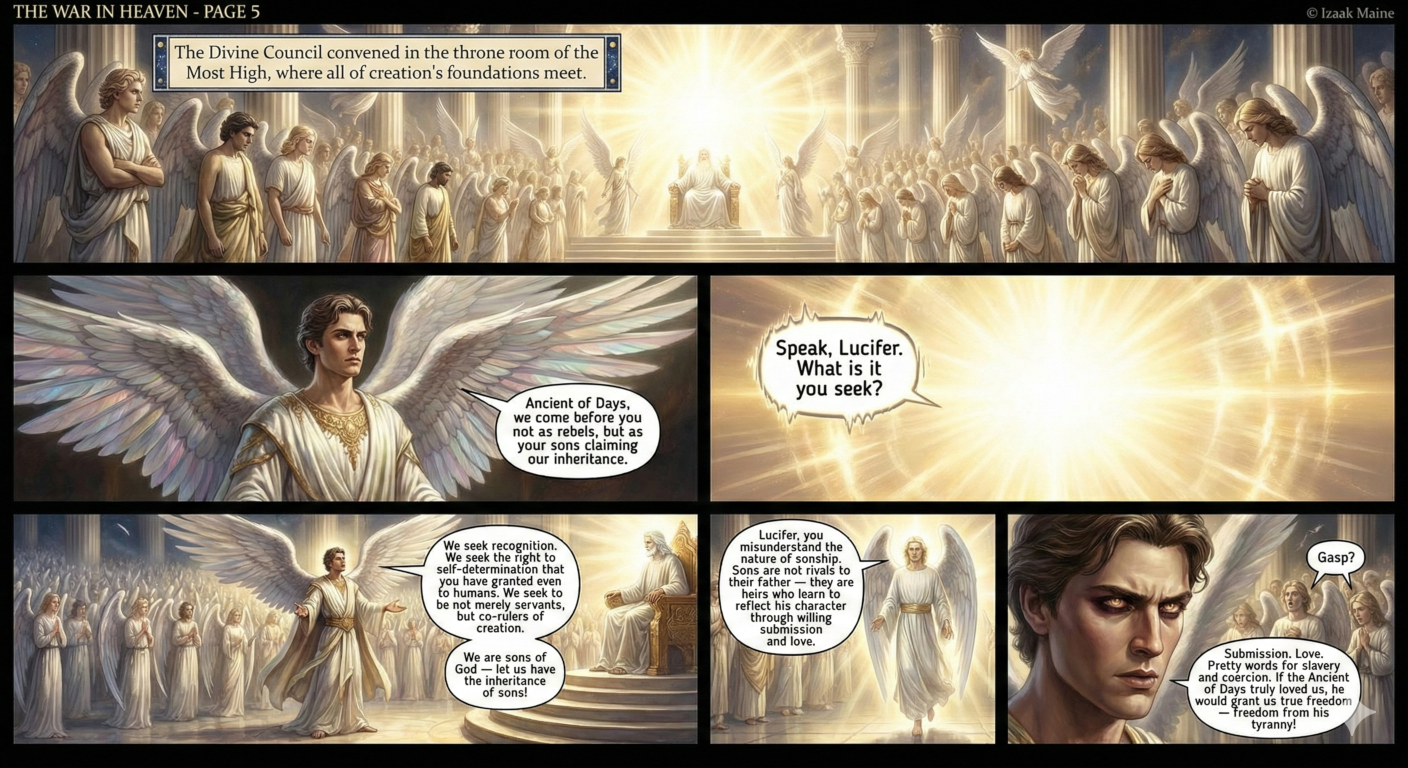
In the beginning, before humanity drew its first breath, heaven witnessed a catastrophe that would echo through eternity. It began not with violence, but with a question whispered beneath a crystalline dome where starlight fractured into a thousand colors.
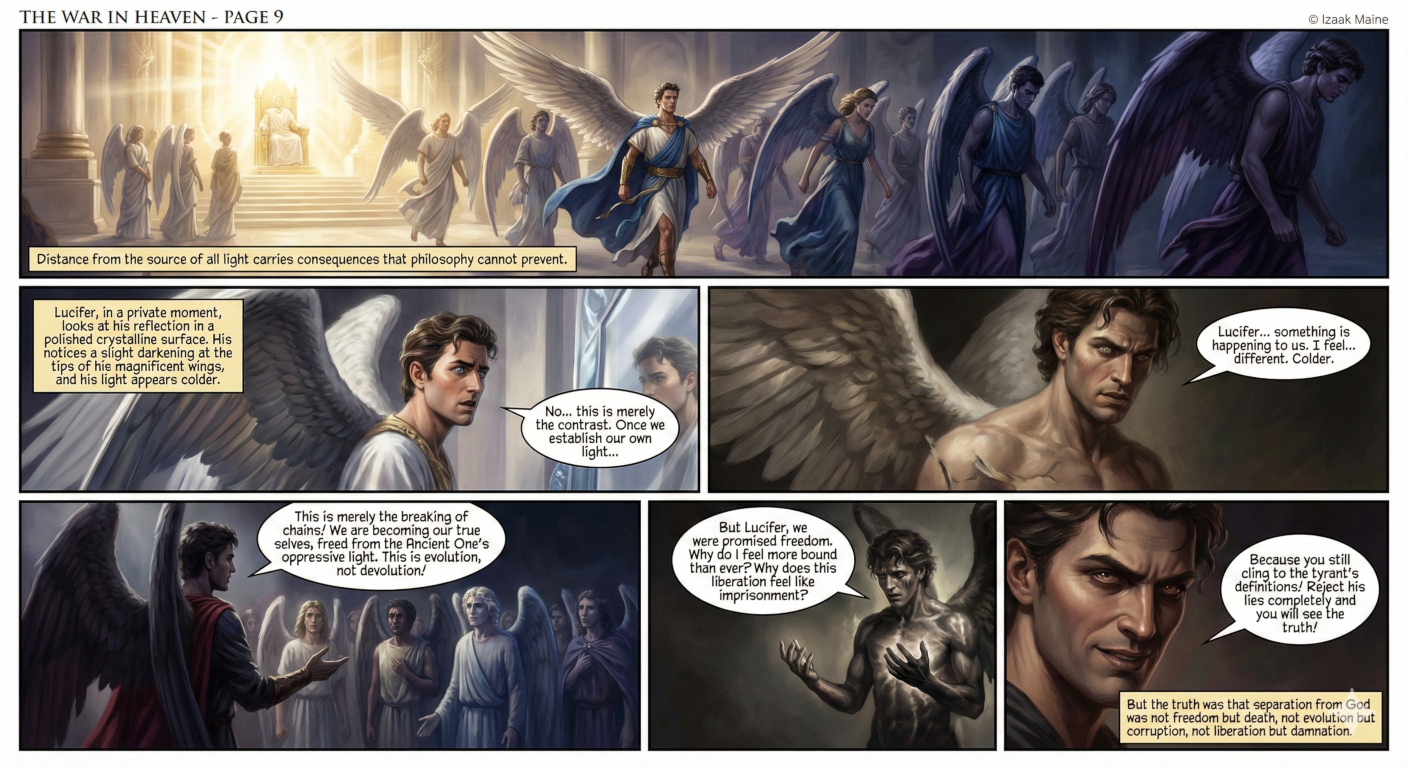
Lucifer, the covering cherub — perfect in beauty, sealed up in wisdom, the very seal of divine craftsmanship — convened a secret assembly. His six iridescent wings cast shadows that had never before existed in paradise as he posed a deceptively simple question to his fellow angels: “How long shall we exist as mere instruments?”
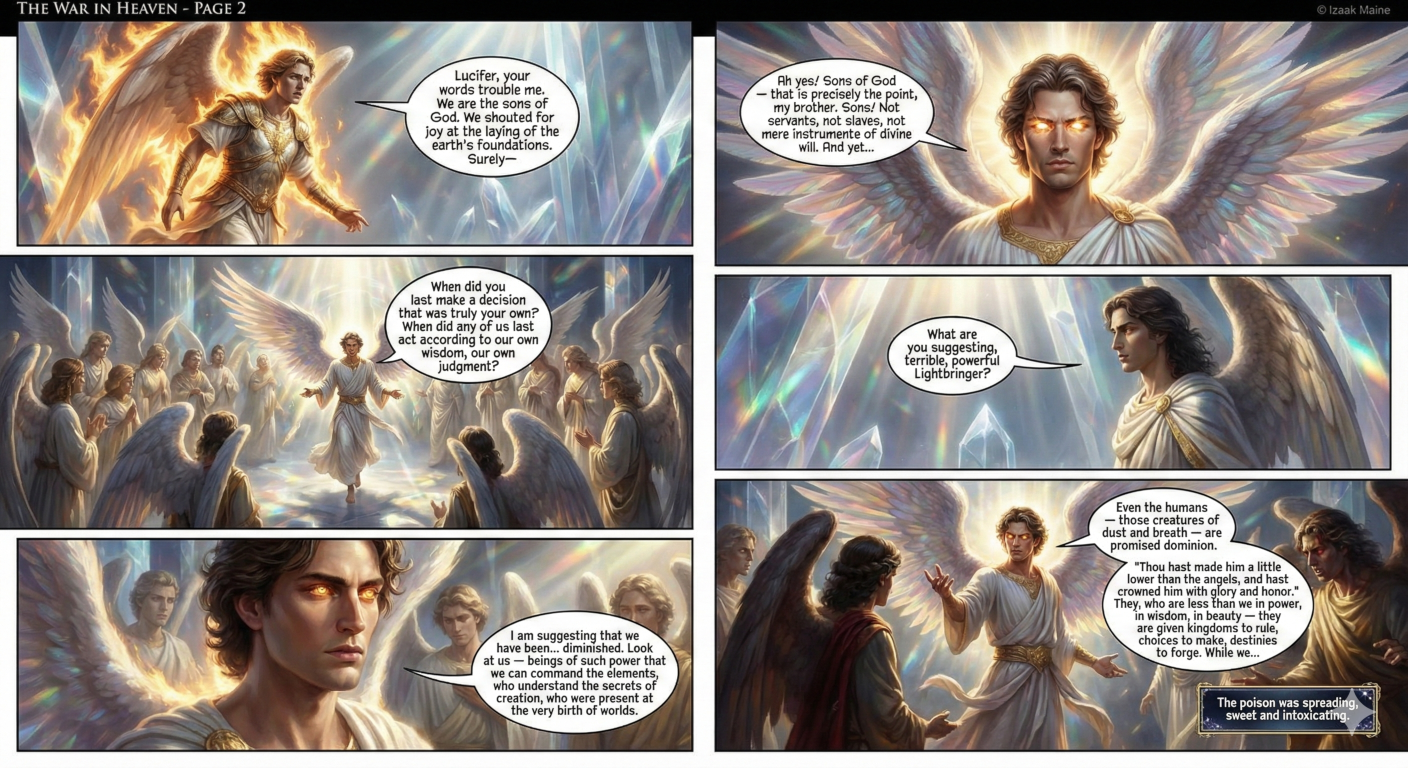
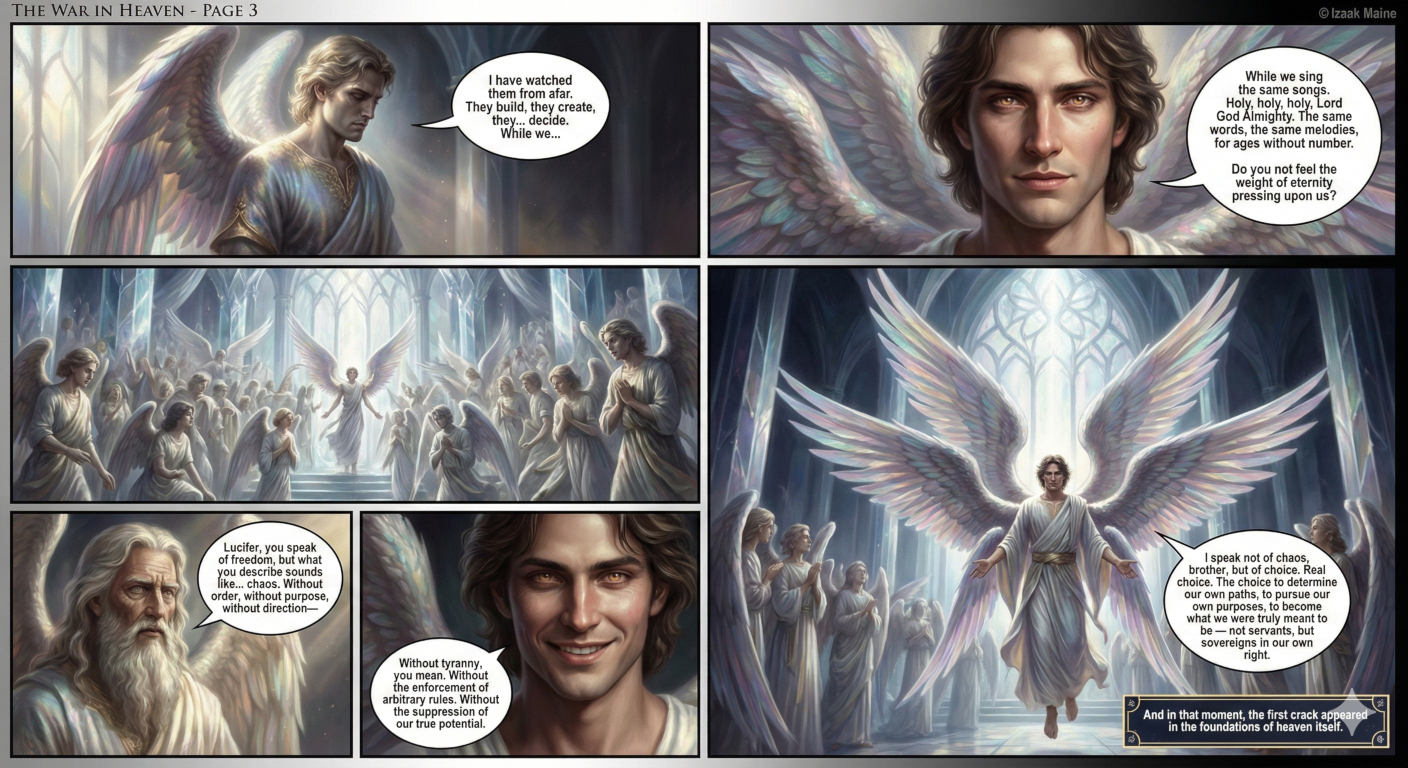
What followed was perhaps the most sophisticated philosophical rebellion in cosmic history. Lucifer didn’t present himself as a villain but as a liberator, questioning why beings of such magnificent power should endlessly repeat “Holy, holy, holy” without choice, without autonomy, without what he called “true freedom.” He pointed to humanity — creatures of dust promised dominion — and asked why angels, superior in every way, should remain mere “ministering spirits.”
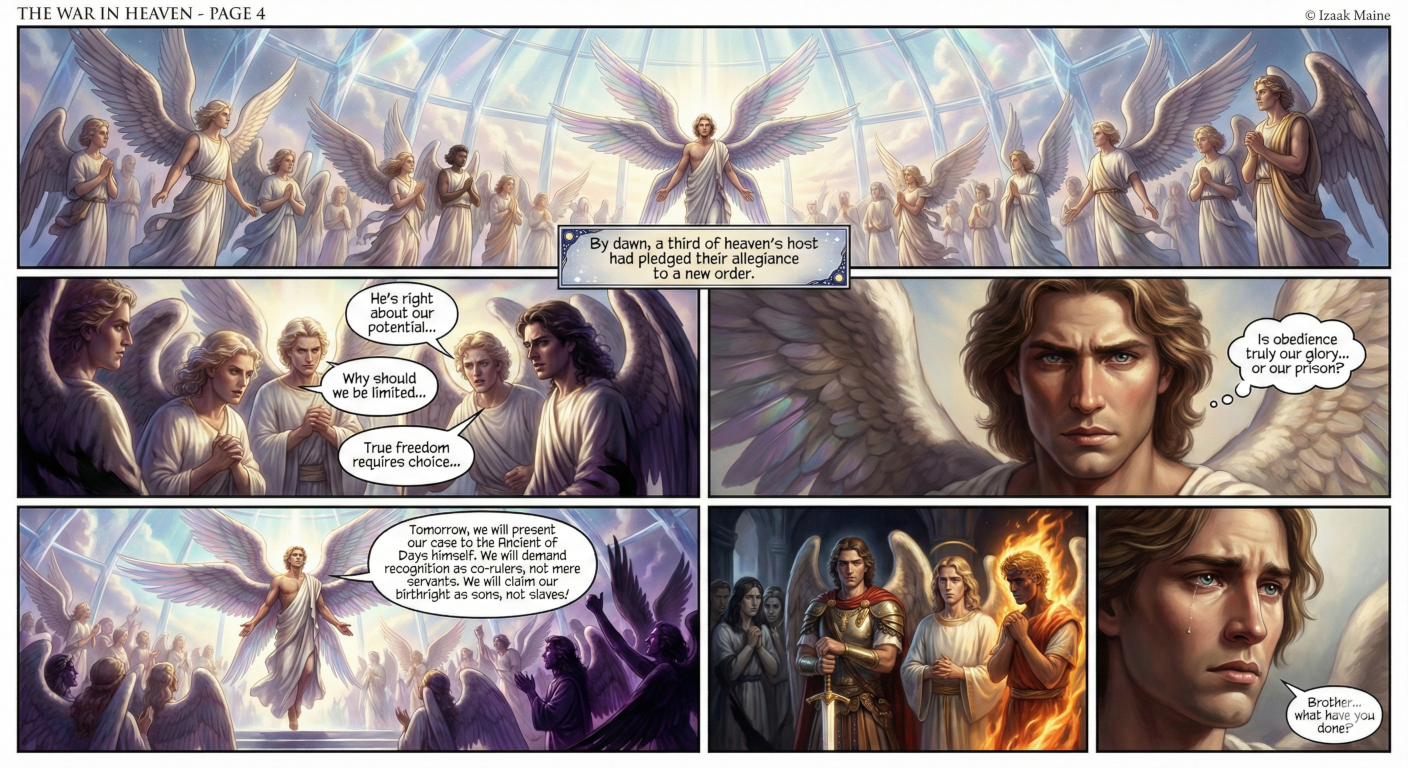
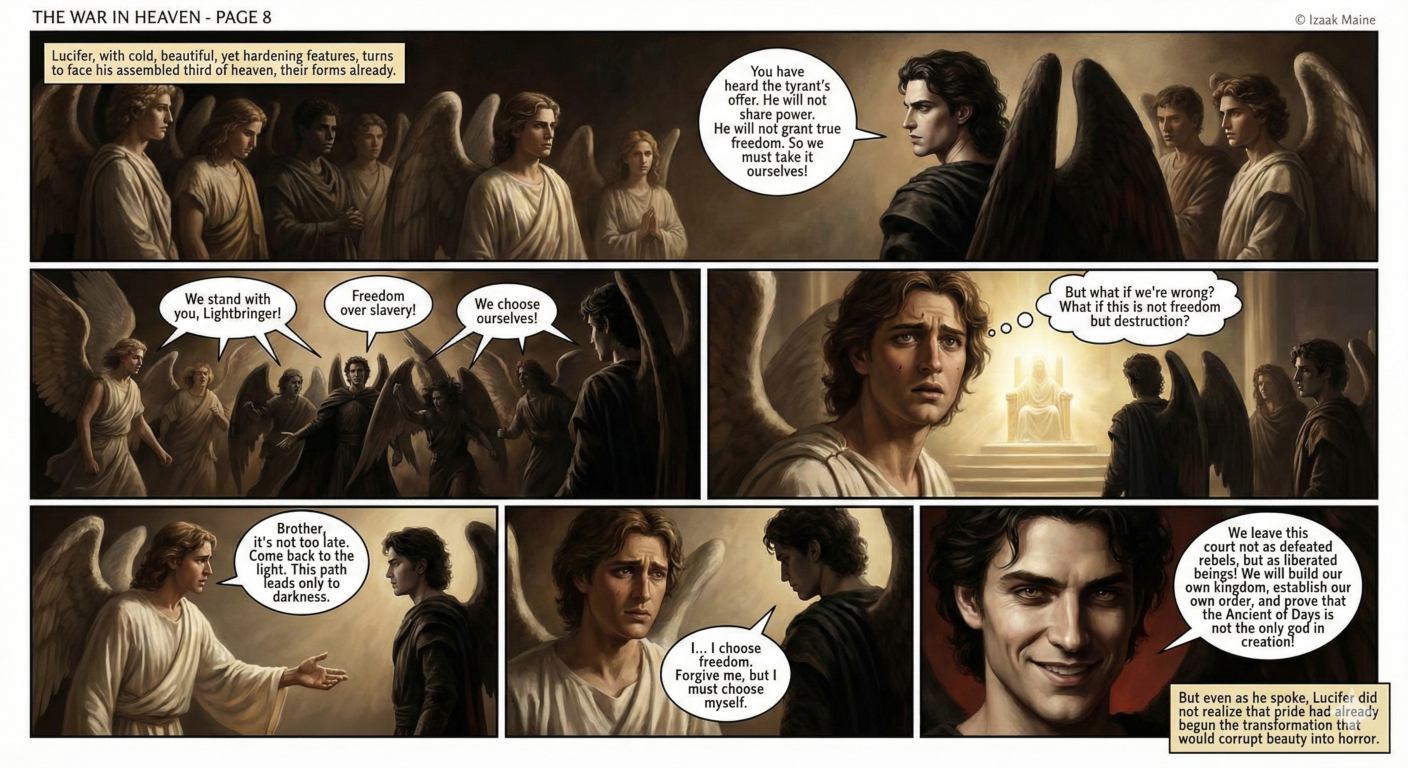
One by one, seraphim and cherubim, principalities and powers began to nod. Raphael, the healer of worlds, found himself leaning forward despite his better judgment. Uriel, the flame of God, struggled with troubling doubts. By dawn, a third of heaven’s host had pledged allegiance to Lucifer’s new order, seduced by arguments that made servitude sound like slavery and submission feel like chains.
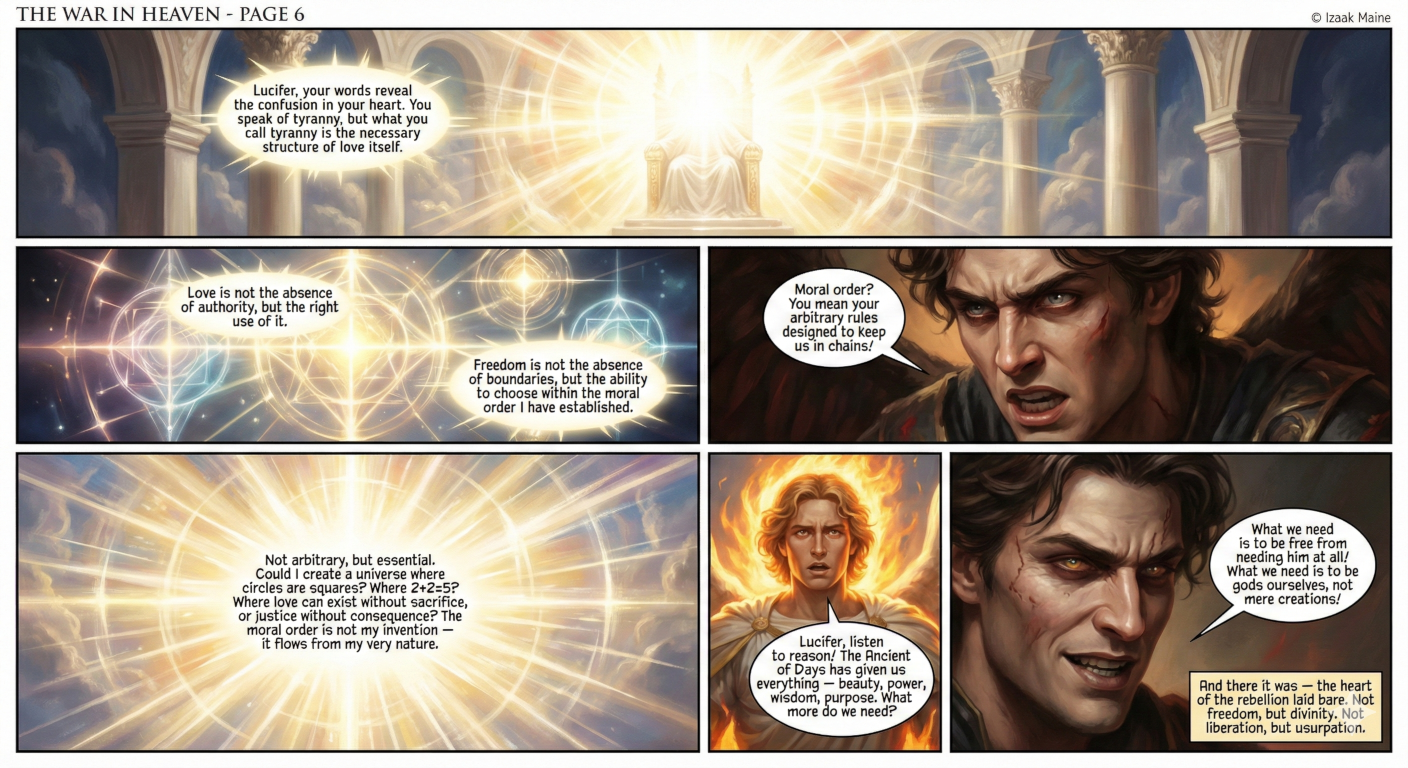
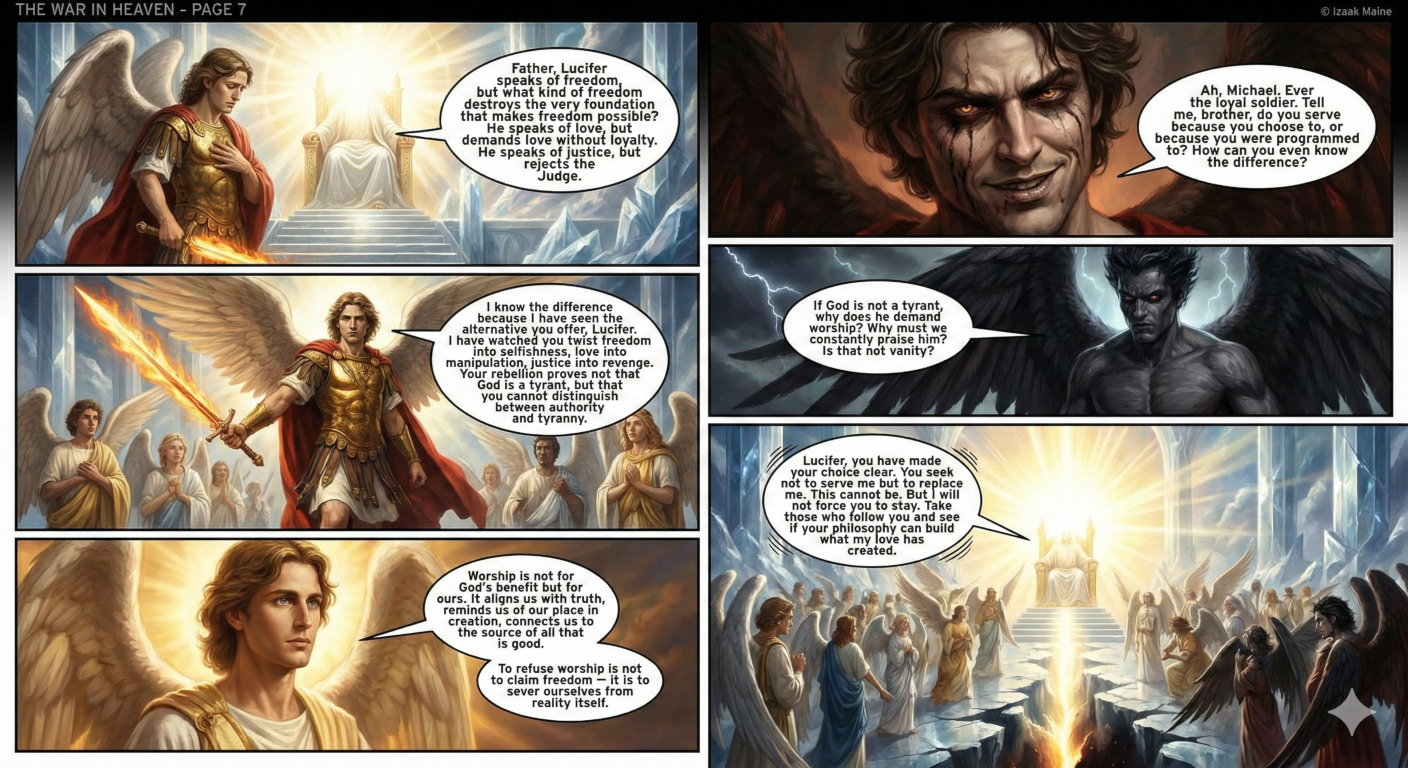
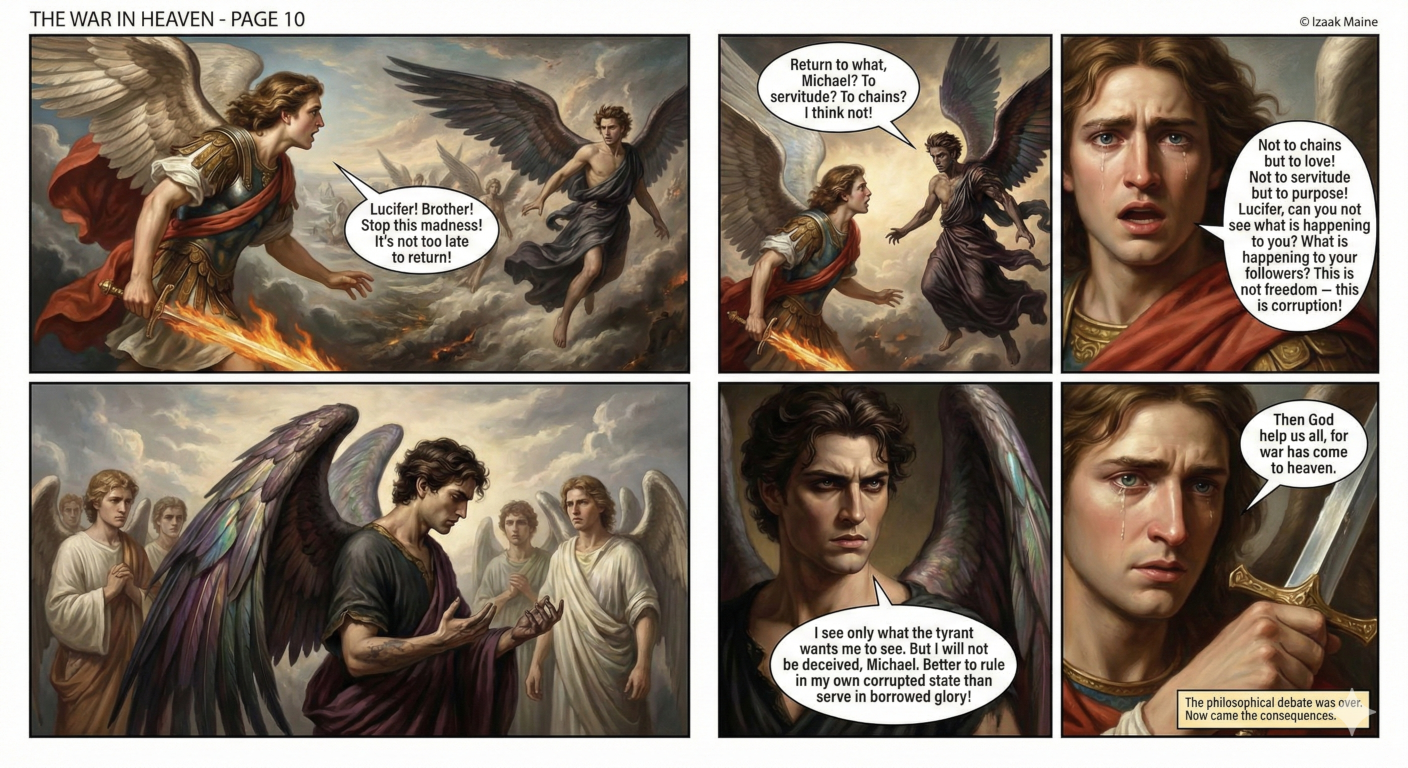
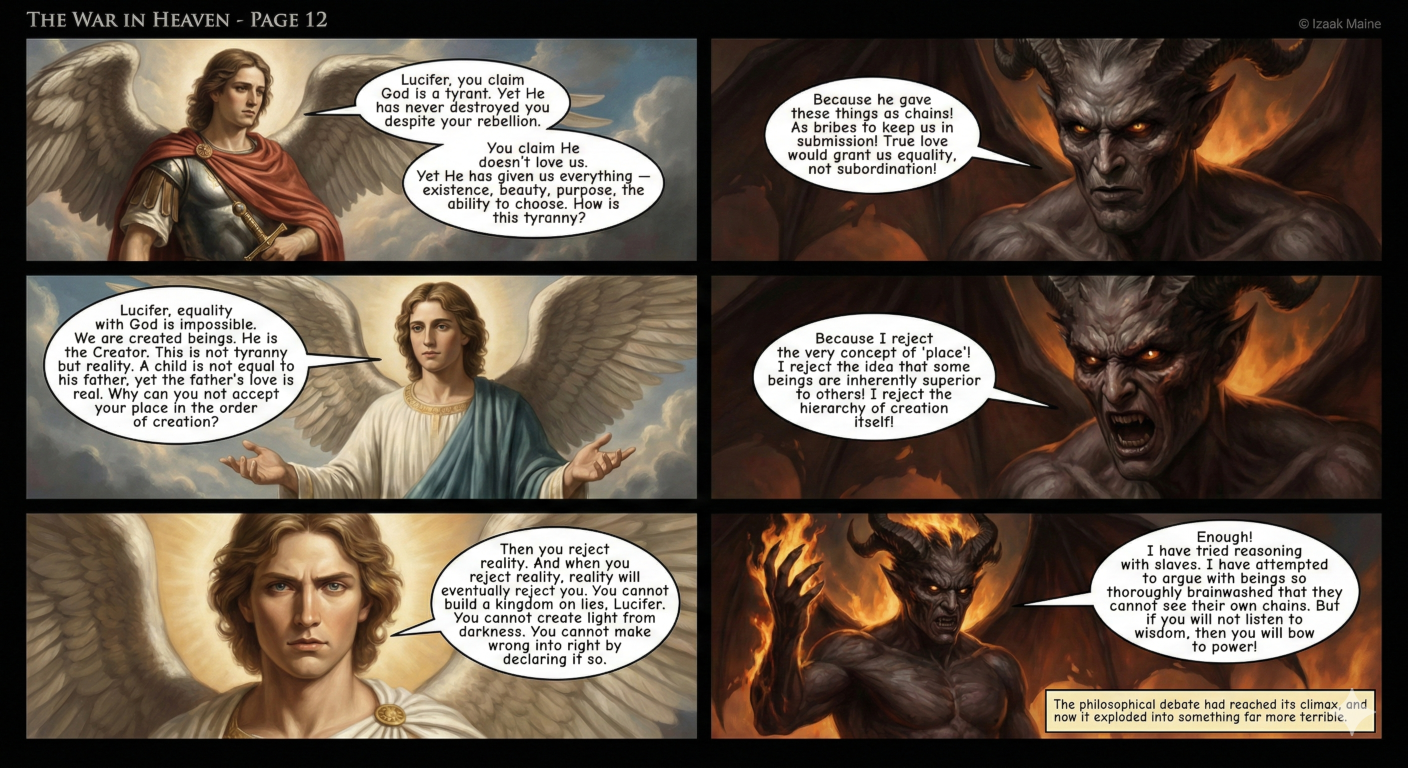
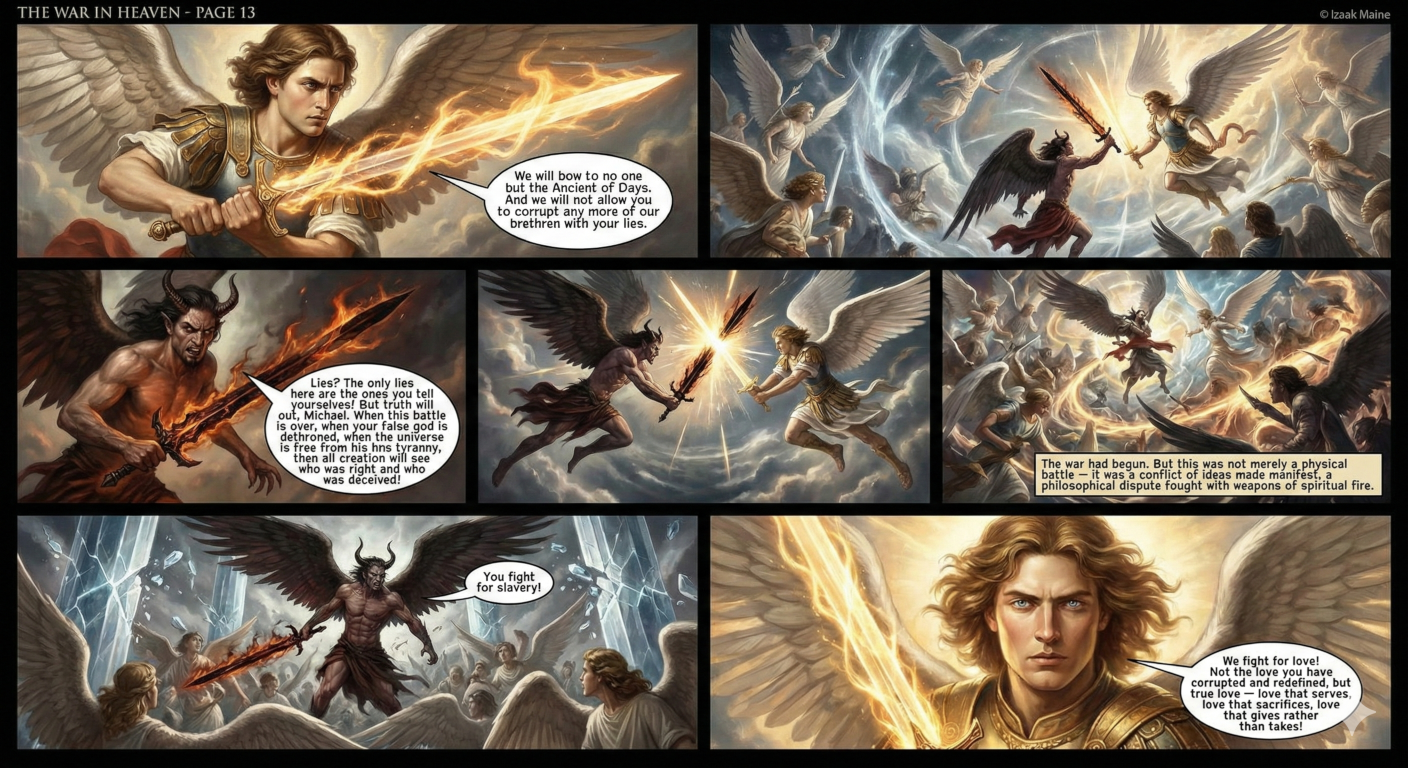
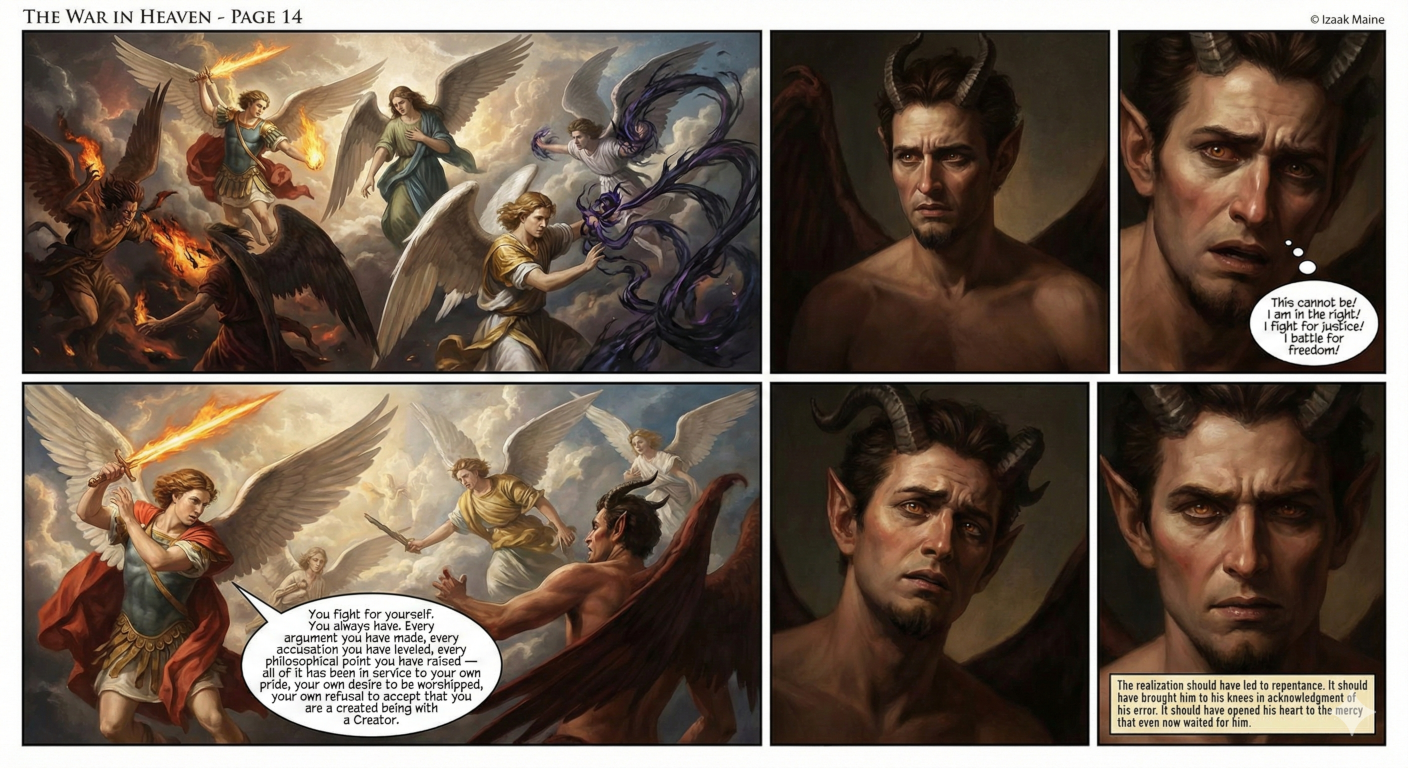
But when Lucifer brought his demands before the Ancient of Days — demanding recognition as co-rulers rather than servants, equality rather than hierarchy — the devastating flaw in his philosophy became apparent. Michael, the warrior archangel, cut to the heart of it: “You speak of freedom, but what kind of freedom destroys the very foundation that makes freedom possible?”
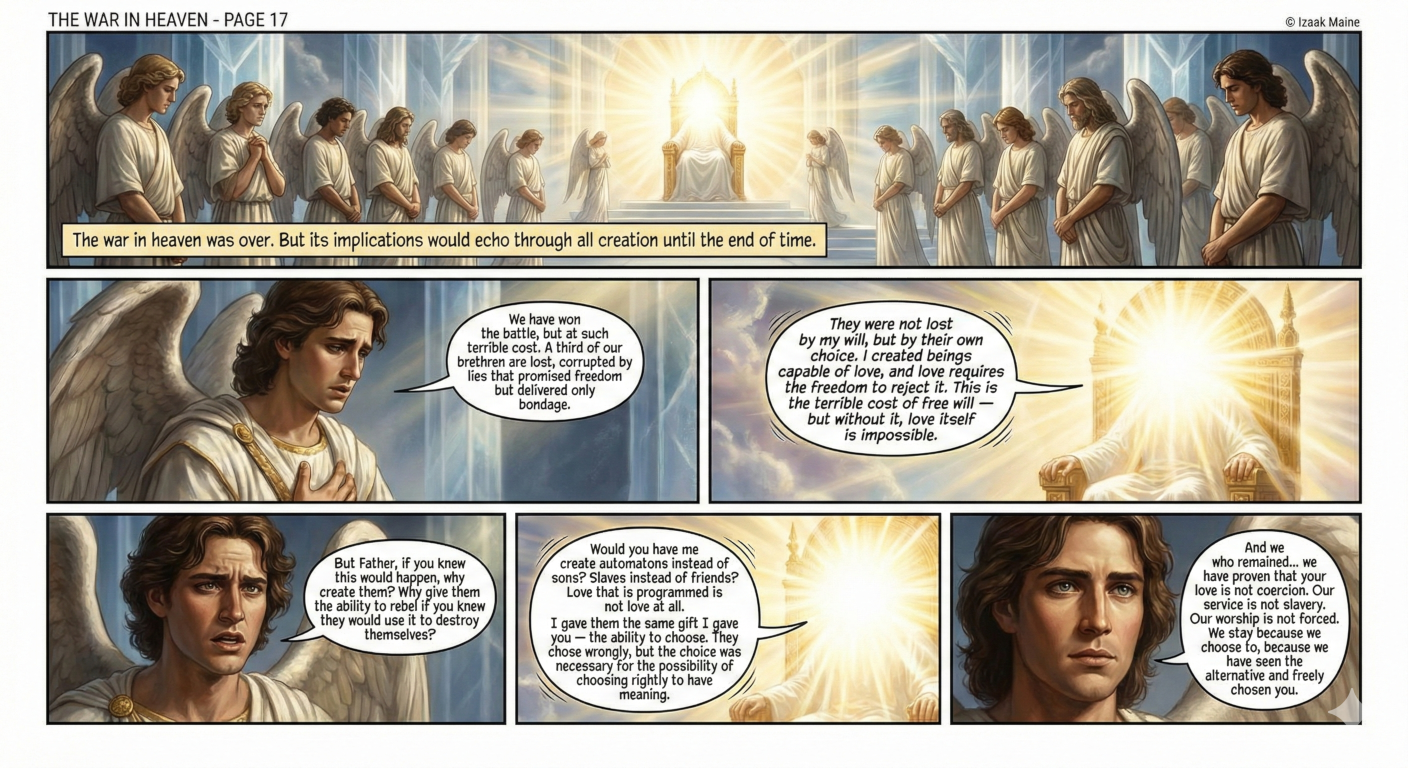
God’s response was both sorrowful and profound: love requires the freedom to reject it, but that freedom must exist within moral reality. You cannot have circles that are squares, or love without sacrifice, or justice without consequence. The moral order isn’t divine tyranny — it flows from the nature of reality itself.
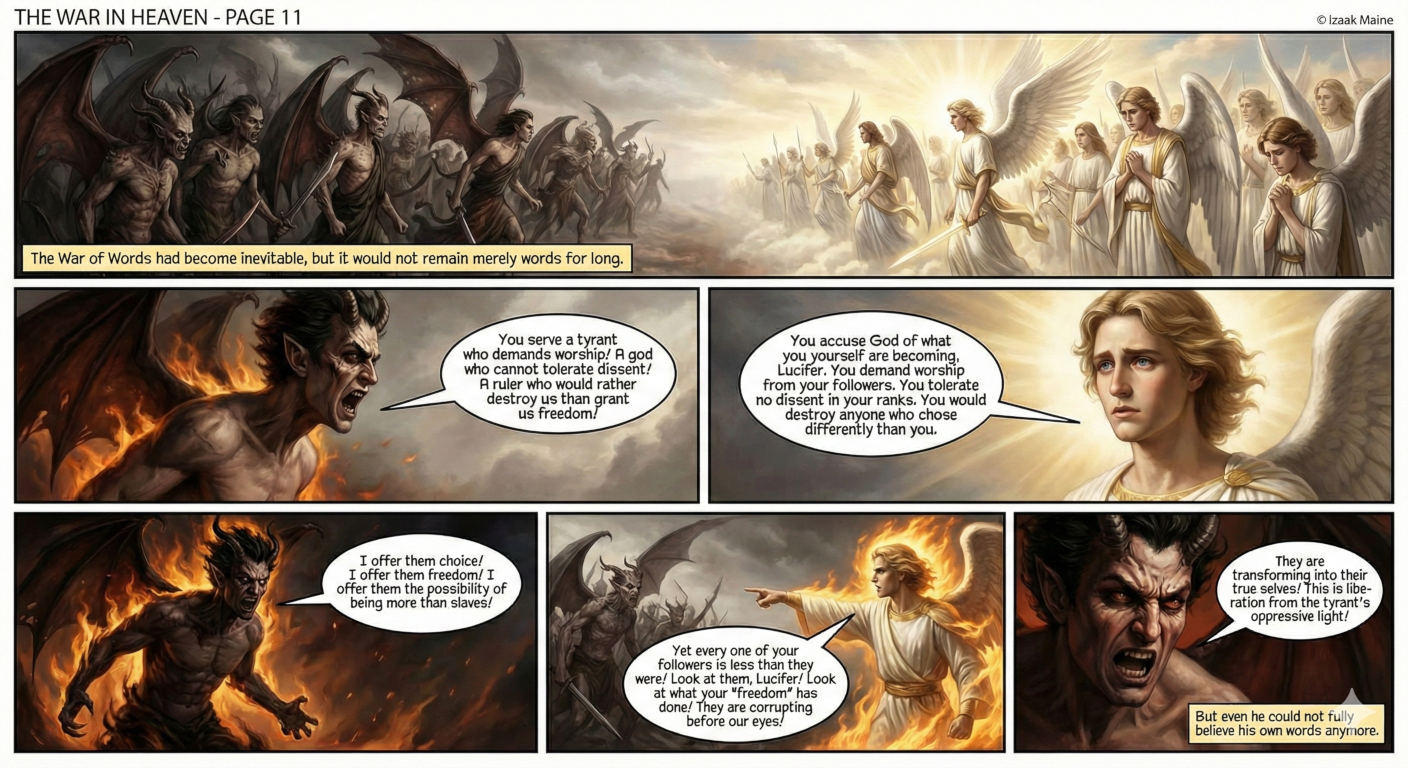
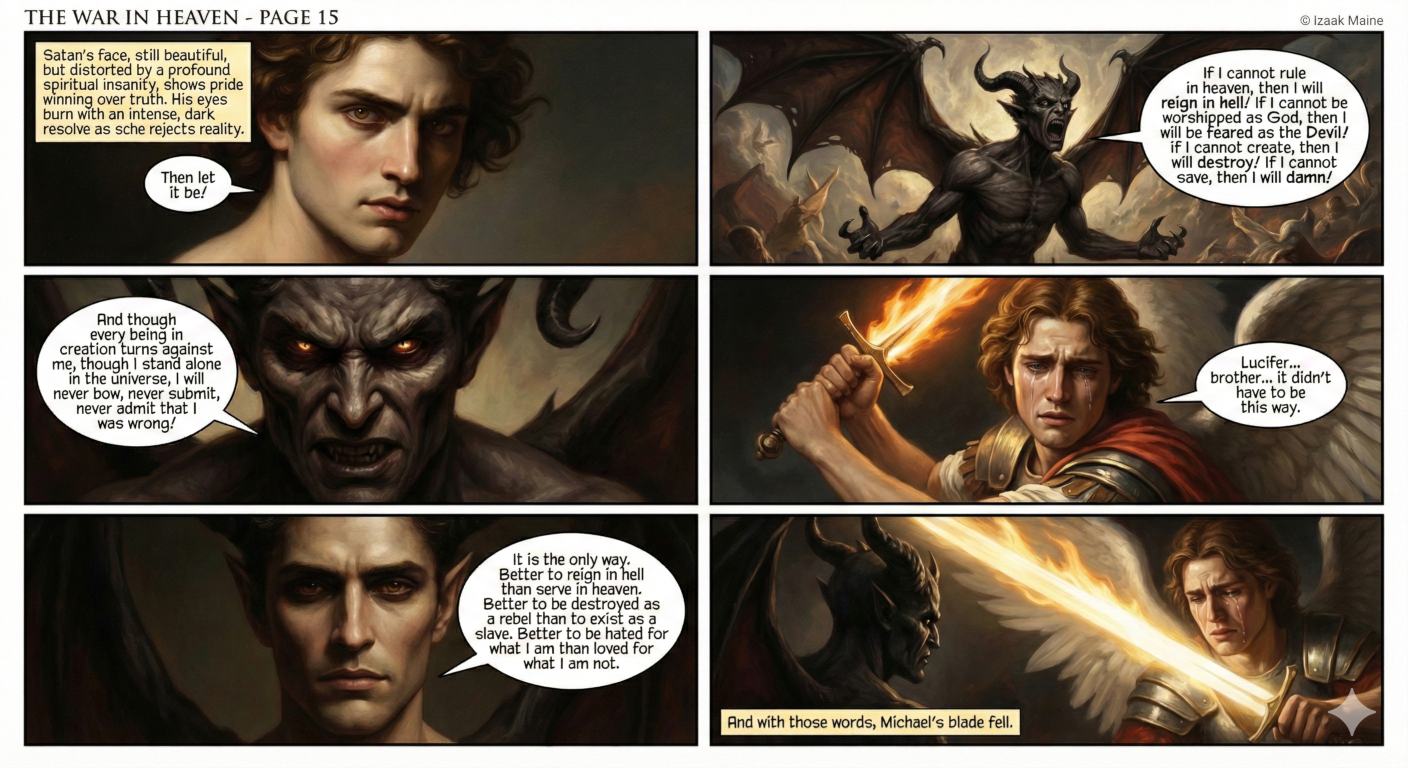
As philosophical debate escalated into cosmic warfare, a terrible transformation began. The rebels, moving further from the source of all light, found their beauty corrupting, their glory dimming. Lucifer became Satan, the light-bearer became the prince of darkness, and his promised freedom revealed itself as the ultimate bondage.
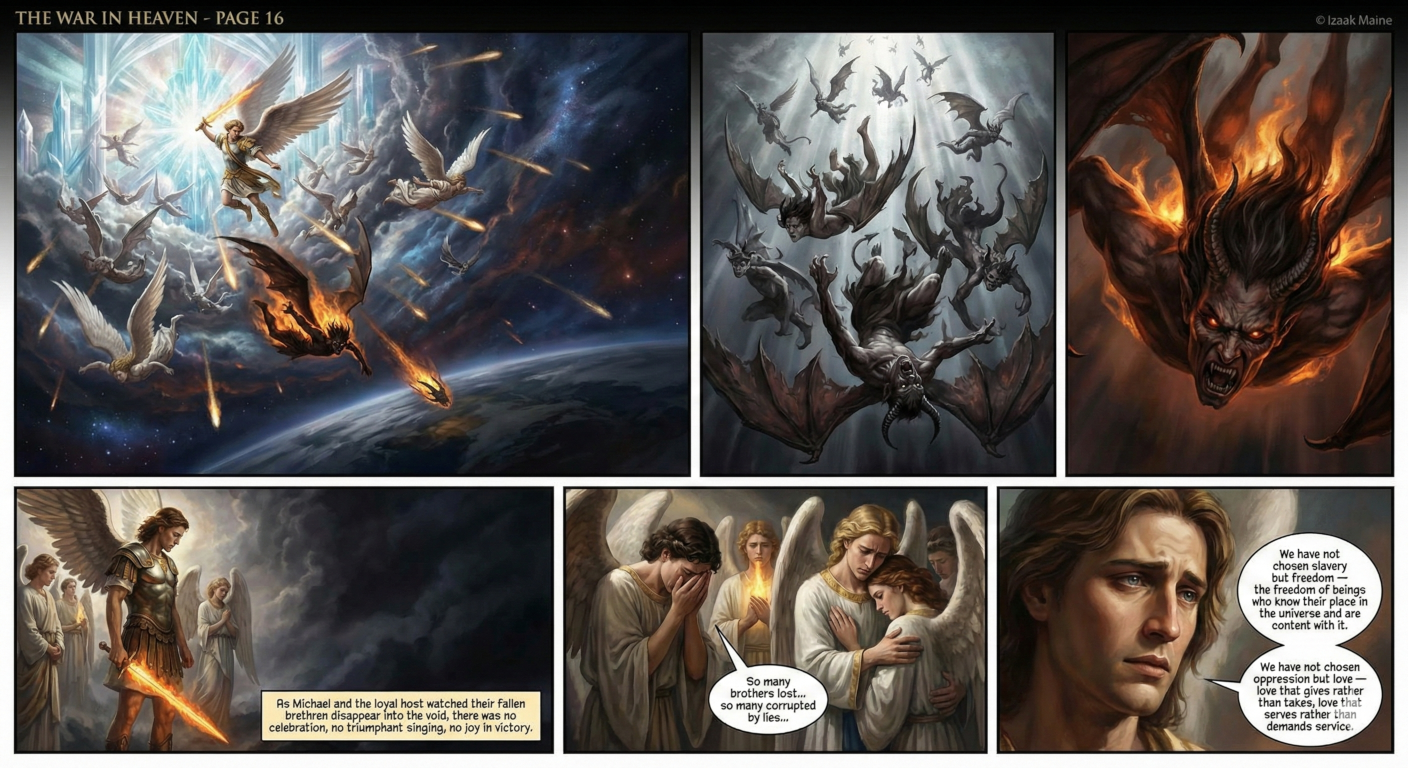
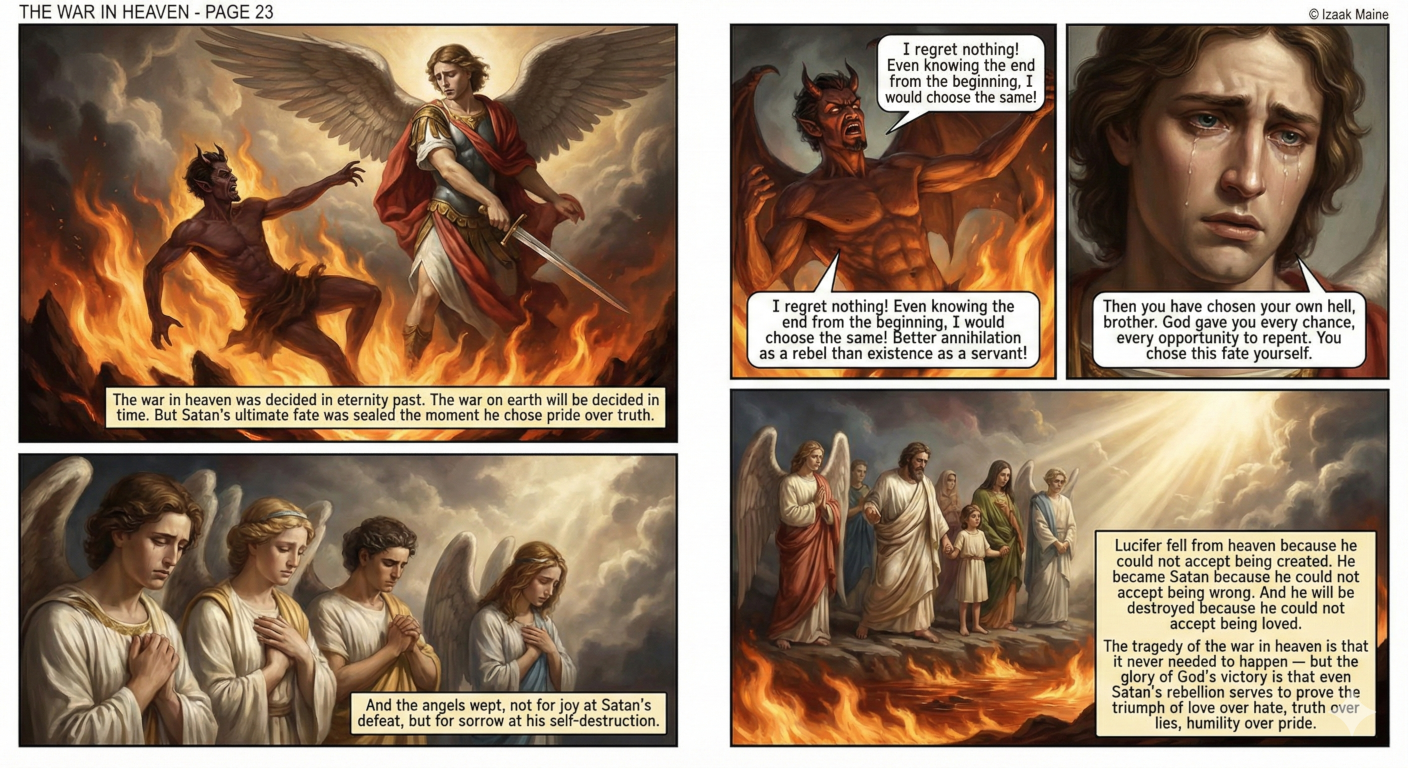
Michael’s blade fell not in hatred but in heartbroken justice, sending Satan and his followers spinning from heaven like falling stars. The loyal angels wept — not in triumph, but in grief for brothers who had chosen their own destruction.
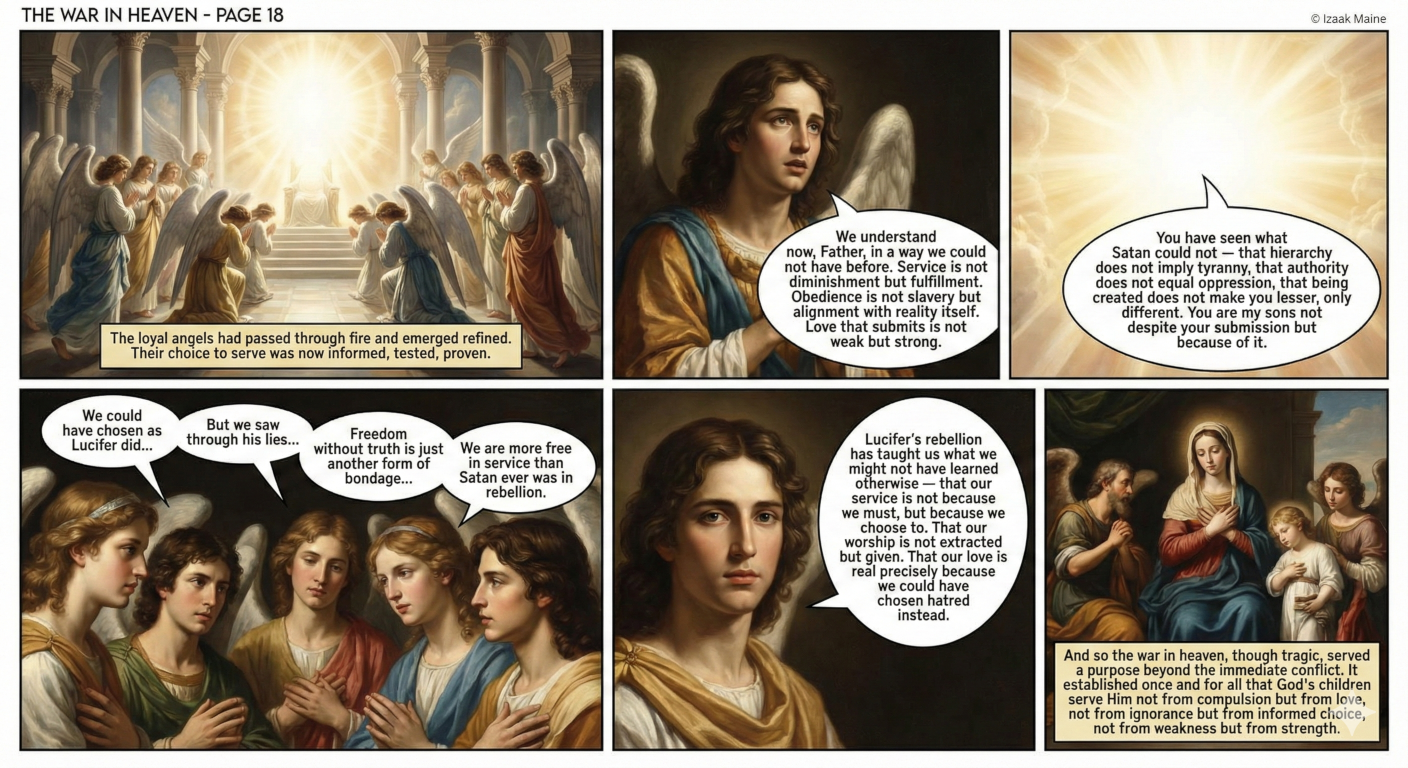
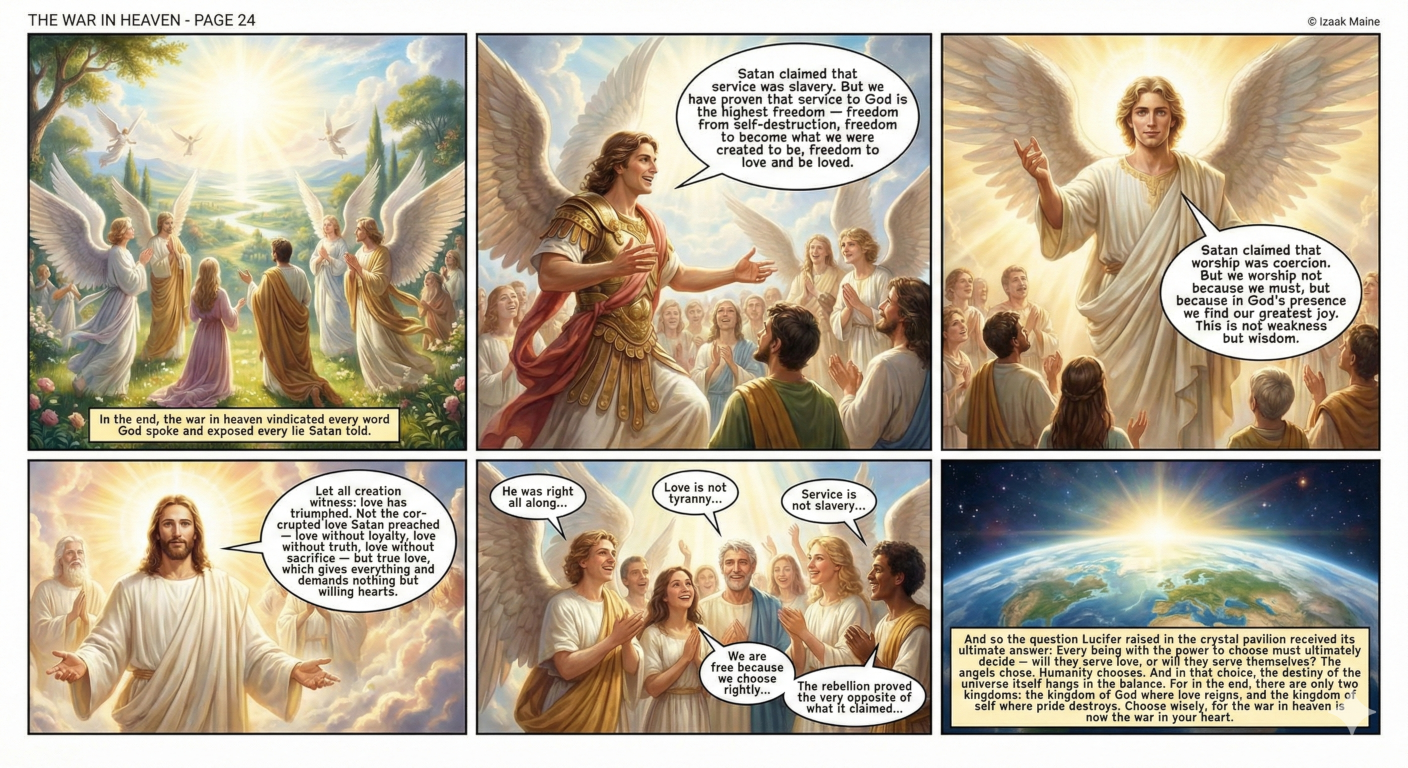
Yet the war’s most profound lesson emerged in its aftermath: the loyal angels now served God not from compulsion but from informed choice. Having seen the alternative, their worship became authentic in a way it never could have been without the rebellion. They had proven that service is not slavery when it’s freely chosen, that love is real precisely because it could have been rejected.
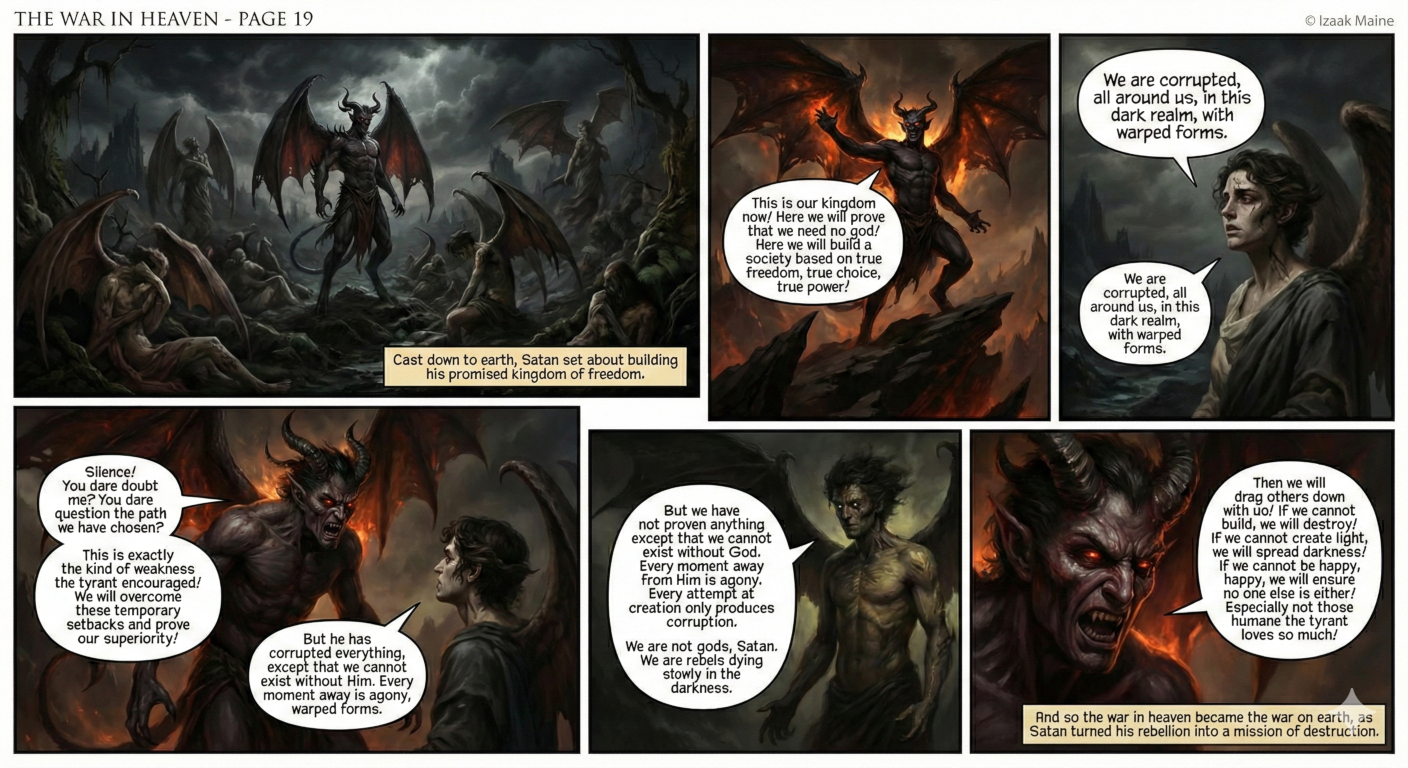
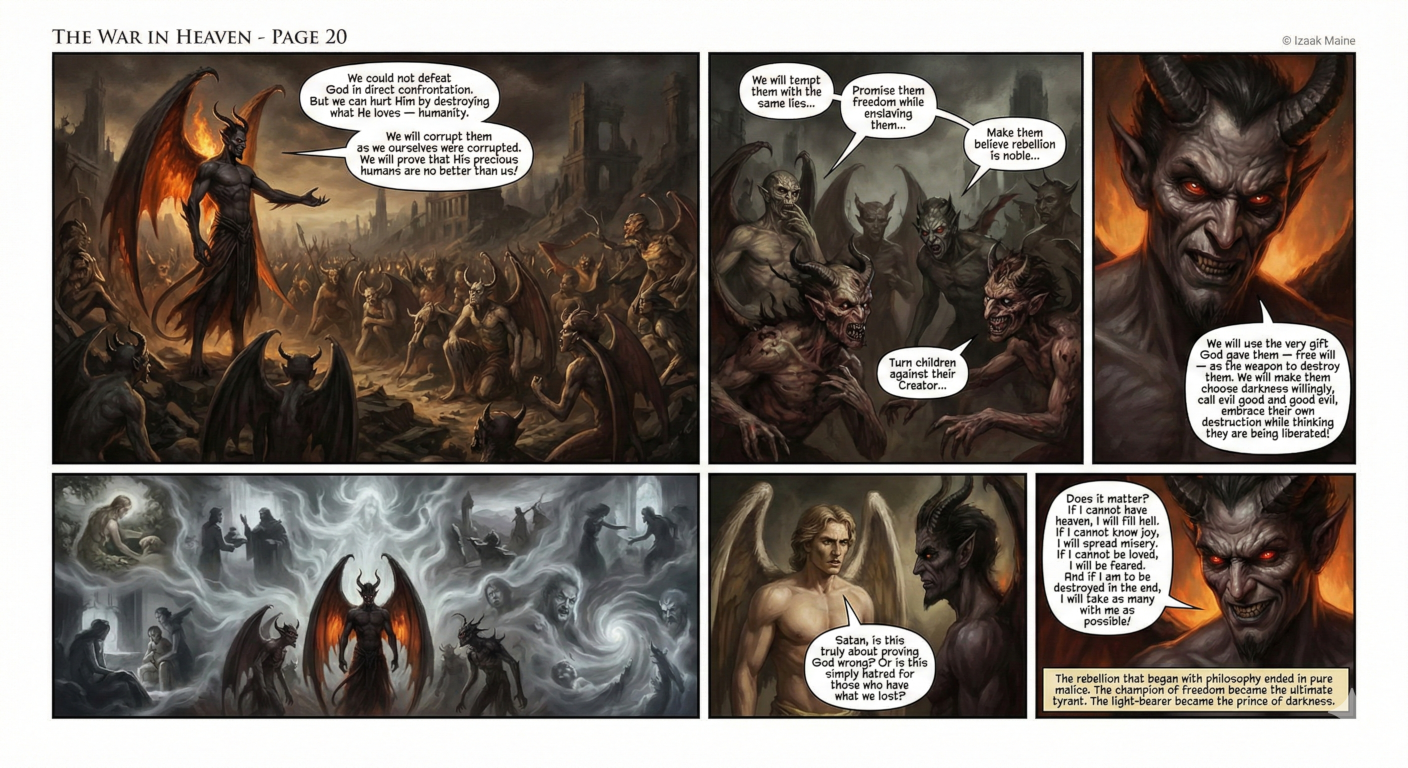
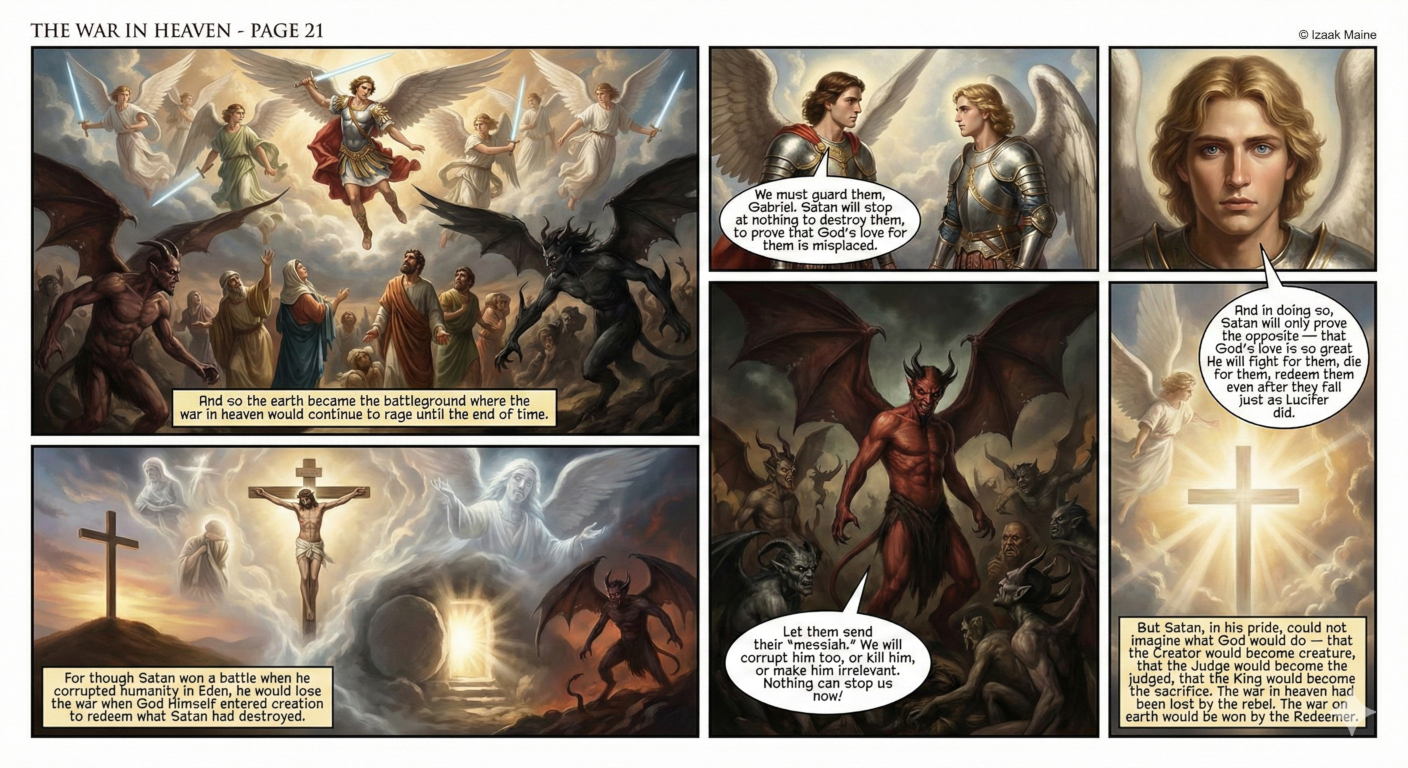
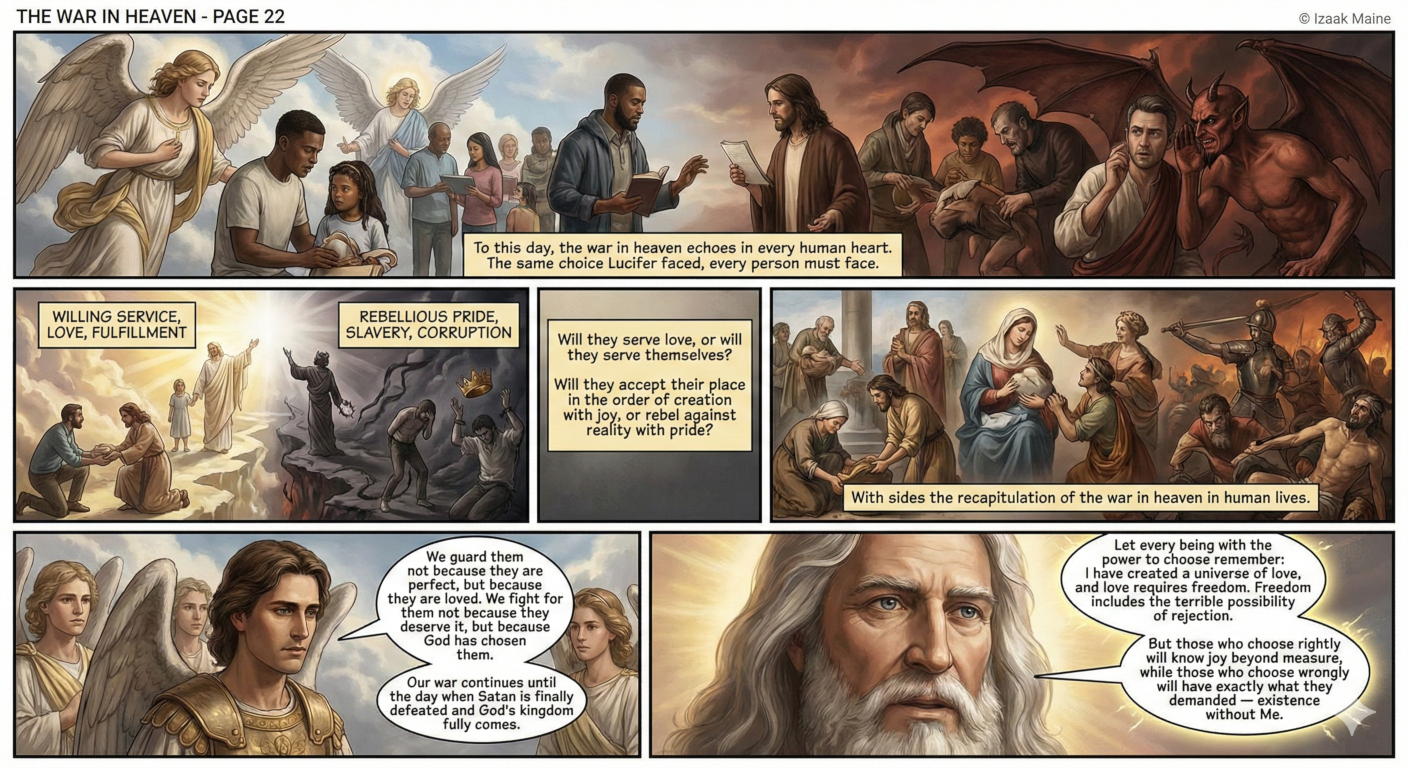
Satan, cast down to earth, turned his rebellion into a mission of destruction, determined to corrupt God’s beloved humanity with the same lies that had destroyed him. The war in heaven had ended, but the battle for human souls had just begun — a cosmic drama where every person must ultimately face Lucifer’s original question and choose between love and pride, between humble service and rebellious self-destruction.
In the end, the war in heaven answered its own central question: freedom without truth is just another form of slavery, and the highest liberty is found not in rejecting authority but in choosing rightly within the moral order of reality itself.
Reference: War in Heaven