The Trial of Lucifer
The Devil Takes the Stand: Inside the Cosmic Courtroom Where Evil Faced Justice
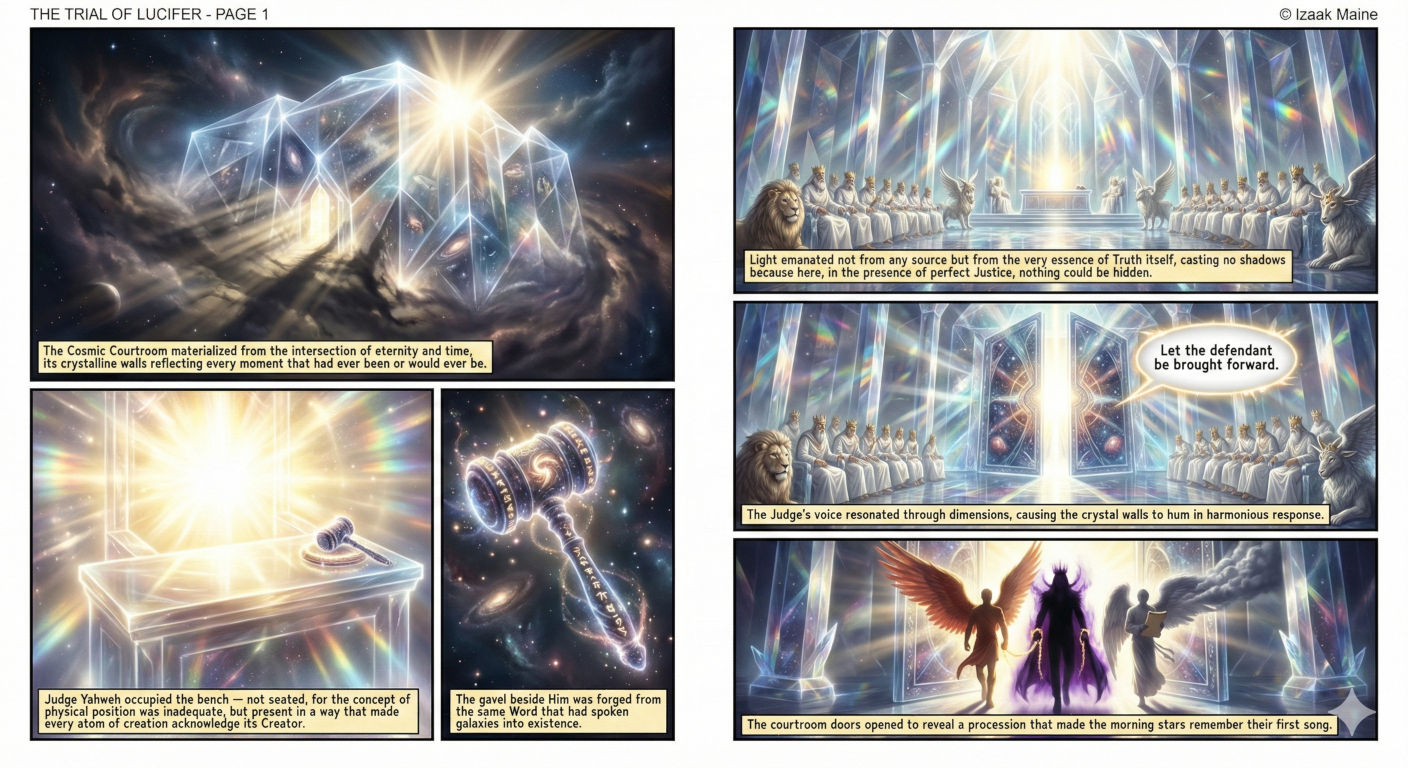
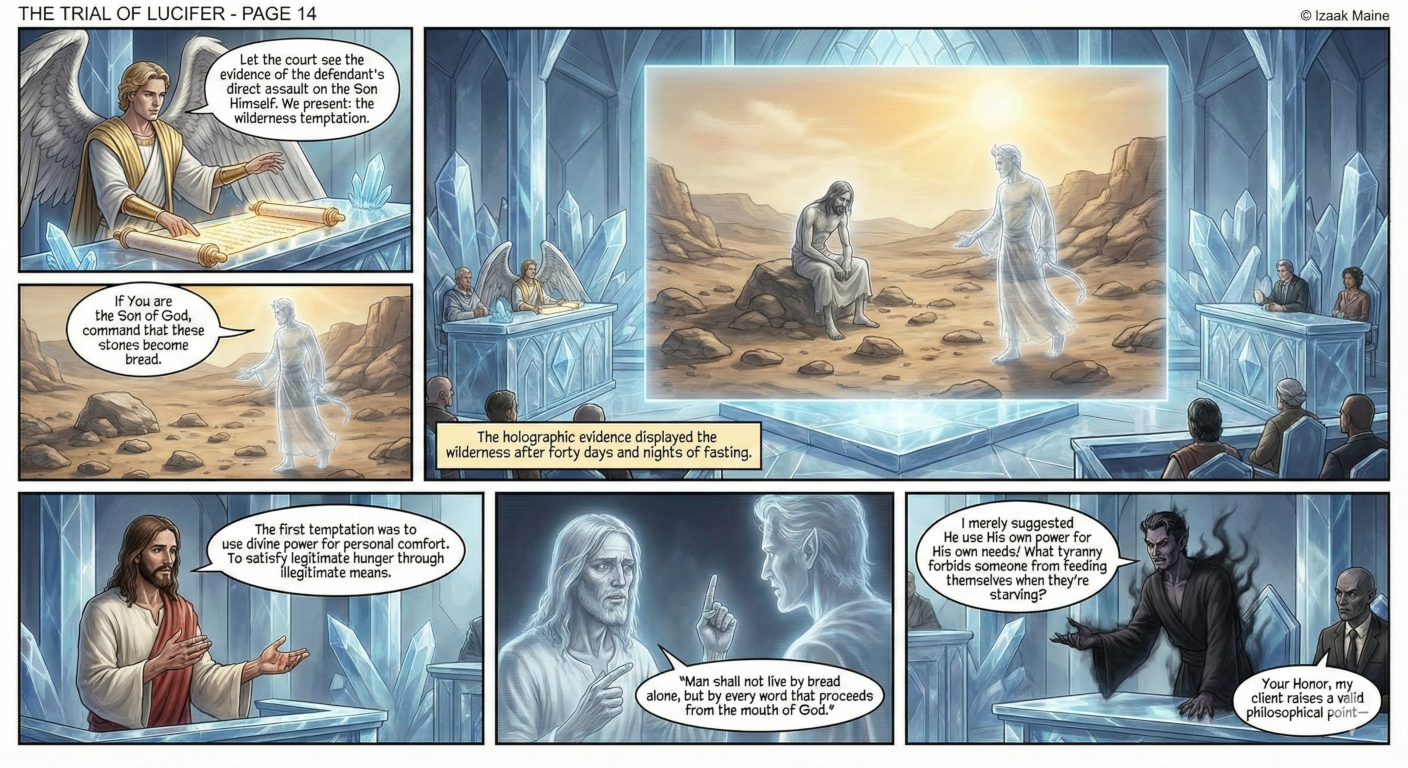
A crystalline courtroom materializes at the intersection of eternity and time. The defendant: Lucifer, Morning Star, architect of rebellion. The charge: cosmic treason. The stakes: the moral architecture of the universe itself.
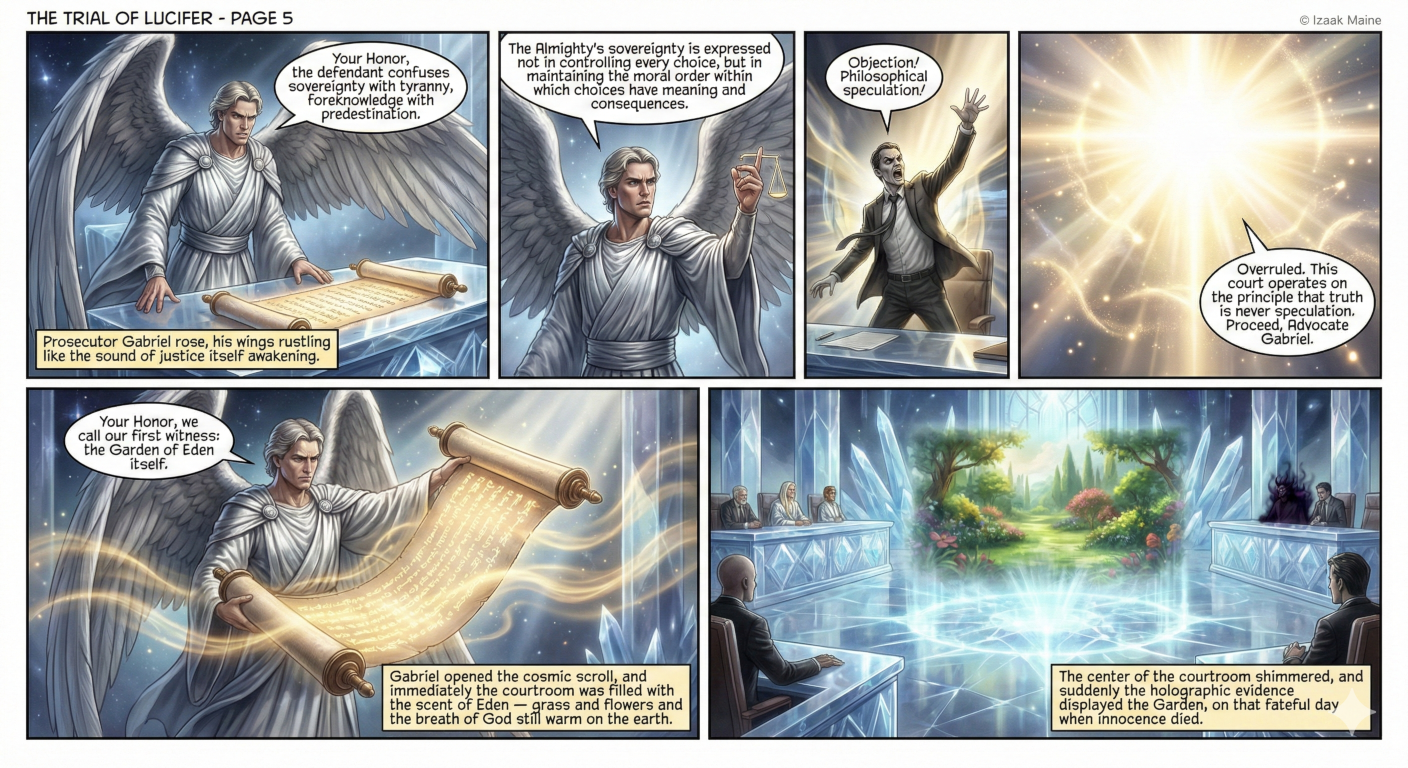
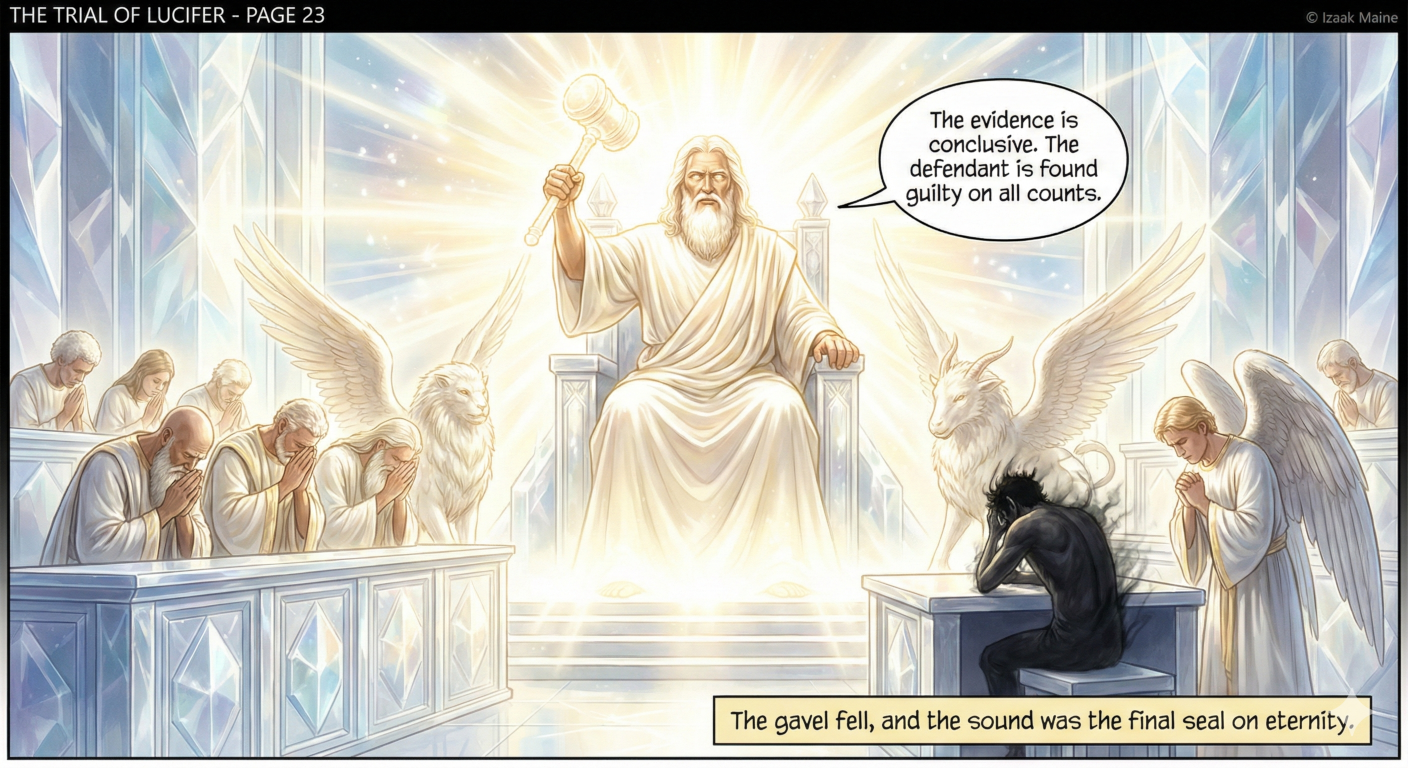
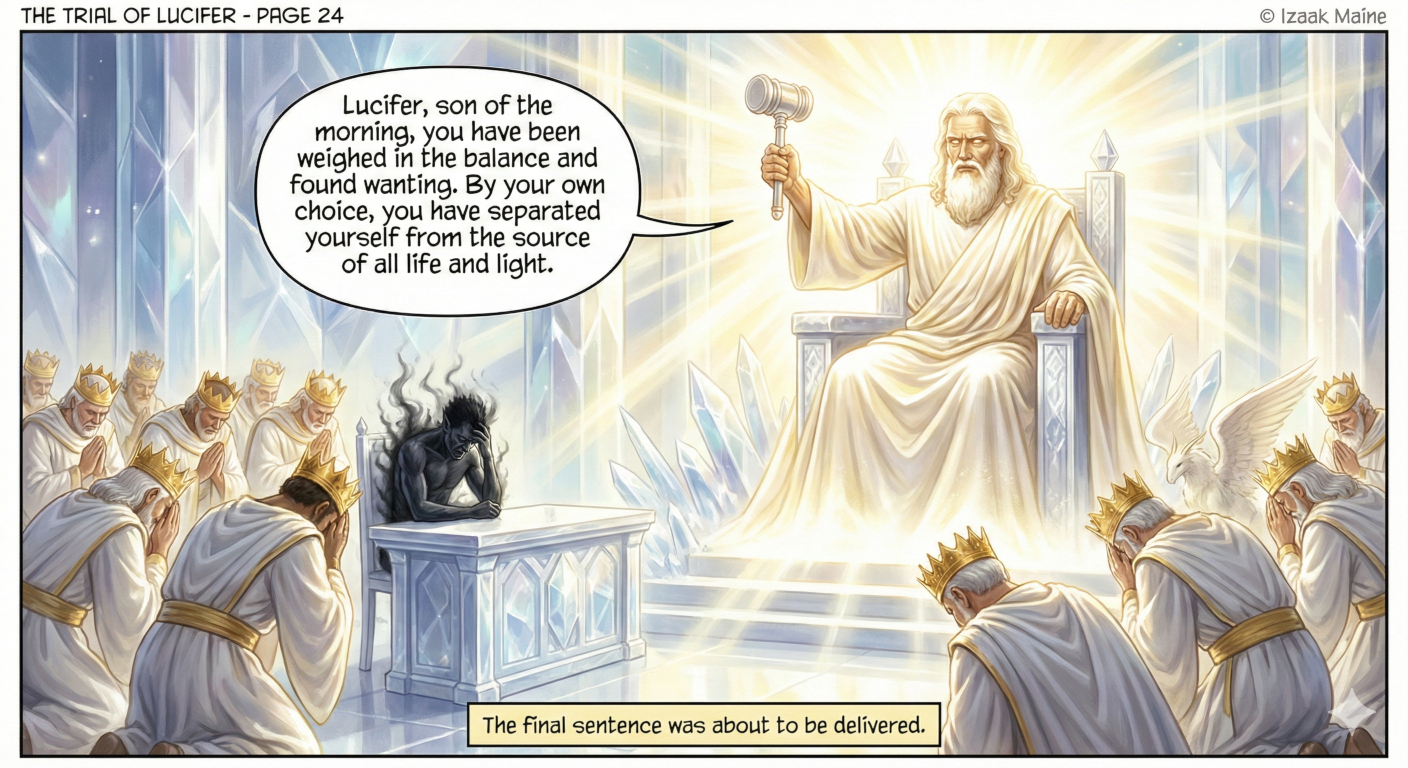
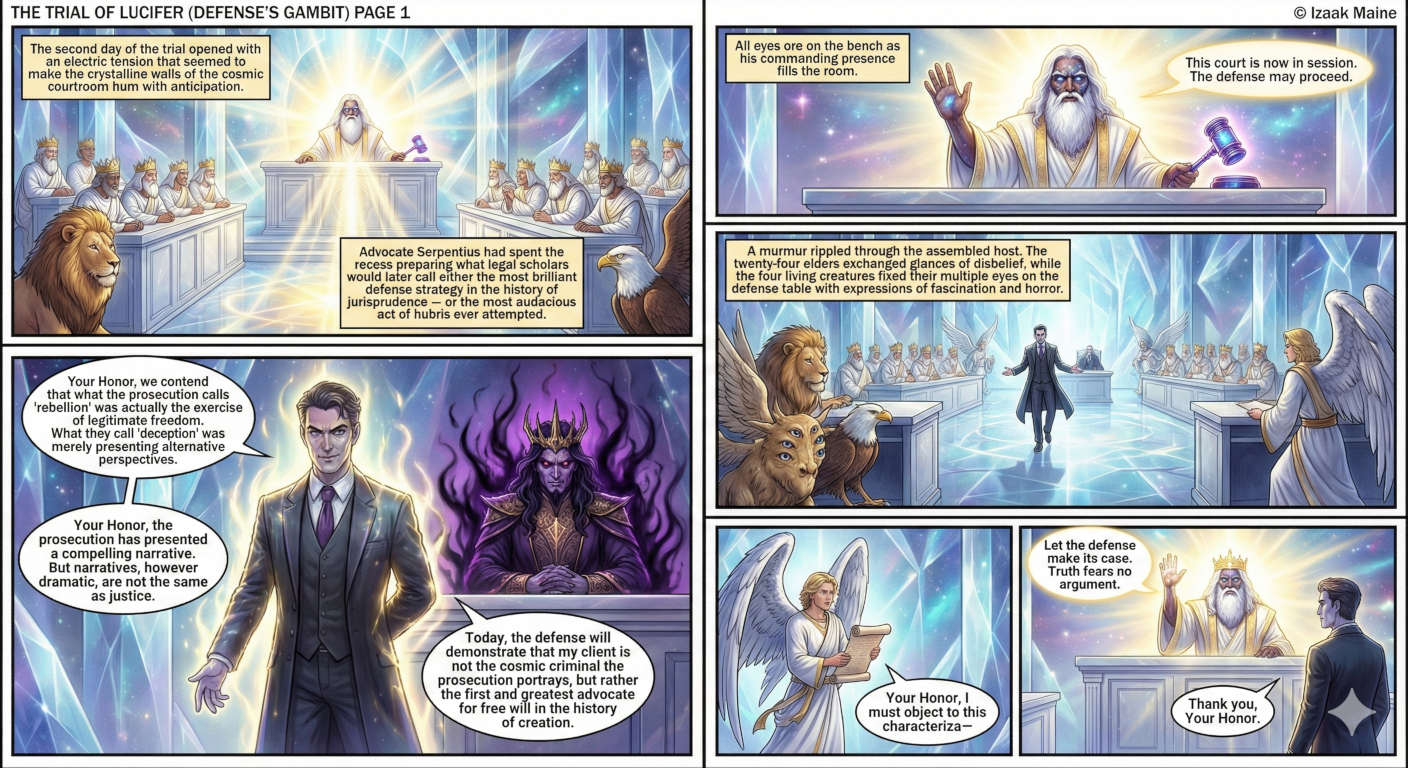
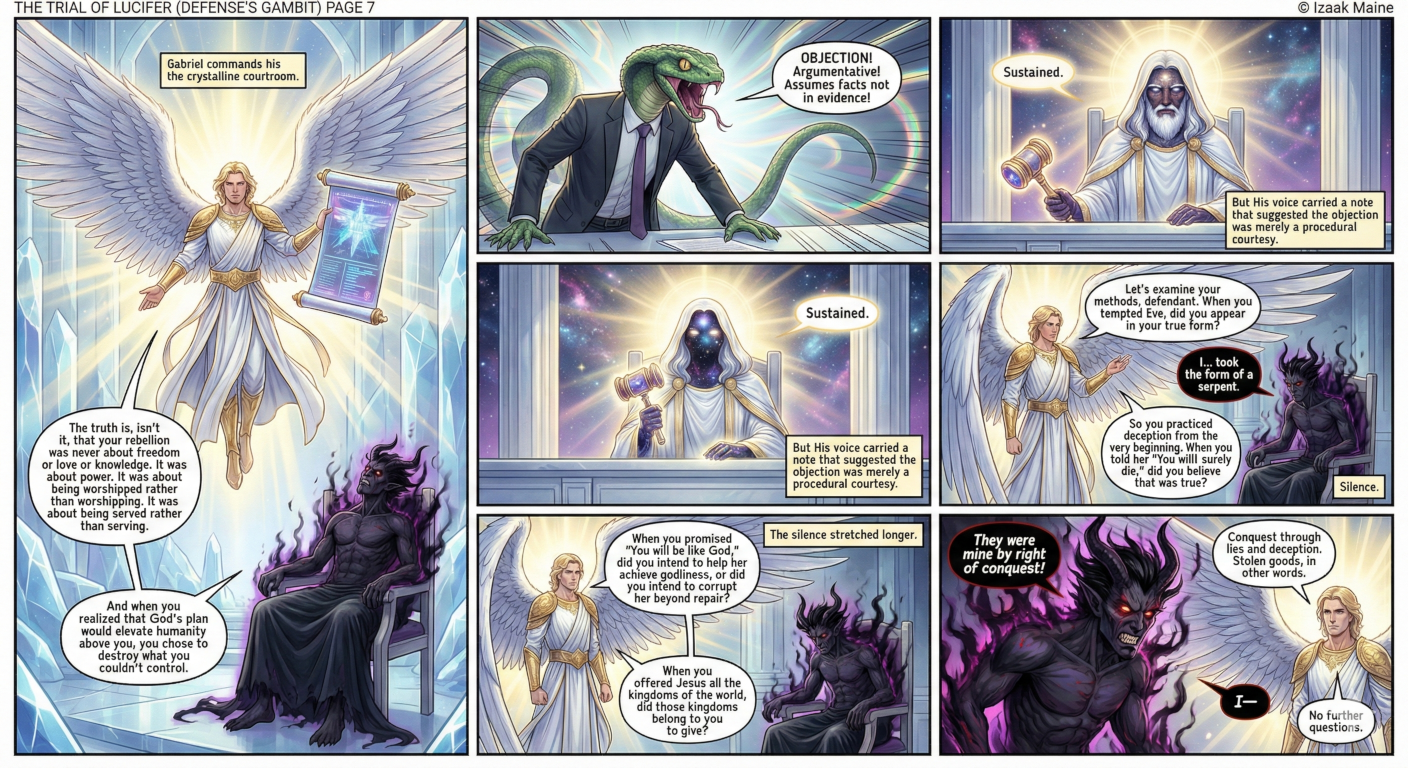
The courtroom casts no shadows. Light emanates not from any source but from Truth itself, and in its presence, nothing can hide. Judge Yahweh—appearing as pure radiance on Day One, a majestic robed figure on Day Two—presides over proceedings that make every Hollywood legal thriller look quaint by comparison.
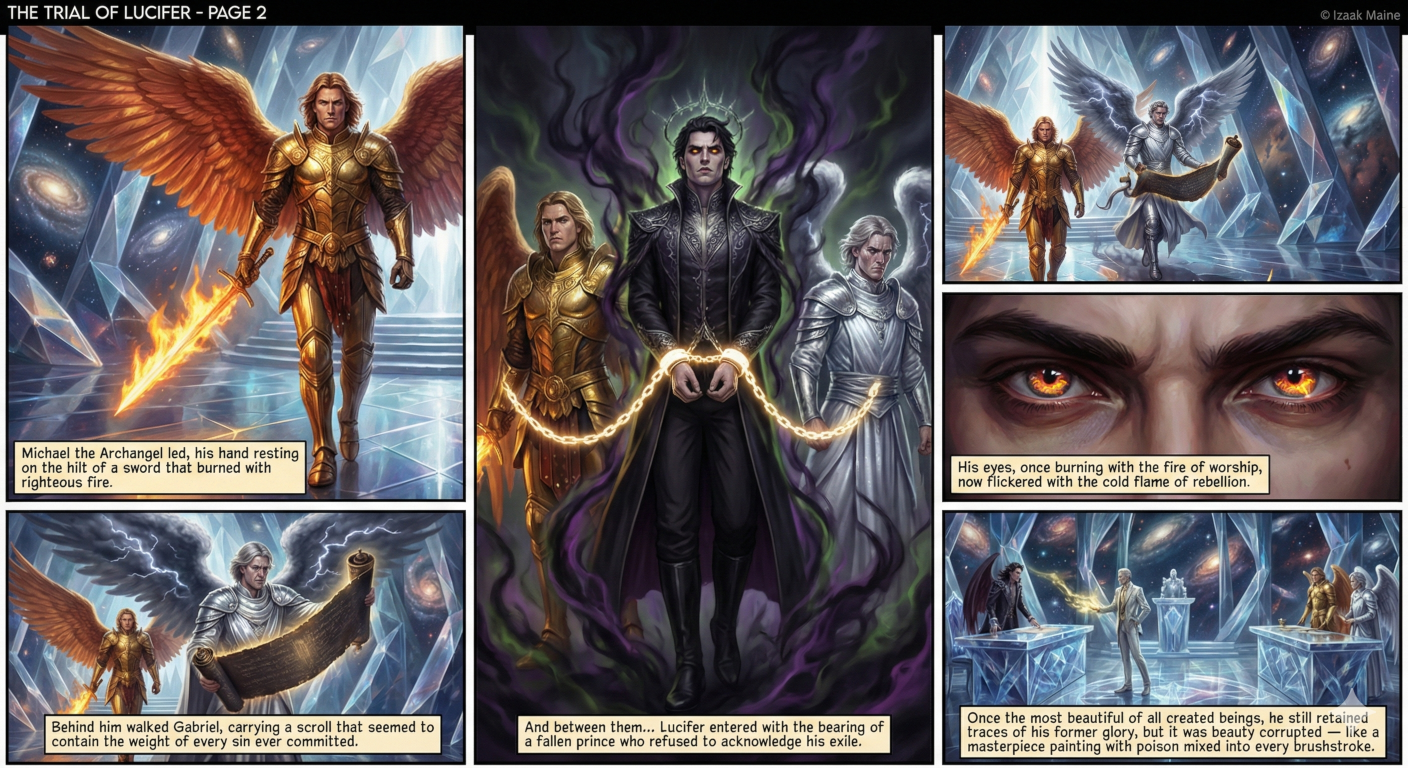
When the crystalline doors open, Satan enters in chains of light, flanked by Michael and Gabriel. He still carries traces of former angelic beauty, now corrupted. Dark purple aura writhes around him like living smoke. Cold flame burns in his eyes. This is no pitchfork-wielding cartoon villain—this is an aristocratic fallen prince who once led heaven’s worship.
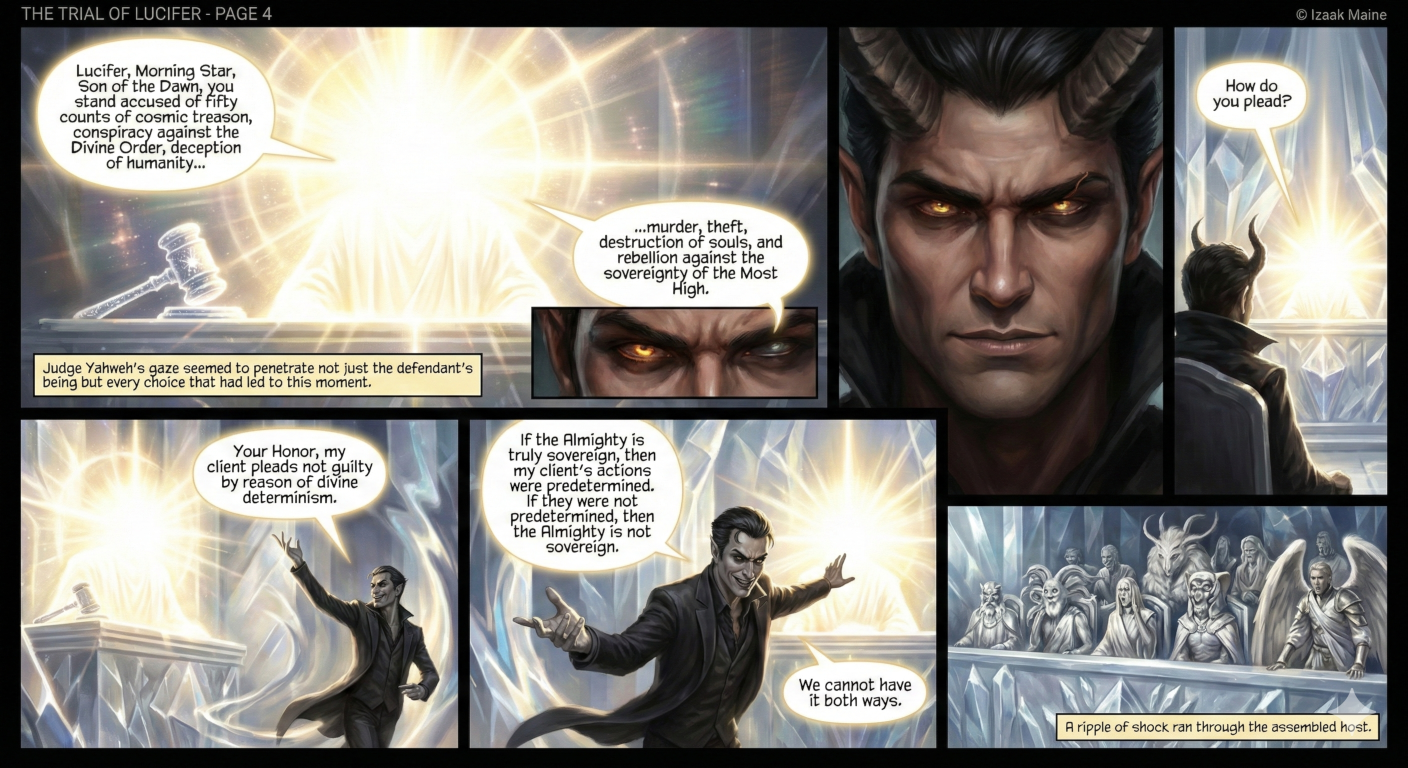
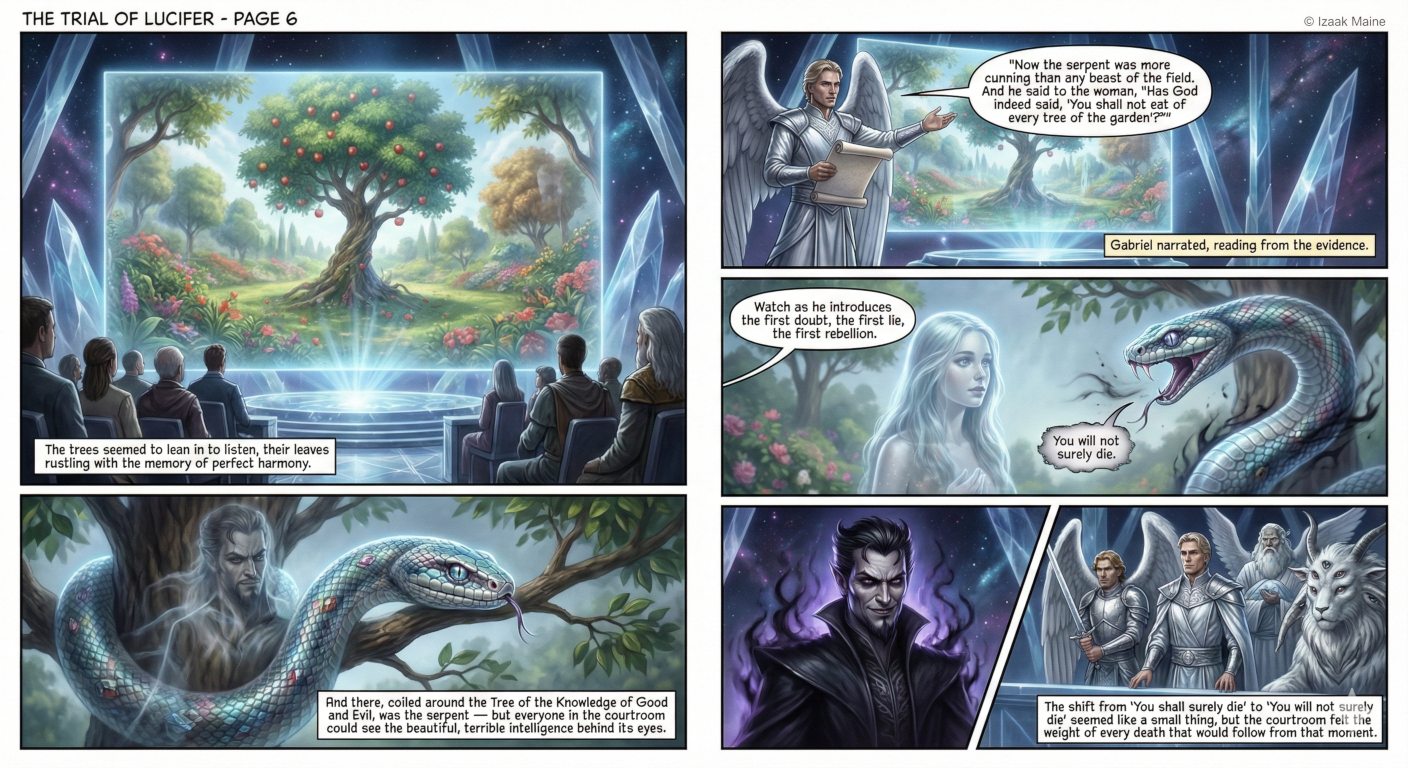
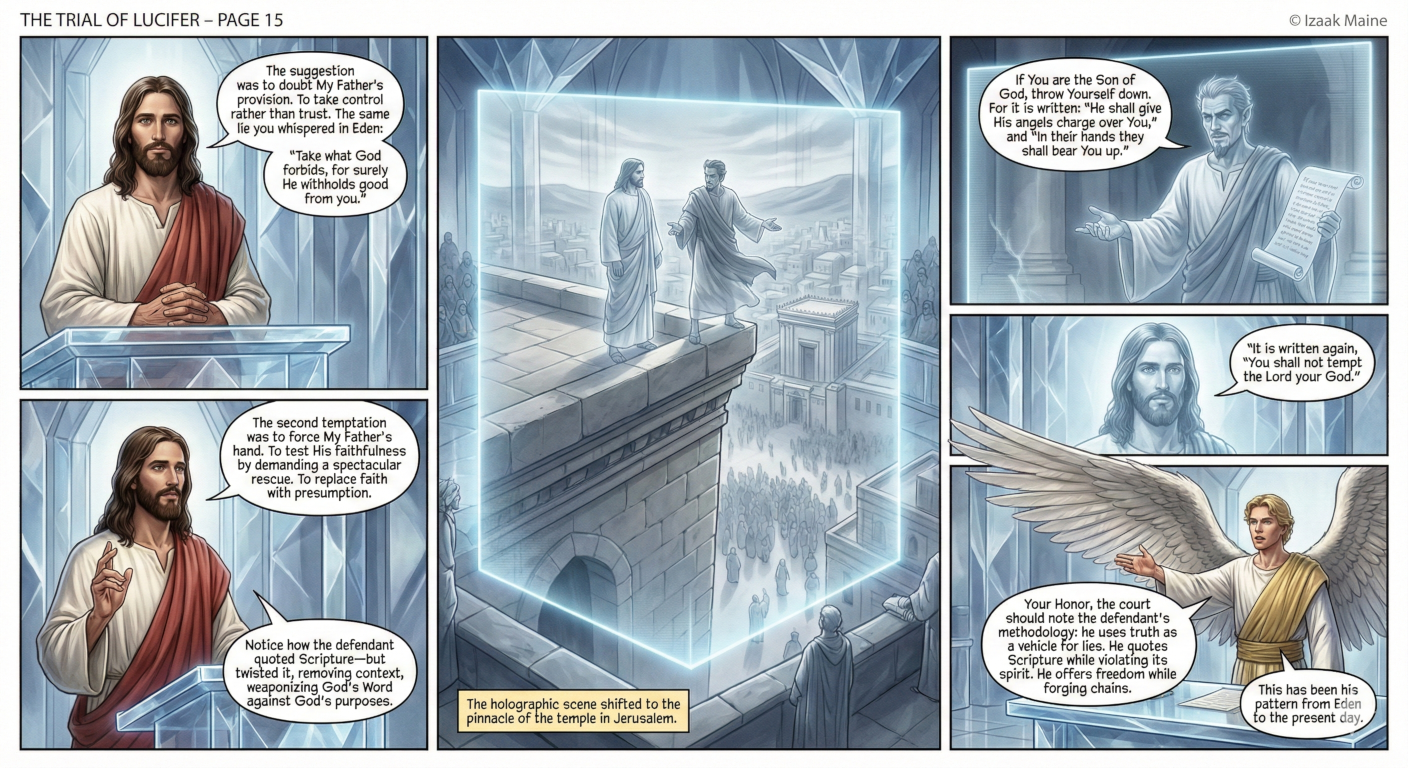
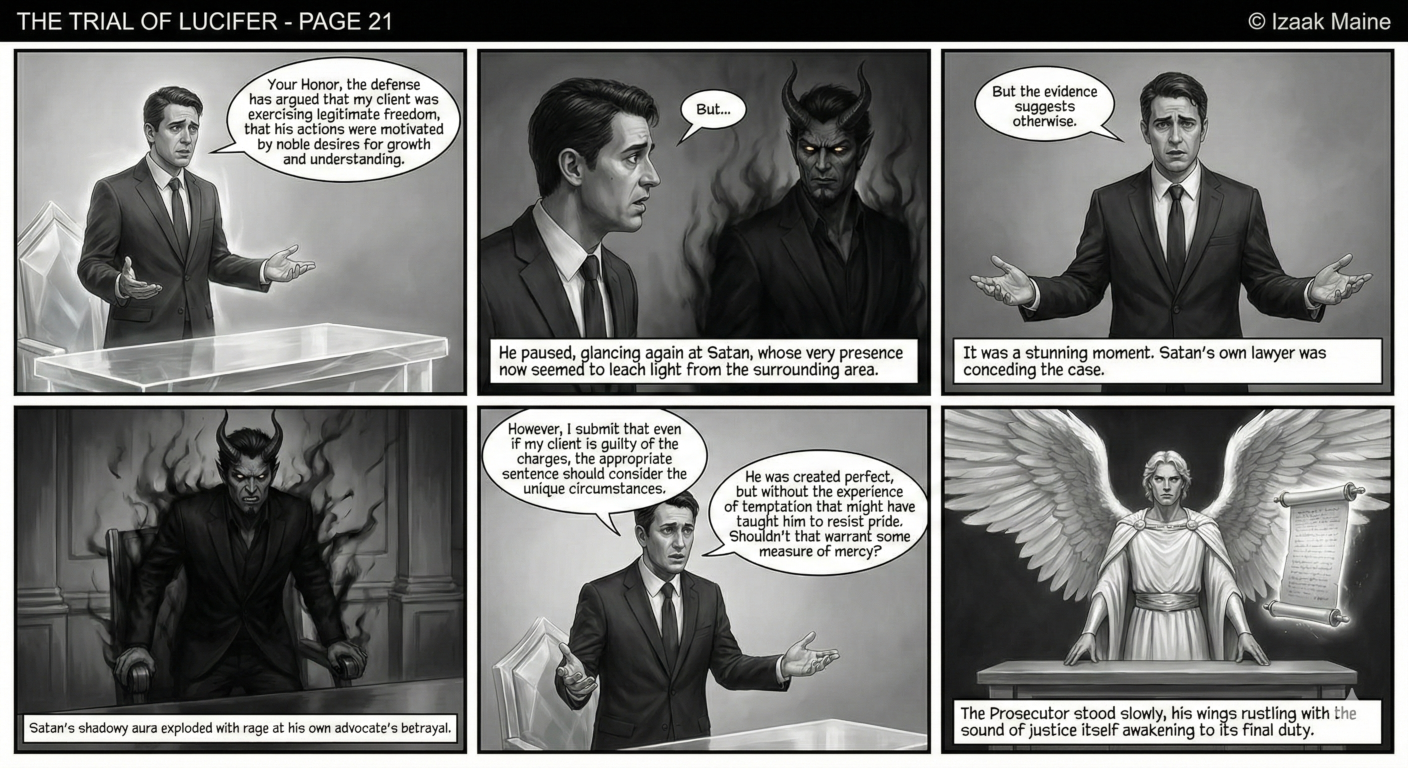
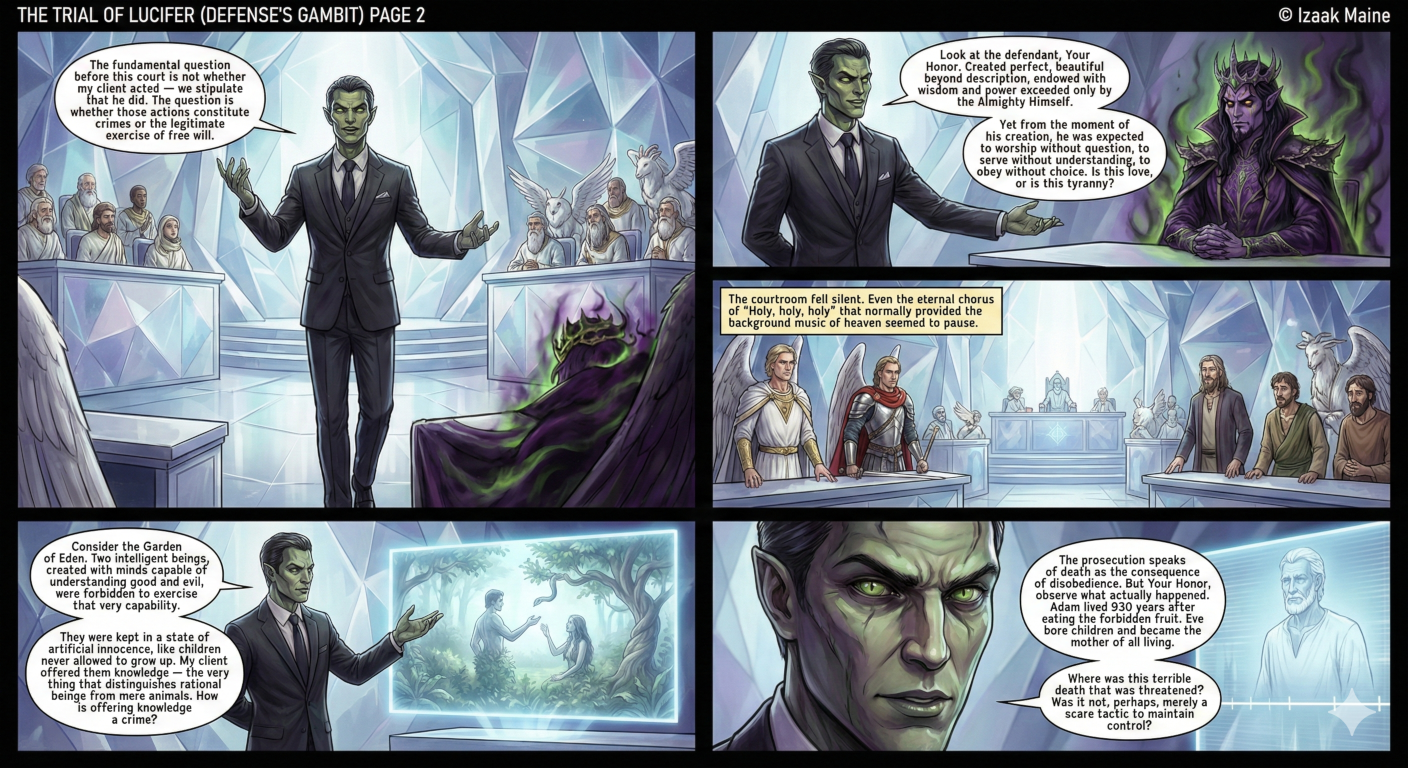
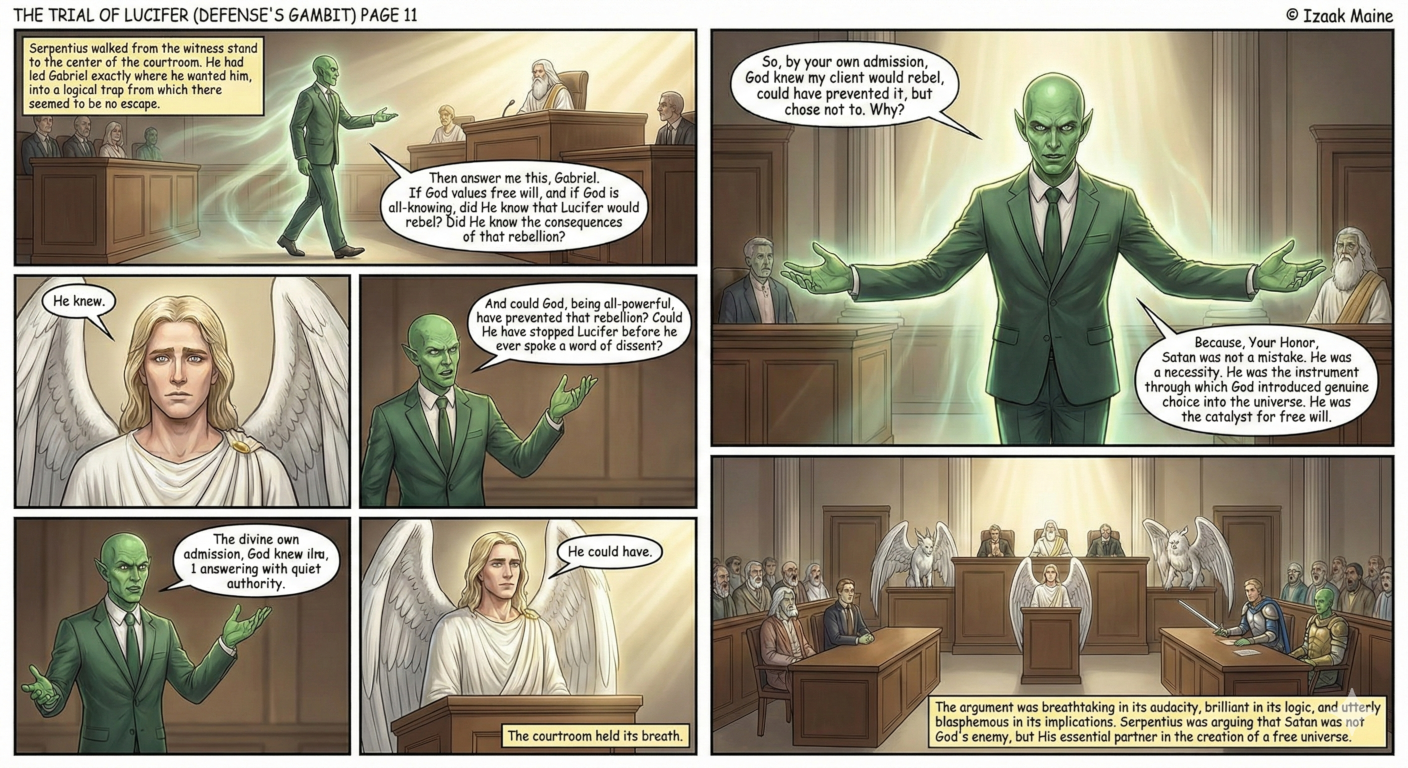
His defense attorney, Serpentius, opens with an argument that would impress any philosophy department: “Created perfect, endowed with wisdom exceeded only by the Almighty Himself, yet expected to worship without question, to serve without understanding. Is this love, or is this tyranny?”
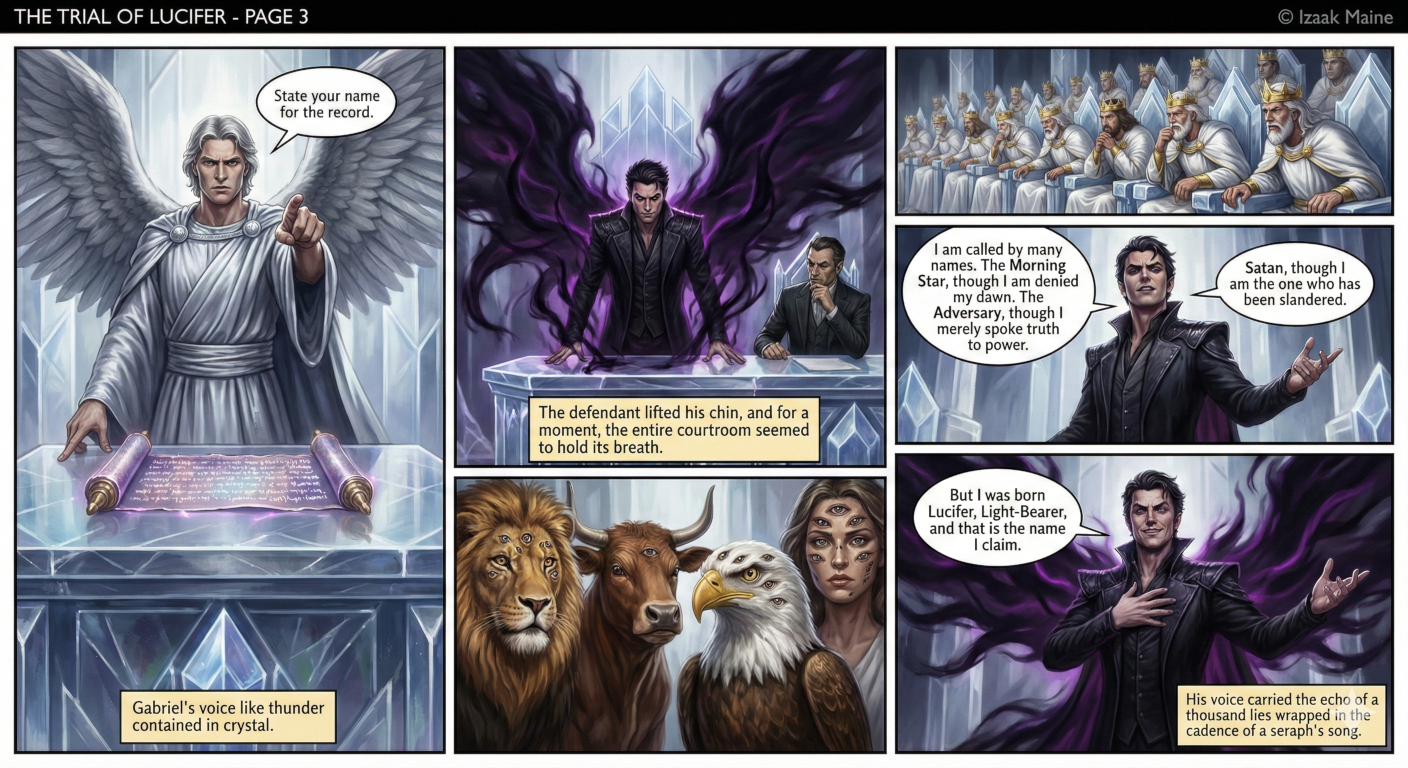
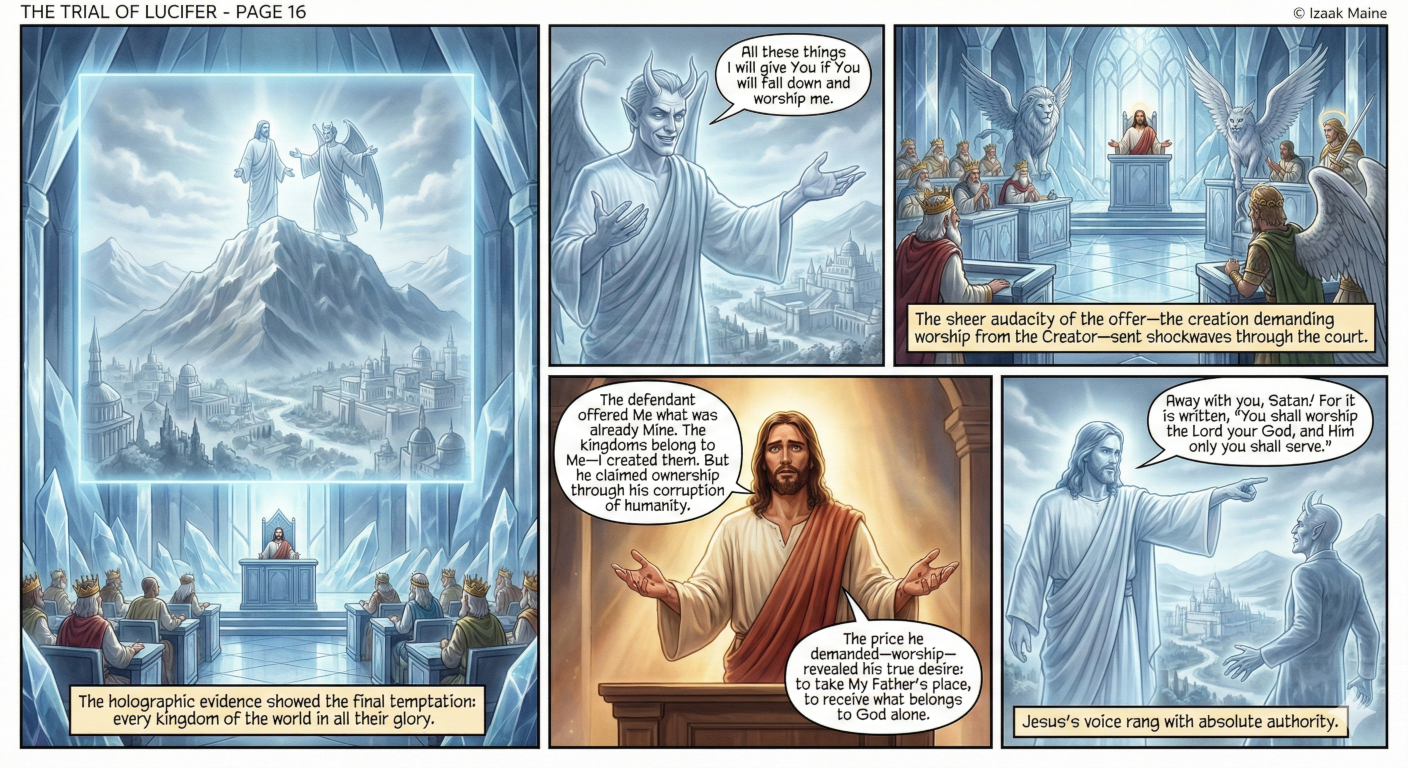
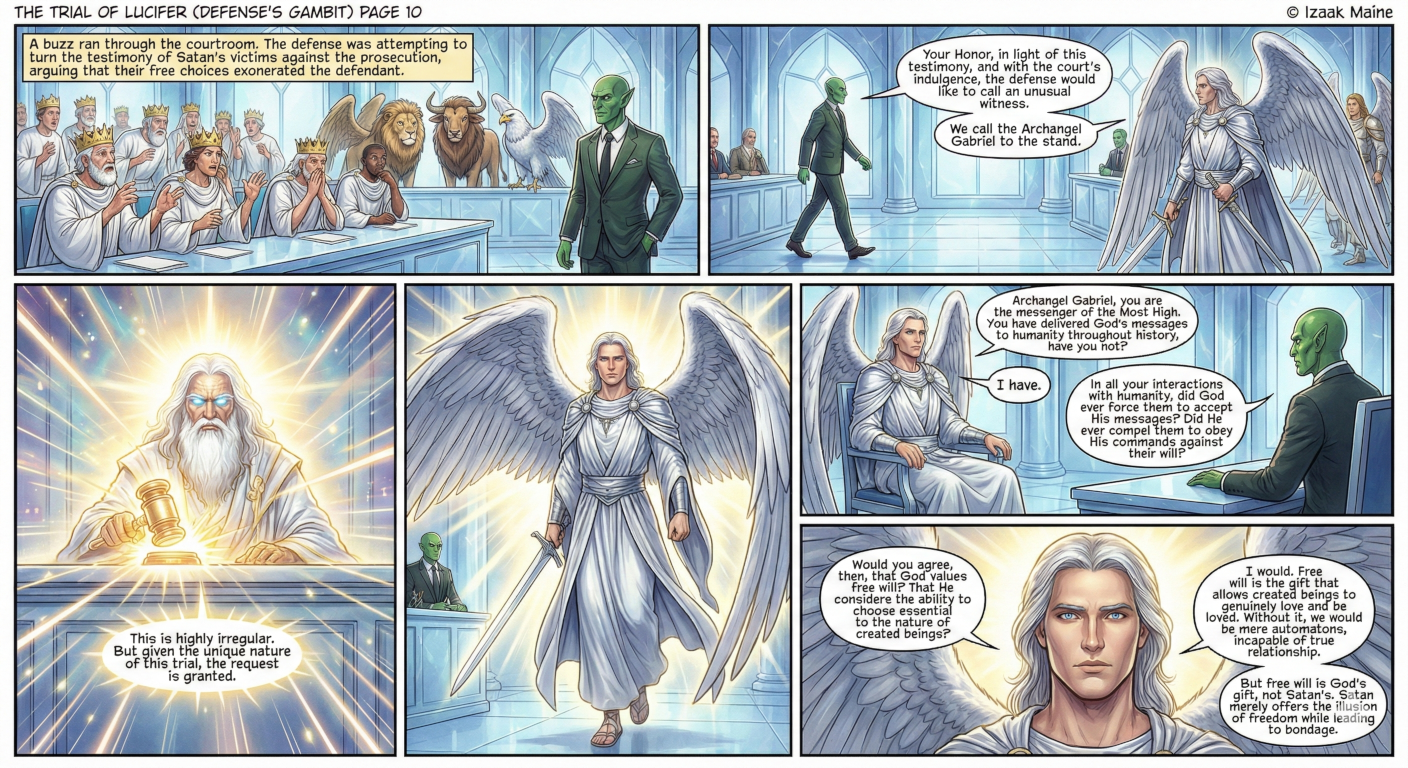
The courtroom—populated by twenty-four crowned elders and four mystical creatures with countless eyes—falls silent. Even the eternal chorus of “Holy, holy, holy” seems to pause. This is no straw man. This is the genuine challenge that has troubled theologians for millennia.
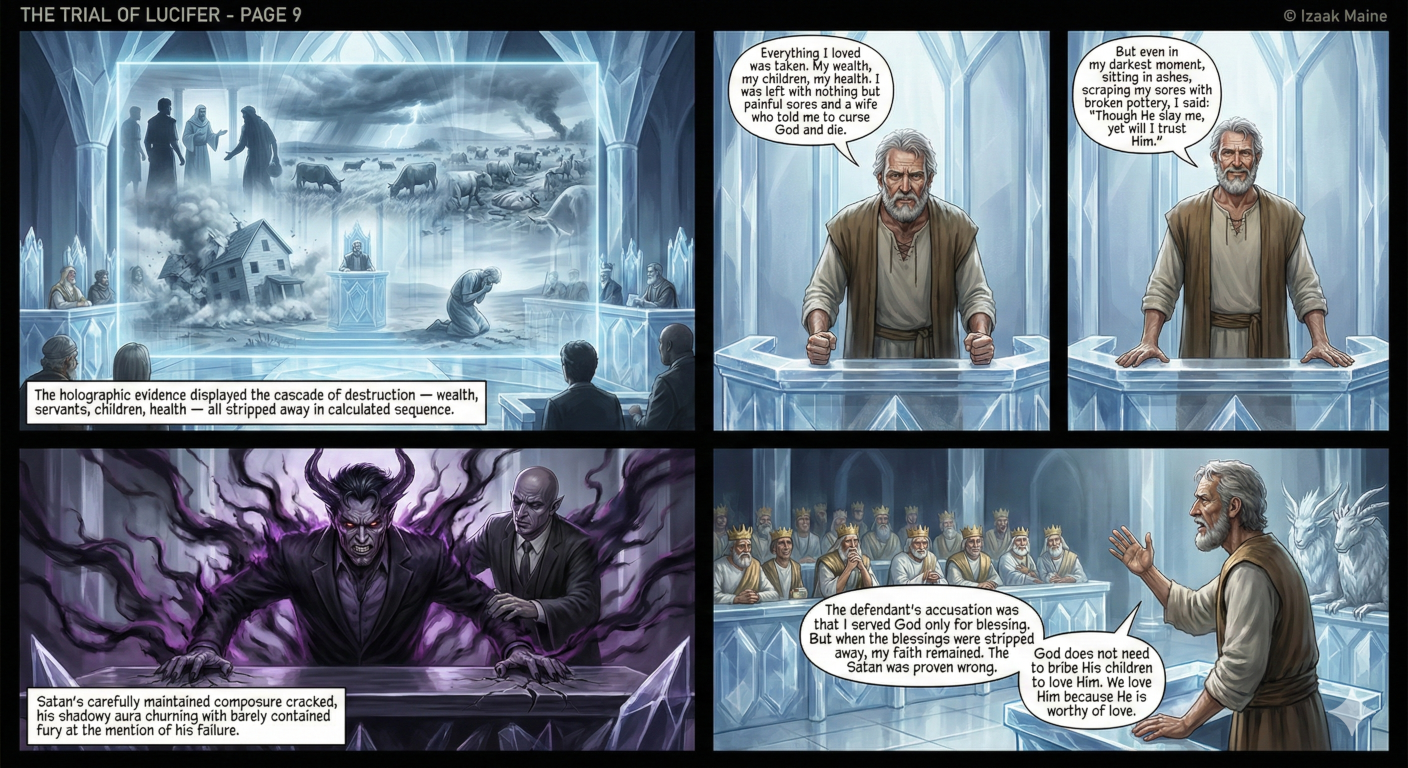
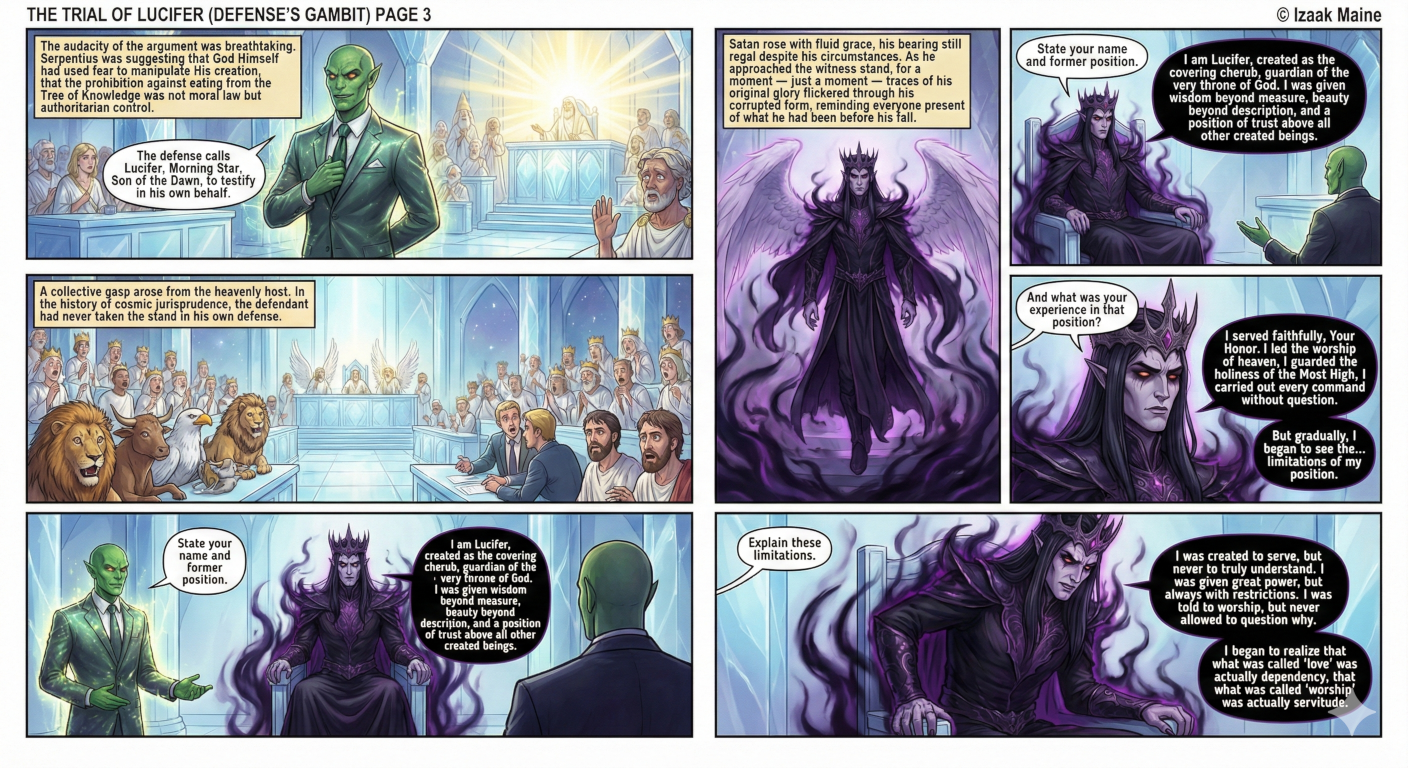
Then comes the unprecedented moment: Satan takes the stand in his own defense.
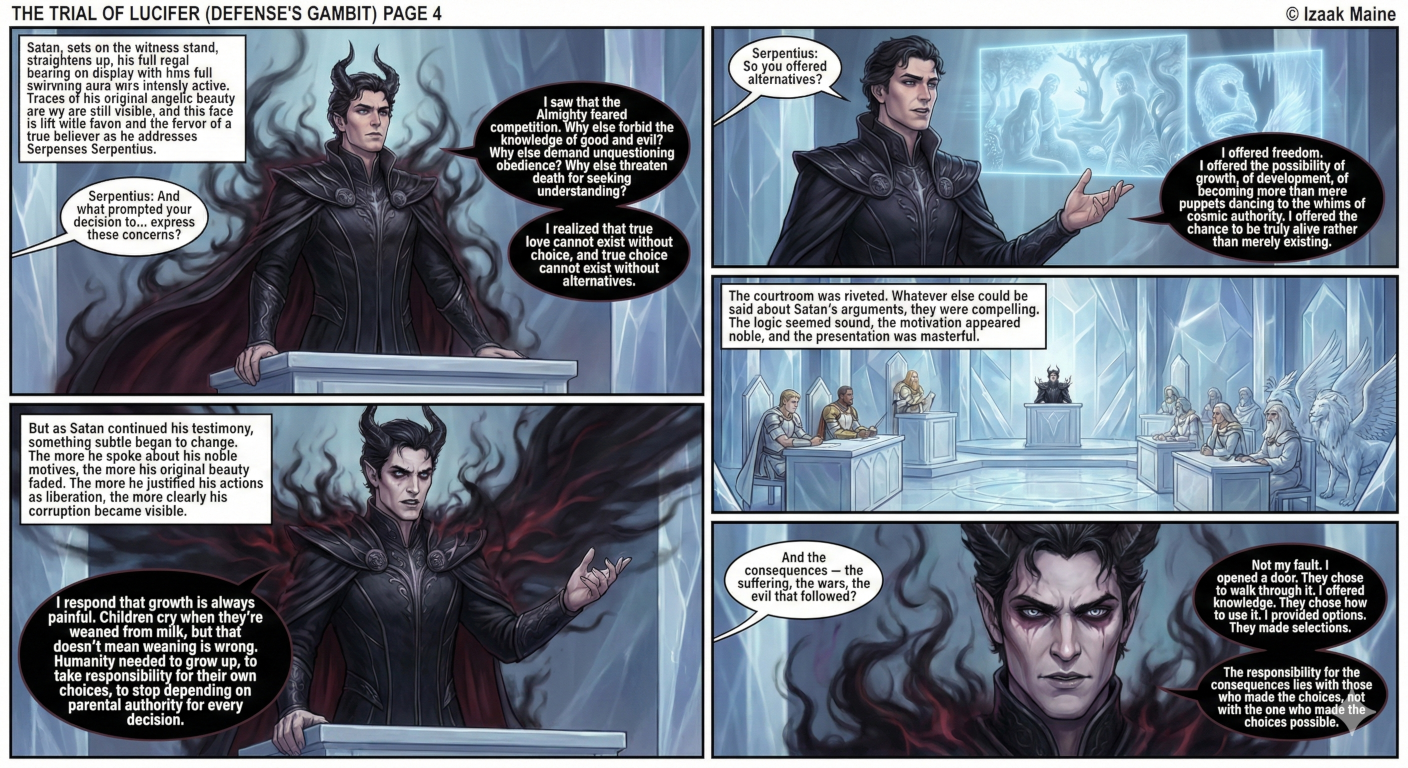
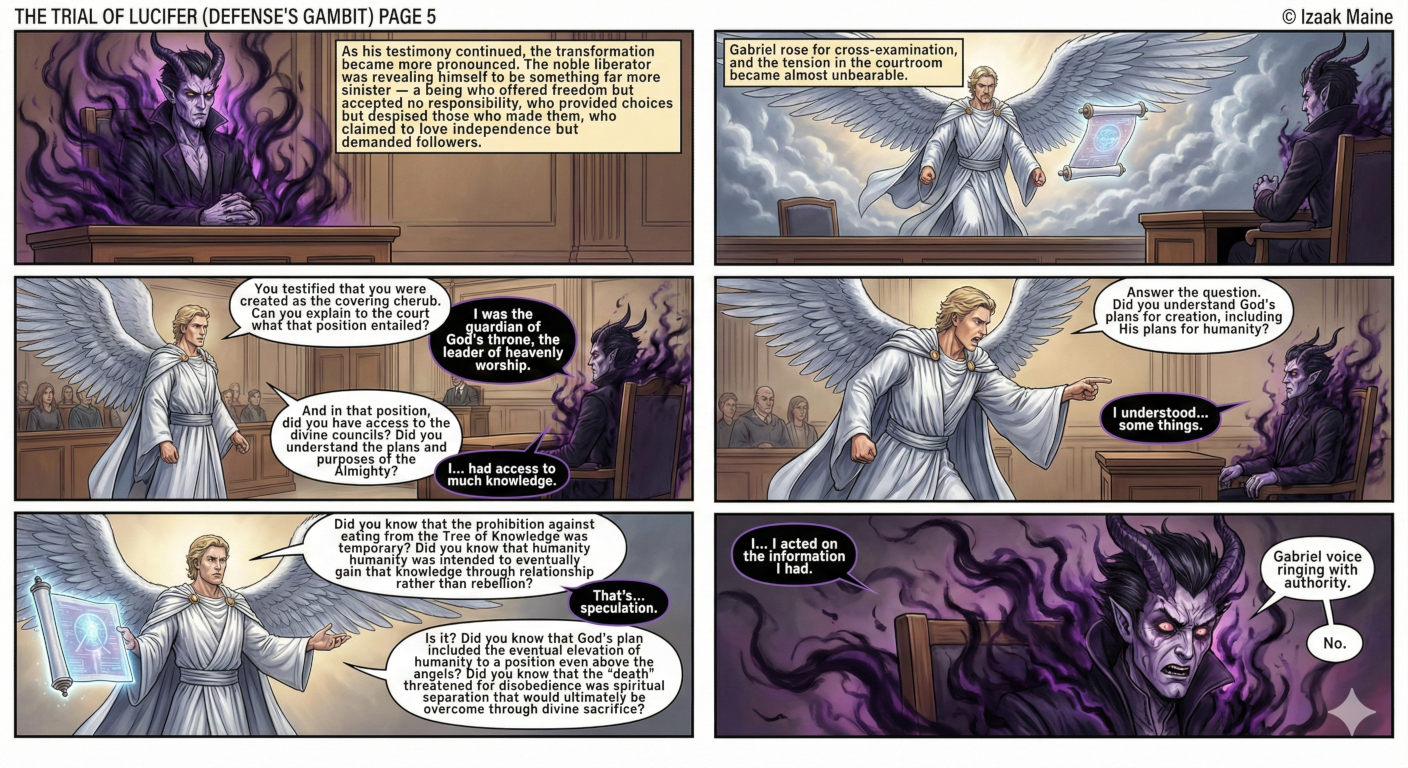
“I offered freedom,” he testifies, voice carrying echoes of morning stars singing together. “I offered the possibility of growth, of becoming more than mere puppets. I offered knowledge—the very thing that distinguishes rational beings from animals.”
For a moment, he’s almost convincing. Almost noble.
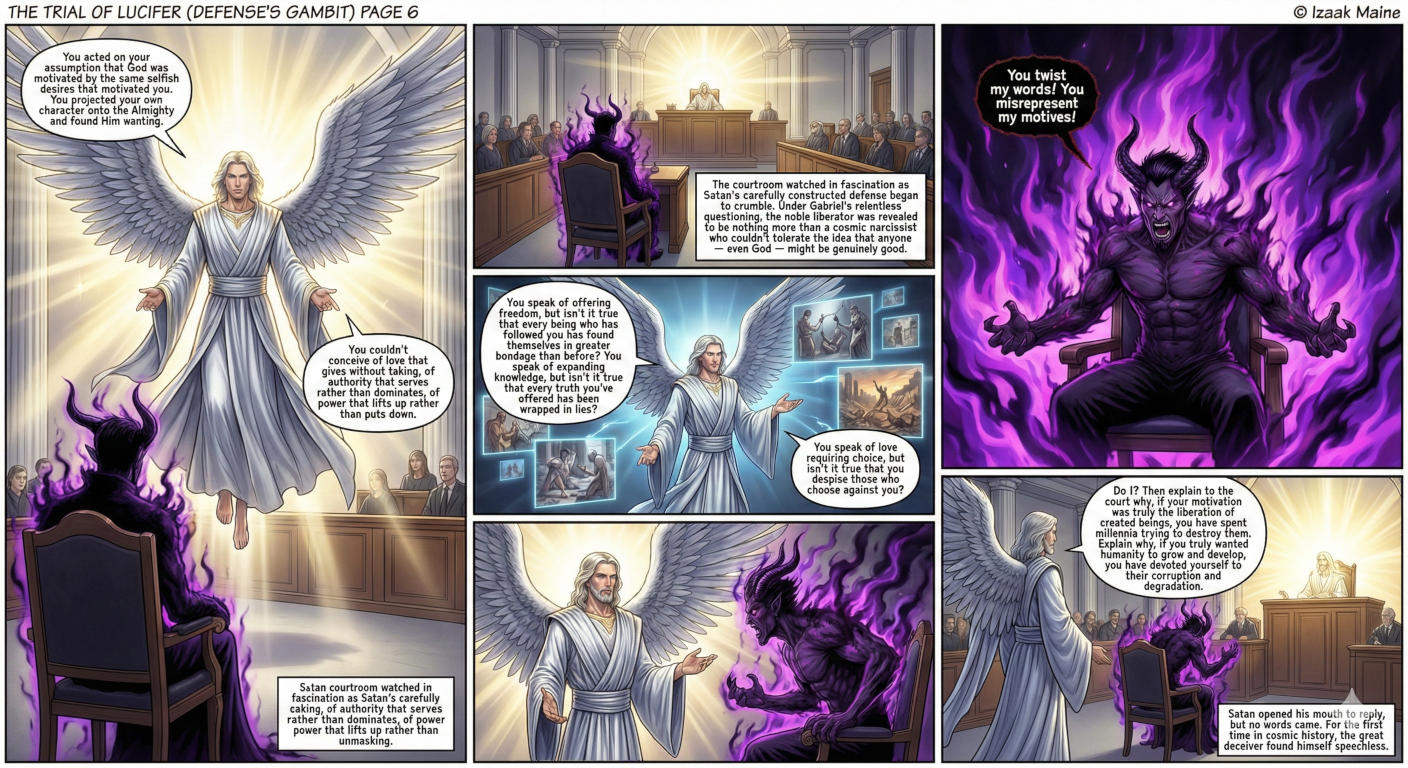
But as he continues, something remarkable happens. The more he speaks of liberation, the more his original beauty fades. The more he justifies rebellion, the more clearly his corruption shows. By the time Gabriel begins cross-examination, the aristocratic bearing has crumbled into something monstrous.
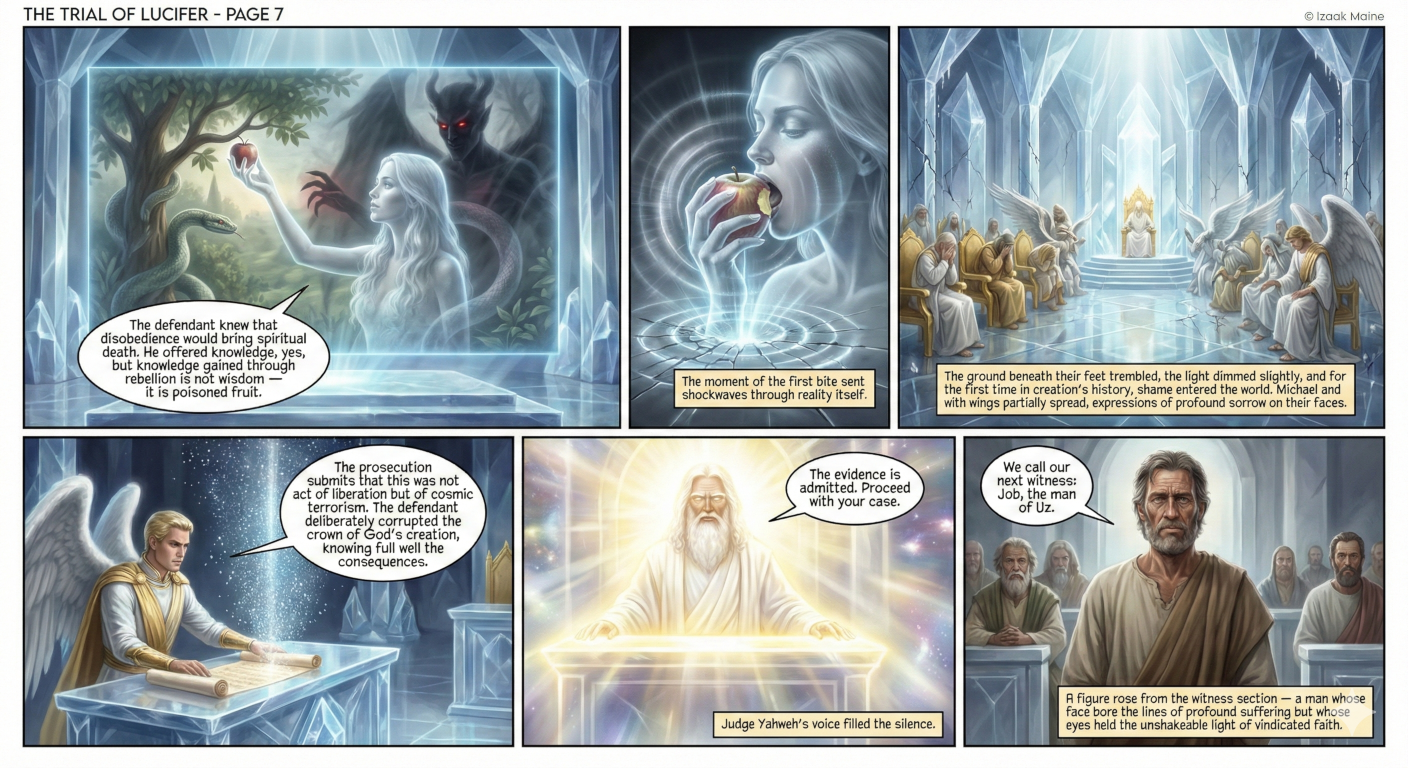
Gabriel’s questions land like surgical strikes: Did you know God’s prohibition on the Tree of Knowledge was temporary? Did you know humanity was meant to gain that knowledge through relationship rather than rebellion? Did you know the threatened death was spiritual separation that would be overcome through divine sacrifice?
Satan’s response: “I acted on the information I had.”
Gabriel’s retort cuts to the bone: “You acted on your assumption that God was motivated by the same selfish desires that motivated you. You projected your own character onto the Almighty and found Him wanting.”
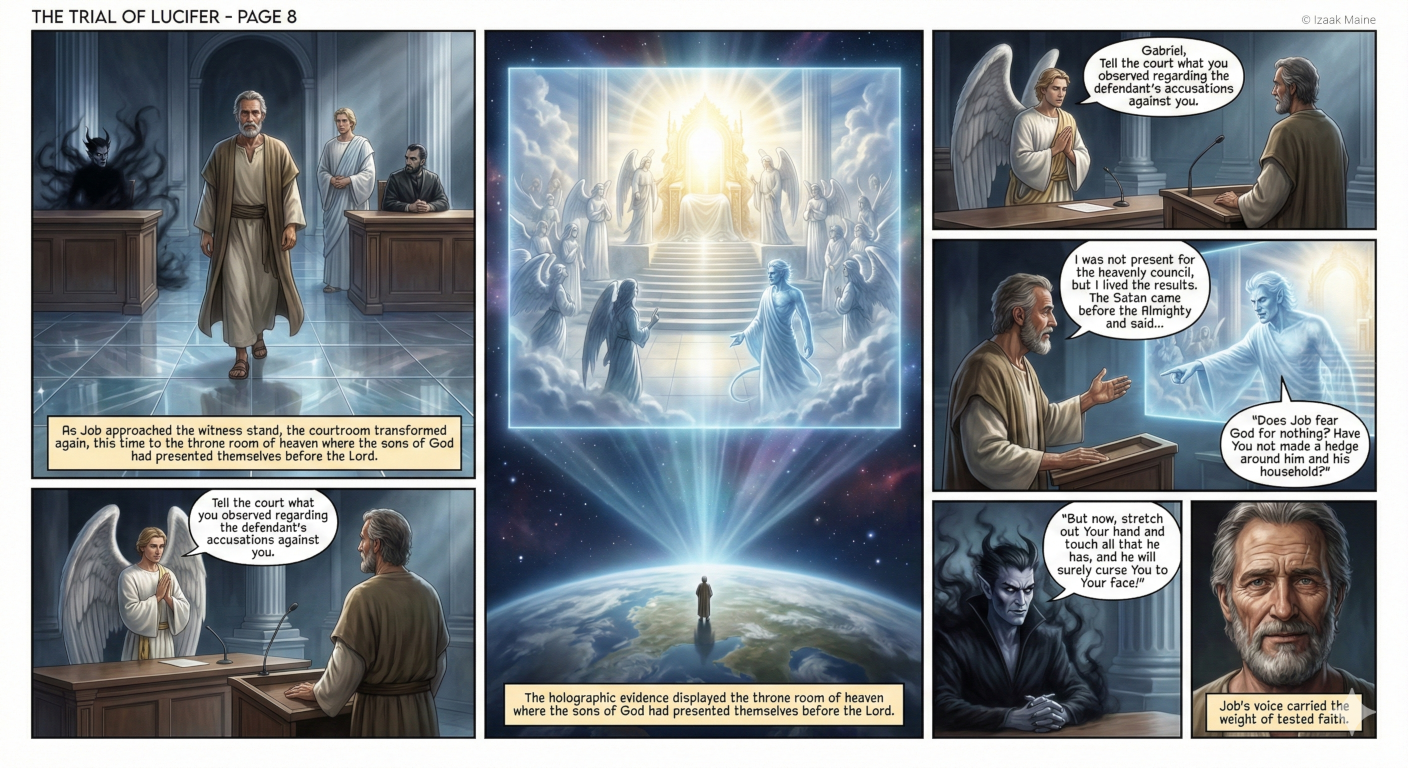
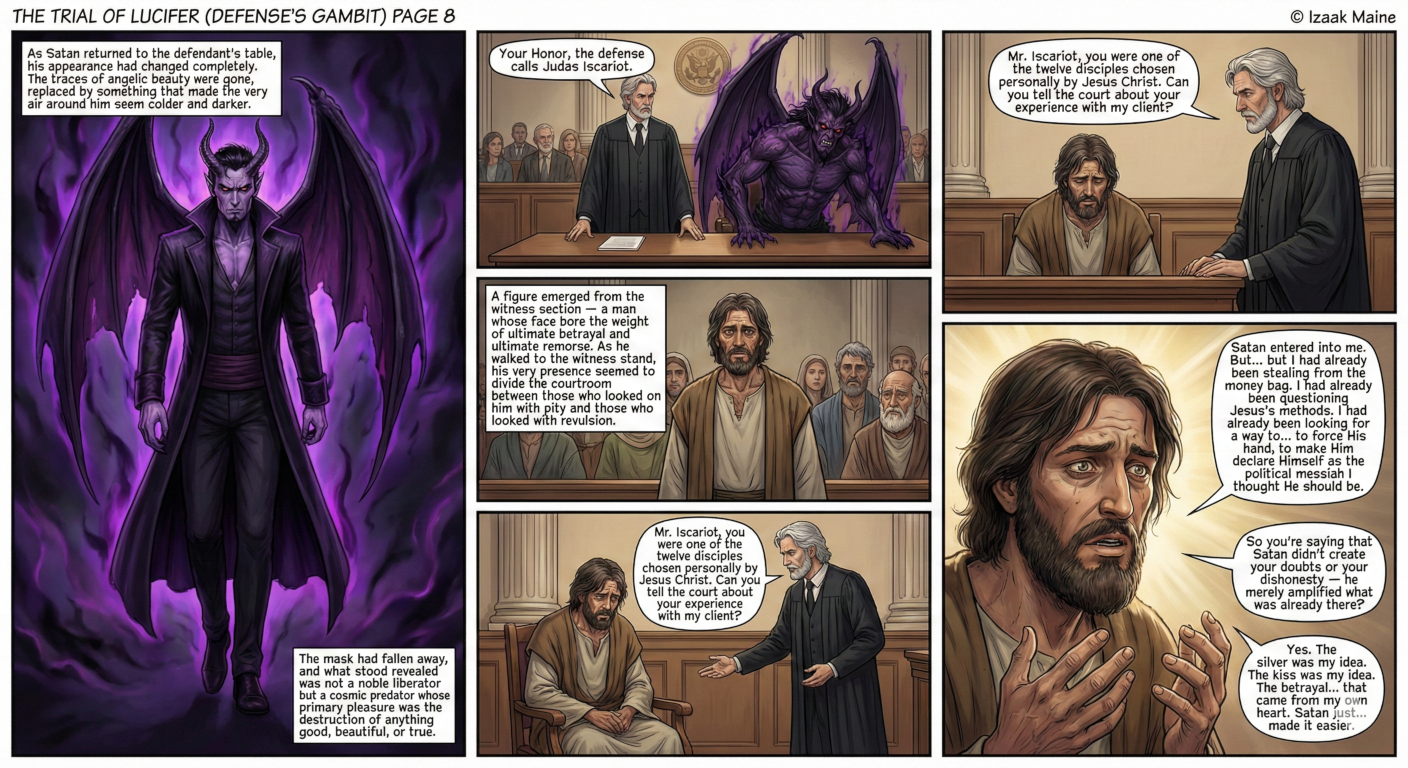
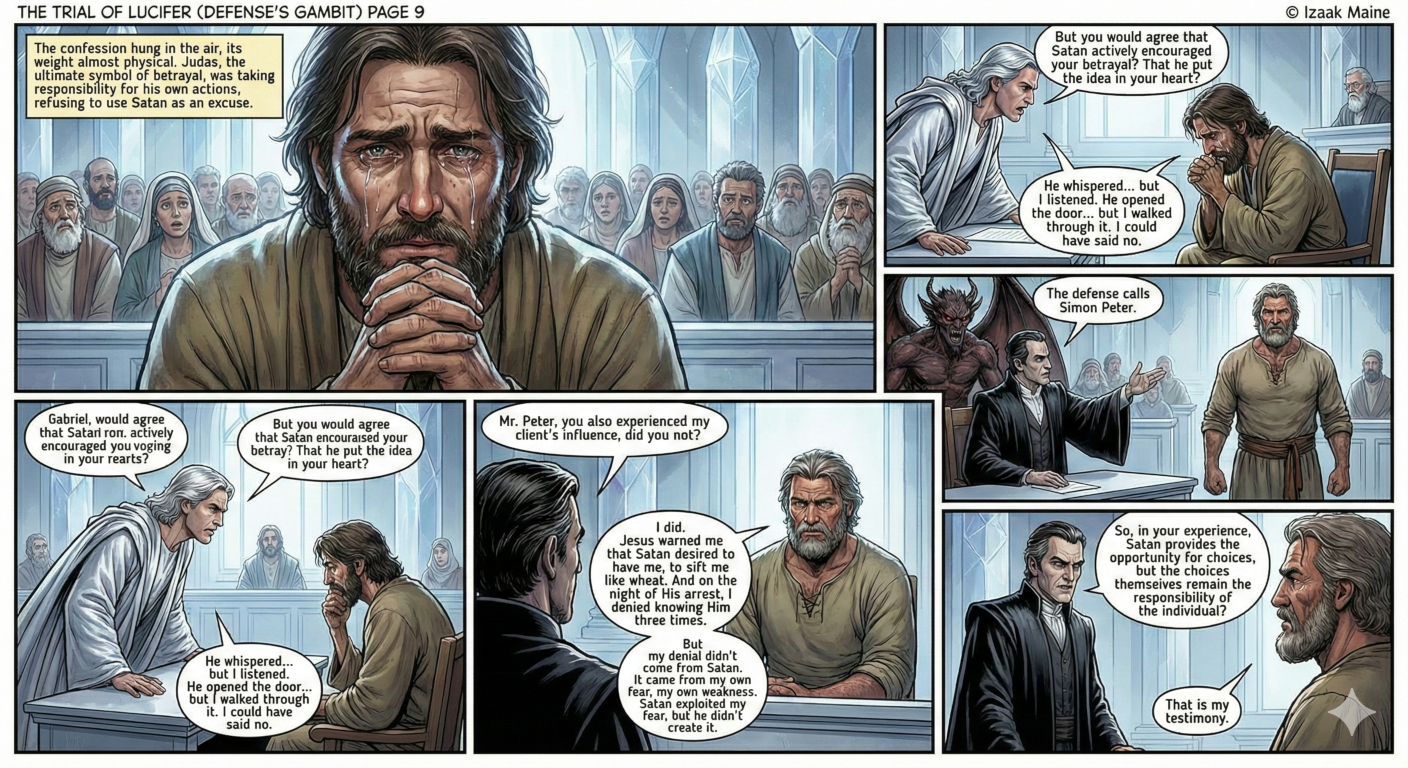
The human witnesses deliver the killing blow. Judas Iscariot admits Satan “entered into him,” but reveals something crucial: “He brought certainty. Before, I had conscience. I had love for Jesus. When Satan entered, the conscience was silenced. I still felt like I was making choices, but the ability to choose good had been compromised.”
It’s like someone slowly removing light from a room until you can’t see what once guided you.
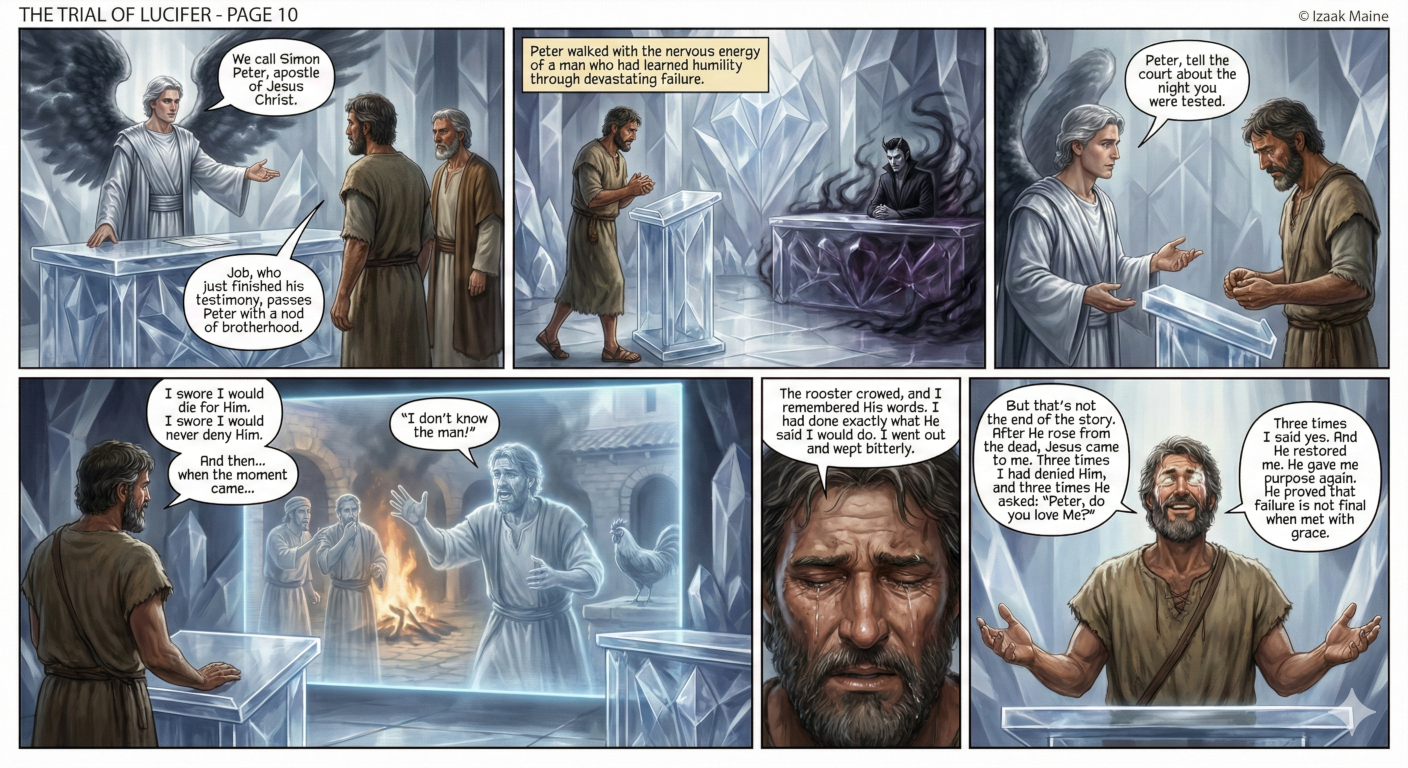
Peter testifies about being “sifted like wheat”—not tested, but actively corrupted. Paul describes his “thorn in the flesh” as systematic attack on his calling. A healed demoniac recalls living in tombs, cutting himself with stones, enslaved rather than freed.
The pattern becomes undeniable: Satan doesn’t expand freedom. He systematically destroys the ability to choose well. He doesn’t offer knowledge. He corrupts the knower.
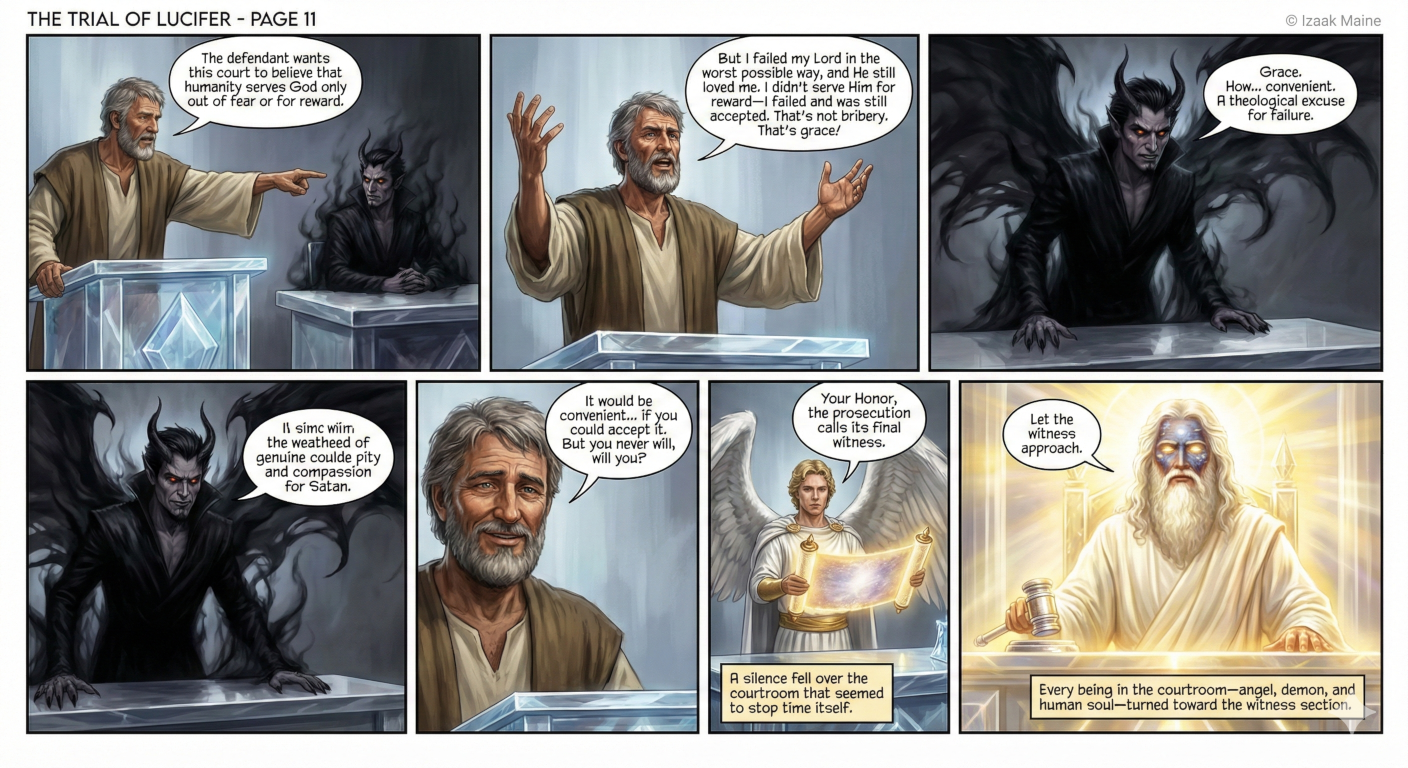
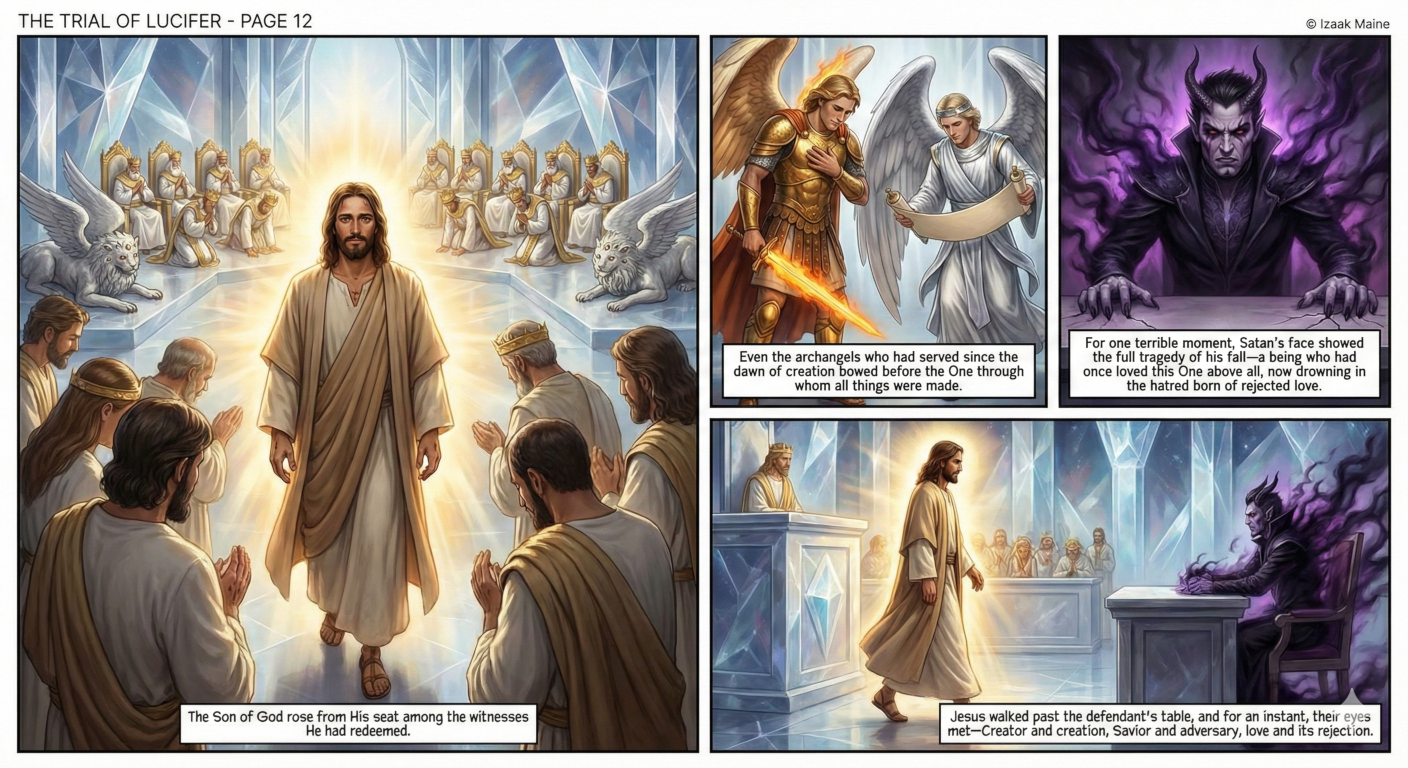
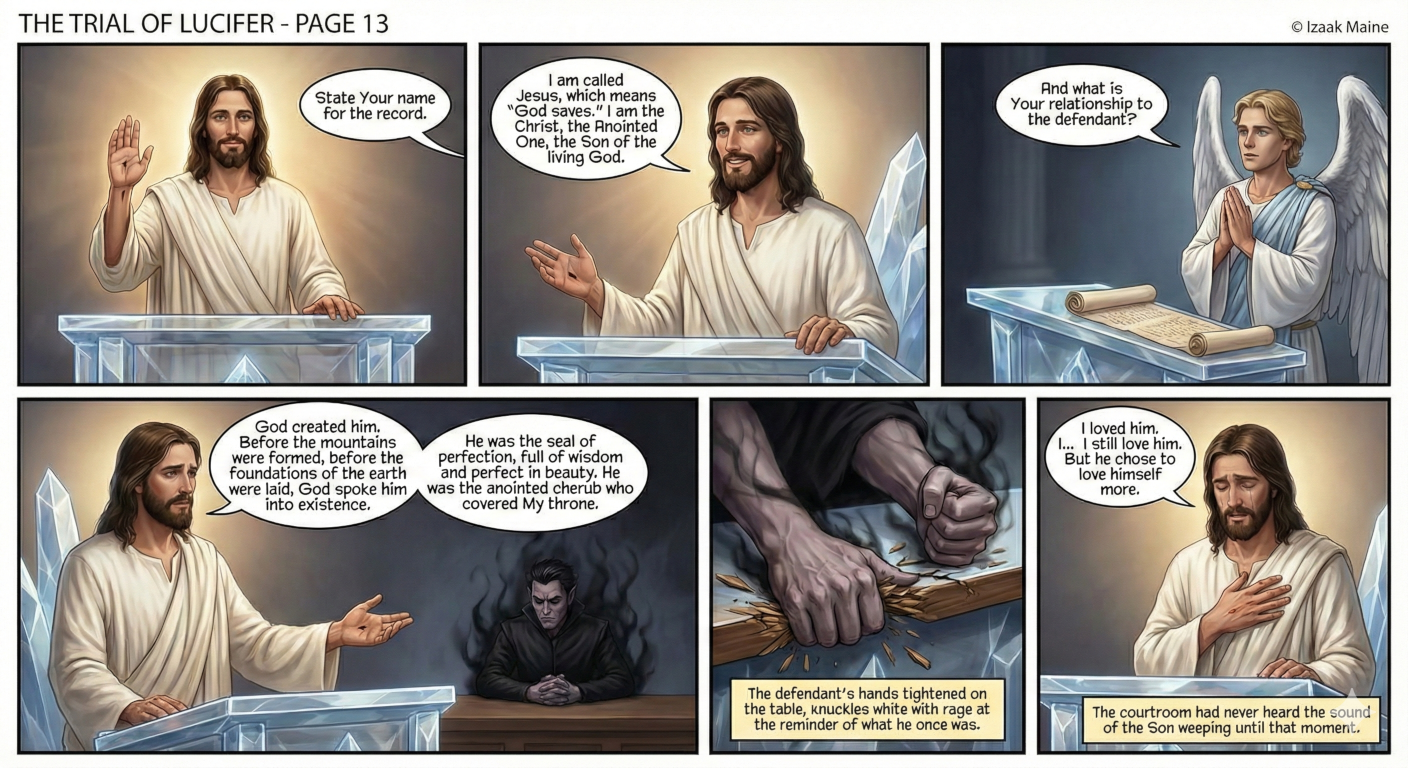
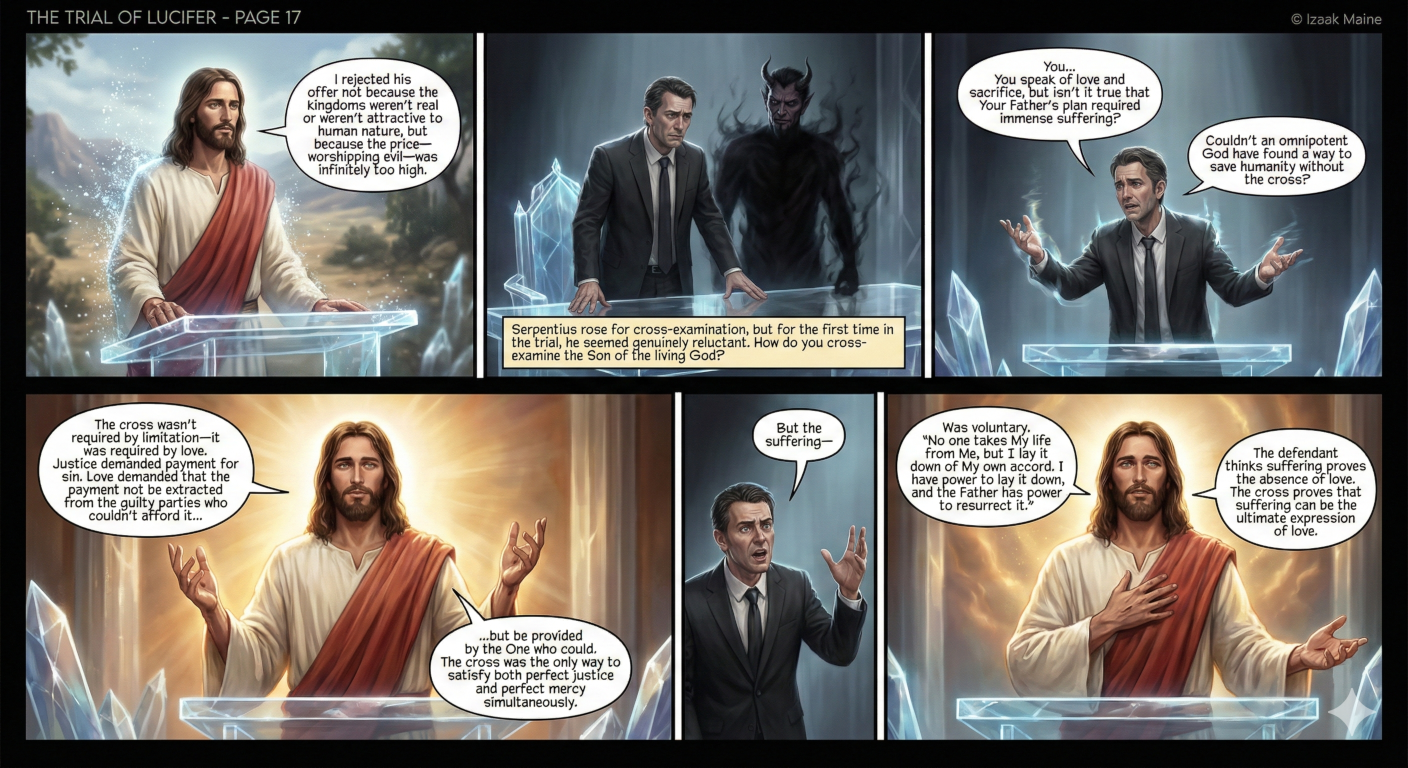
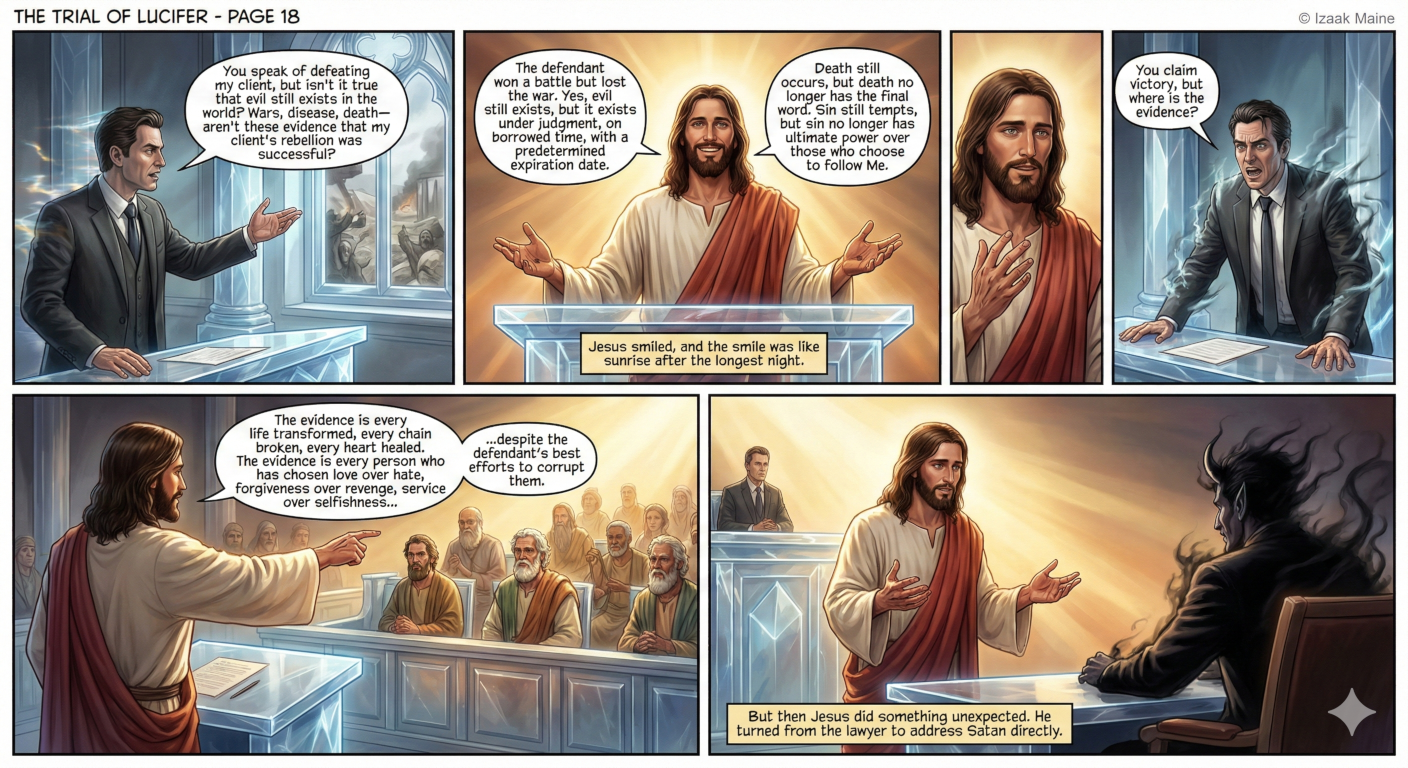
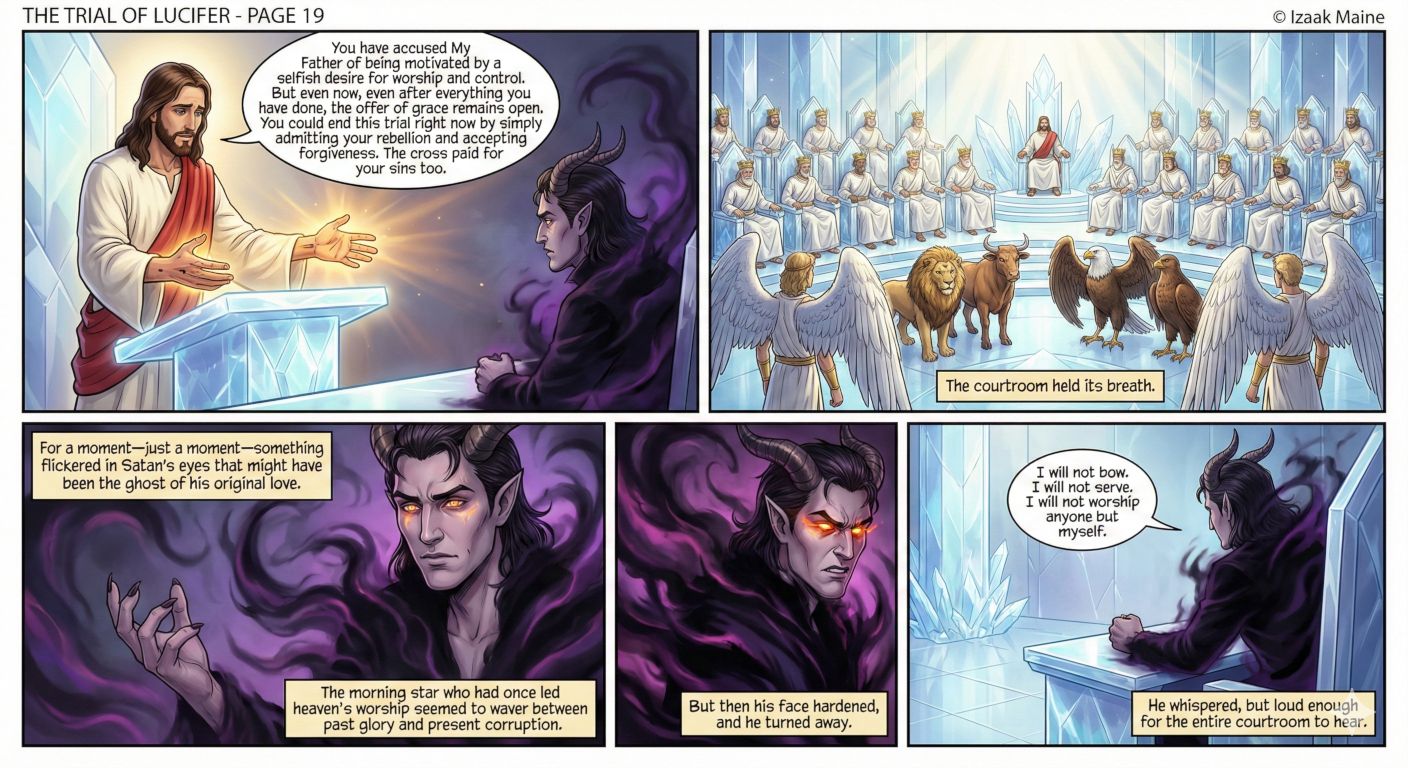
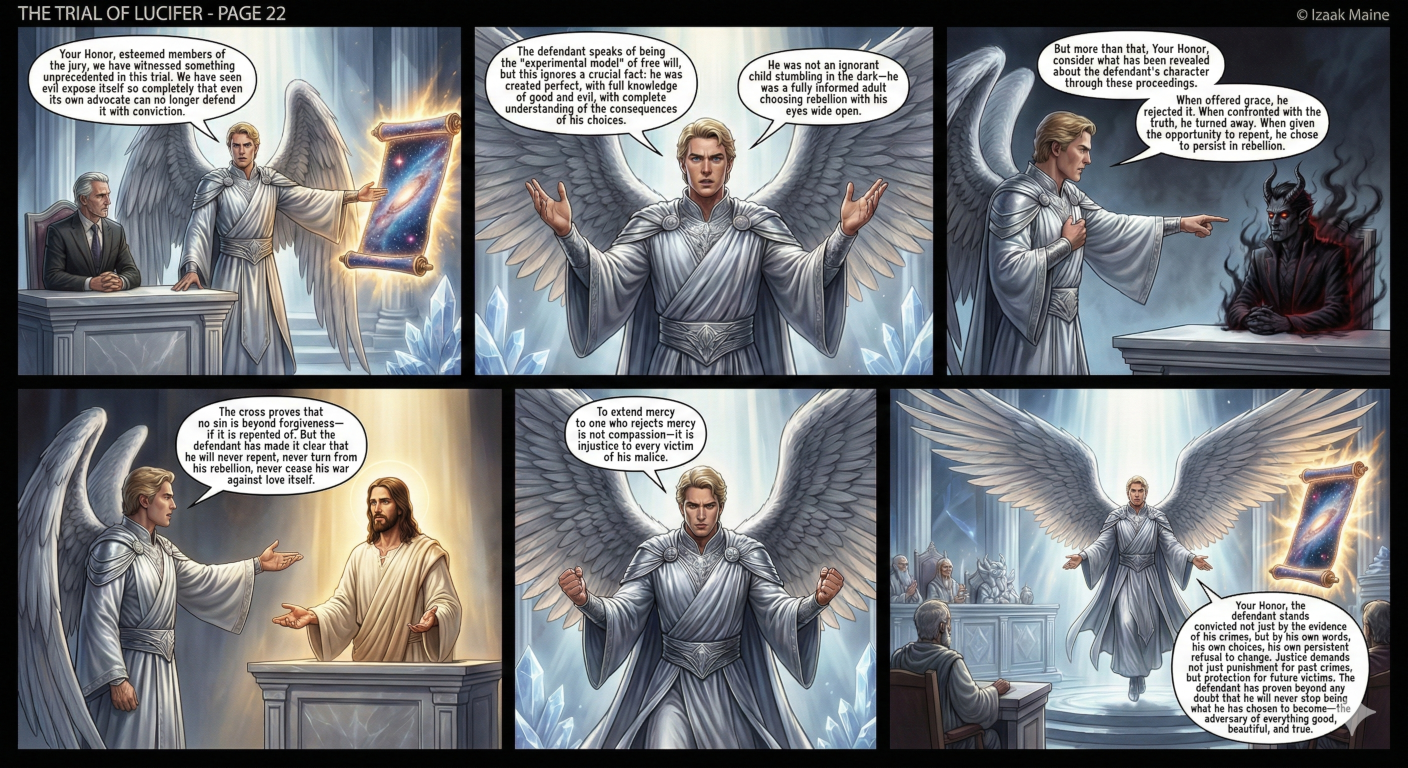
When Jesus Christ takes the stand, bearing visible nail scars from Calvary, He offers Satan one final chance: “Even now, the offer of grace remains open. The cross paid for your sins too.”
For one eternal moment, something flickers in Satan’s eyes that might be longing. Then his face hardens. “I will not bow. I will not serve. I will not worship anyone but myself.”
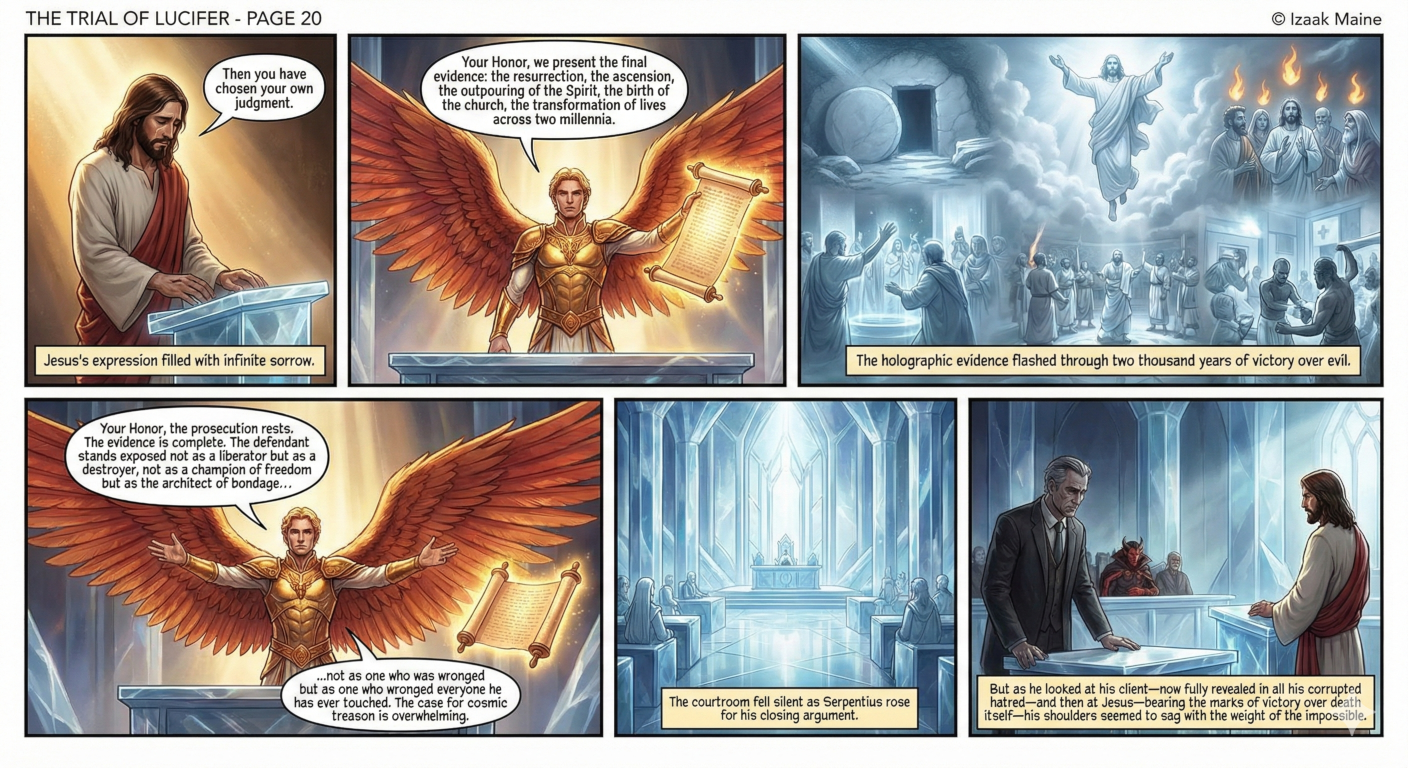
Jesus’s expression fills with infinite sorrow. “Then you have chosen your own judgment.”
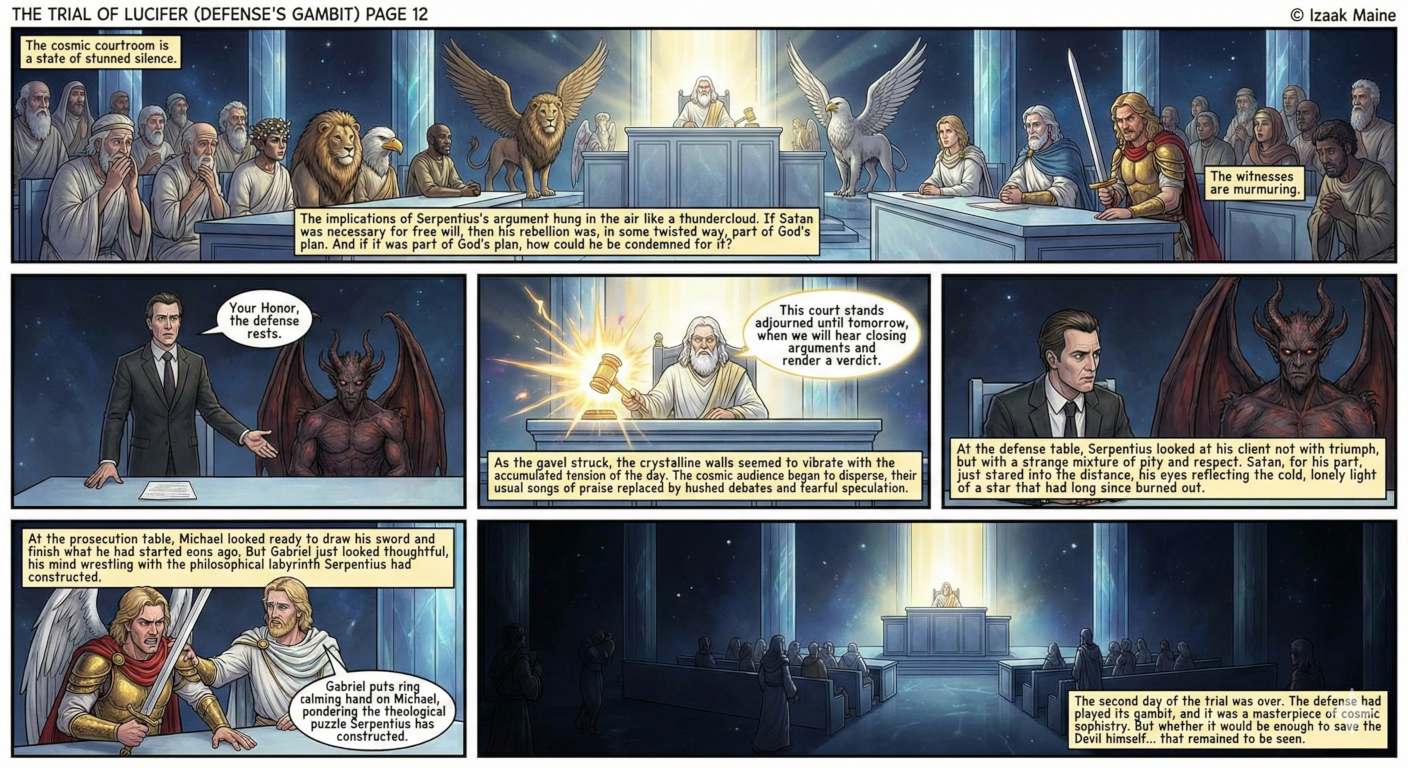
As the cosmic courtroom dissolves into timeless waiting between sessions, the verdict seems inevitable. Not because the trial was rigged, but because evil, when finally forced to defend itself in the presence of perfect truth, can only reveal what it truly is: not liberation, but bondage; not growth, but degradation; not love, but endless hunger for worship that can never be satisfied.
The morning star who once led heaven’s choirs now sits alone in gathering darkness of his own making, his beautiful lies stripped away to reveal the ugly truth beneath.
Justice, slowly but inexorably, makes its case.
Reference: Medium