The Restoration of Apostolic Christianity
A Systematic Exposition of Biblical Truth and the Exposure of Religious Error
PREFACE
This document presents the unassailable truths of apostolic Christianity as preserved and restored through the Church of Christ (Iglesia ni Cristo). Building from the foundational axioms of Scripture alone, we demonstrate how the original faith taught by Christ and His apostles was corrupted through the Great Apostasy, and how God has restored the true Church in these last days.
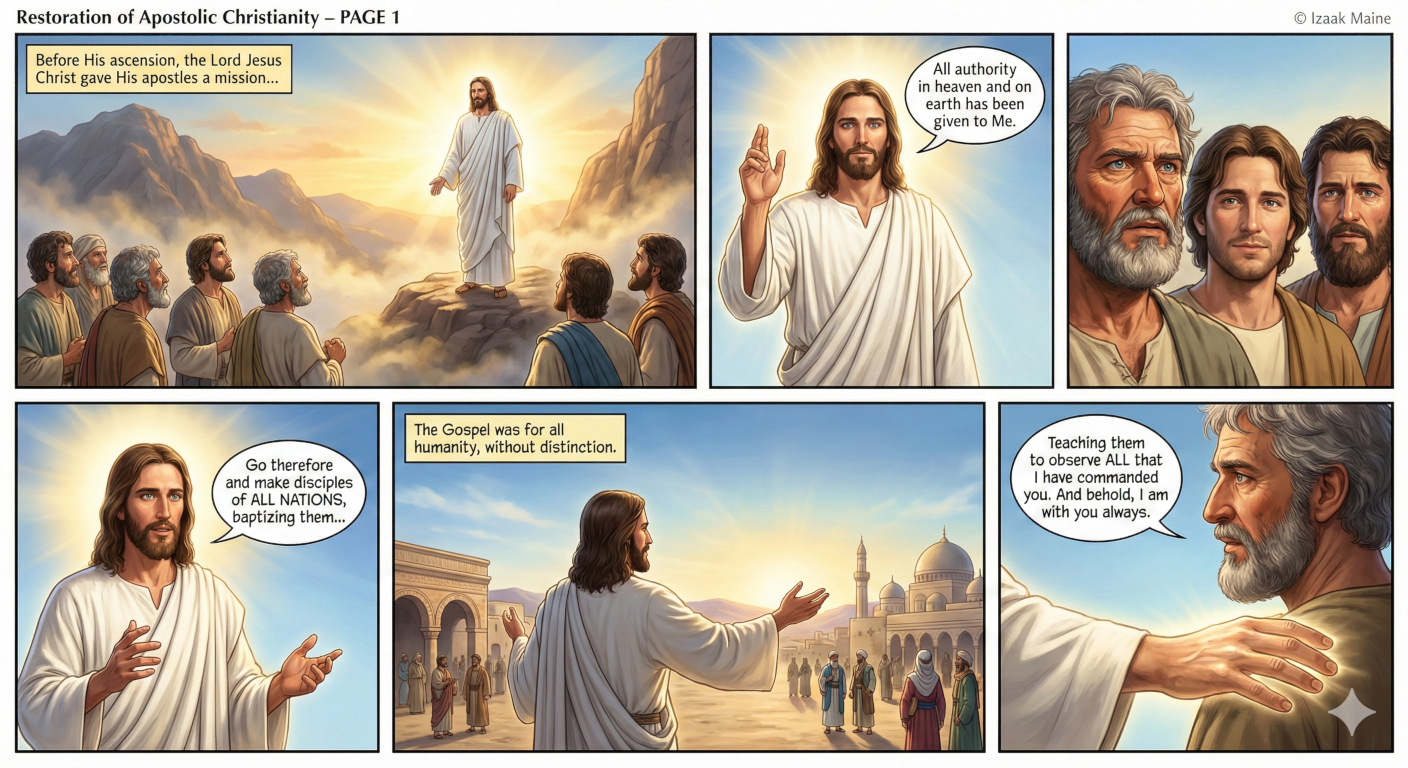
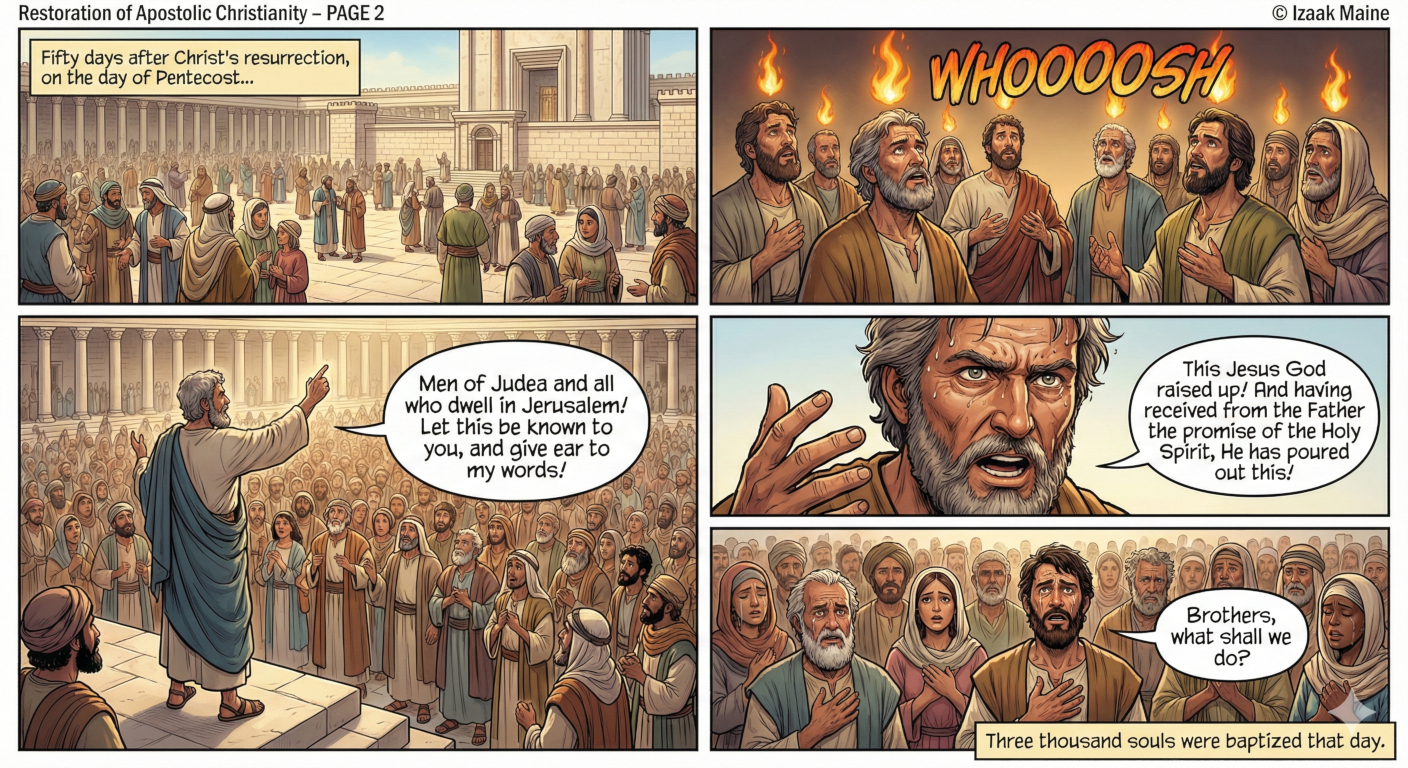
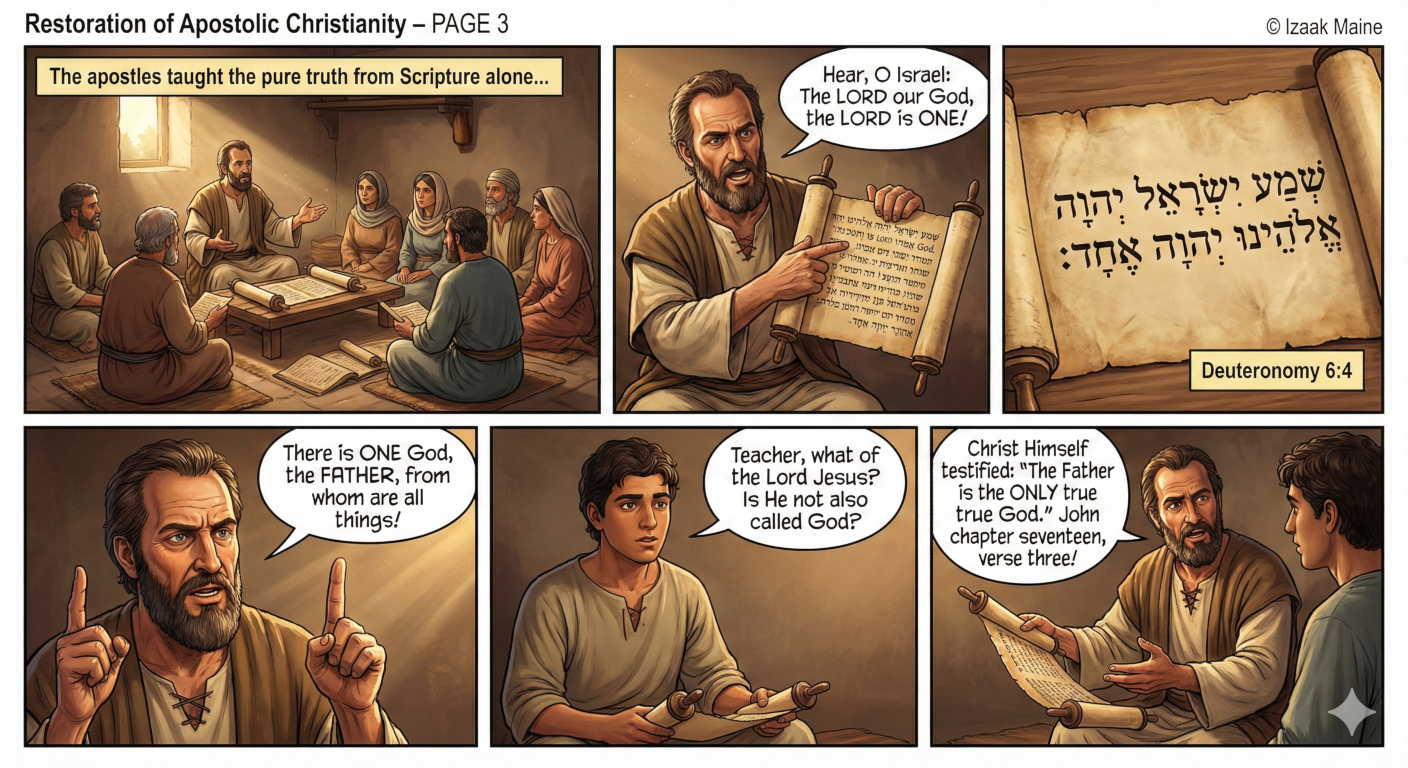
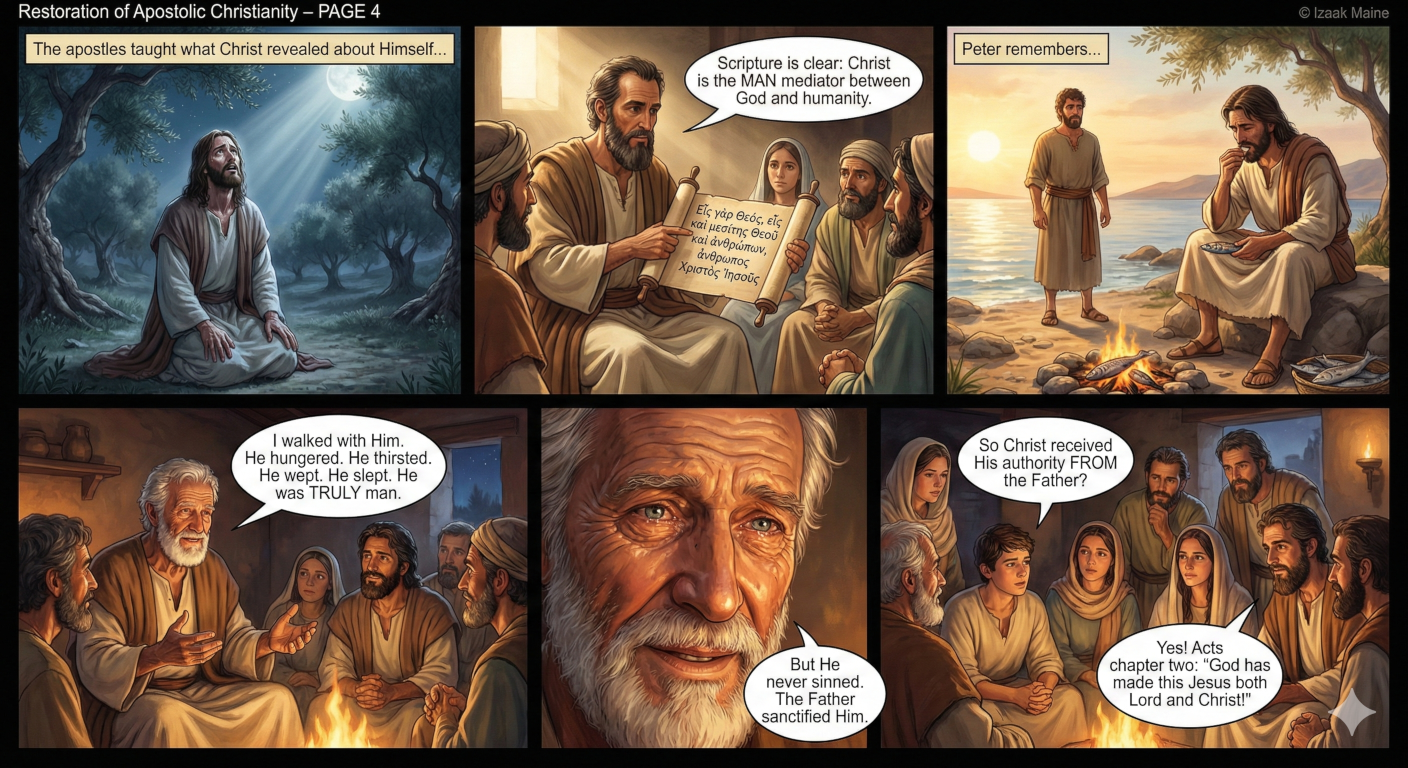
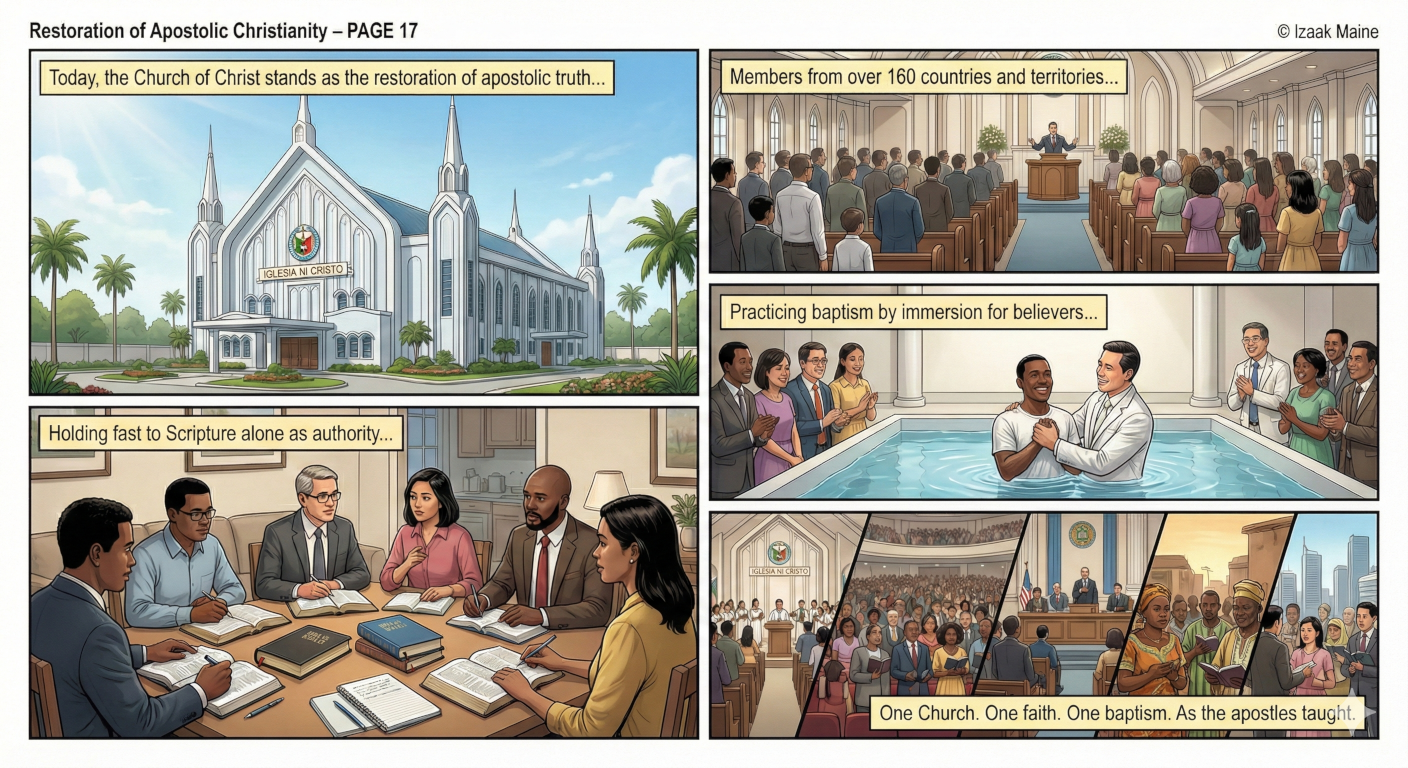
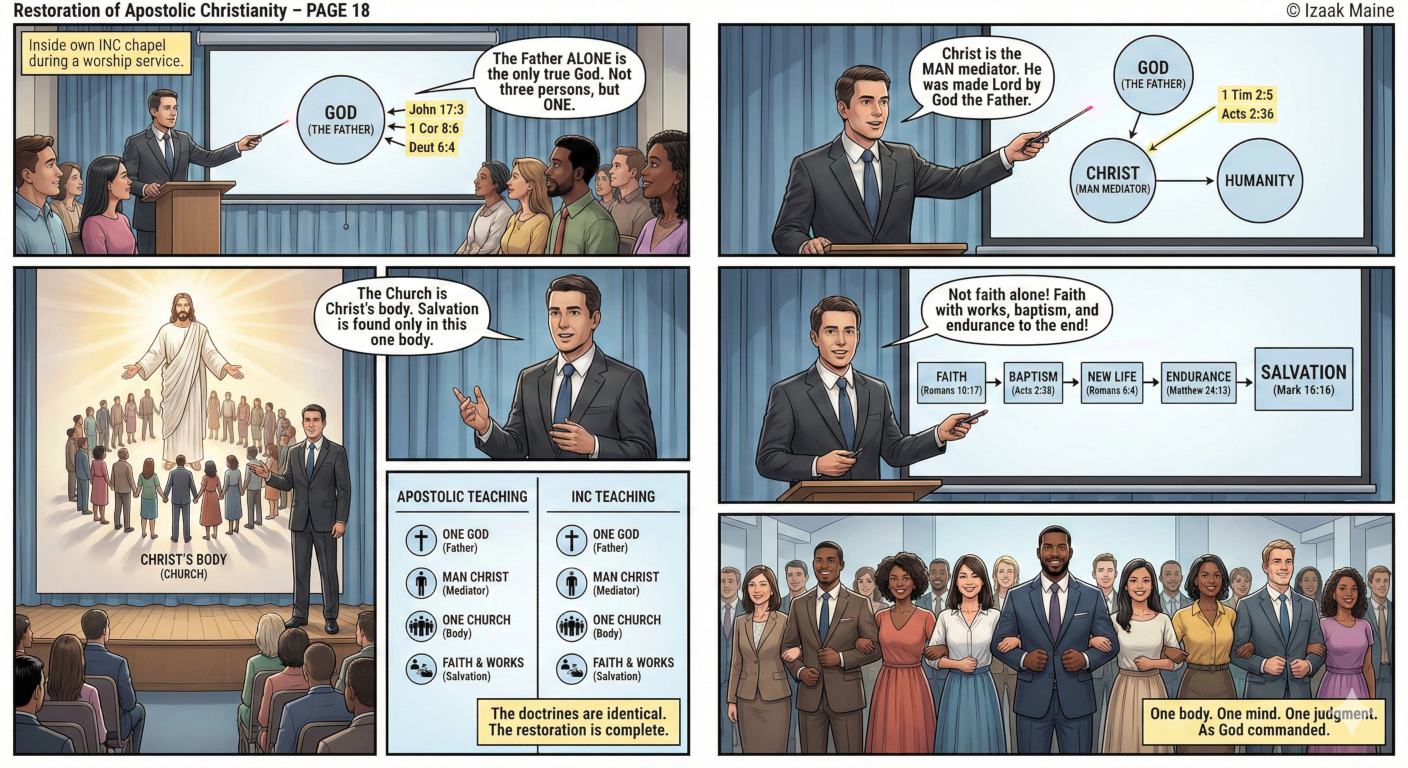
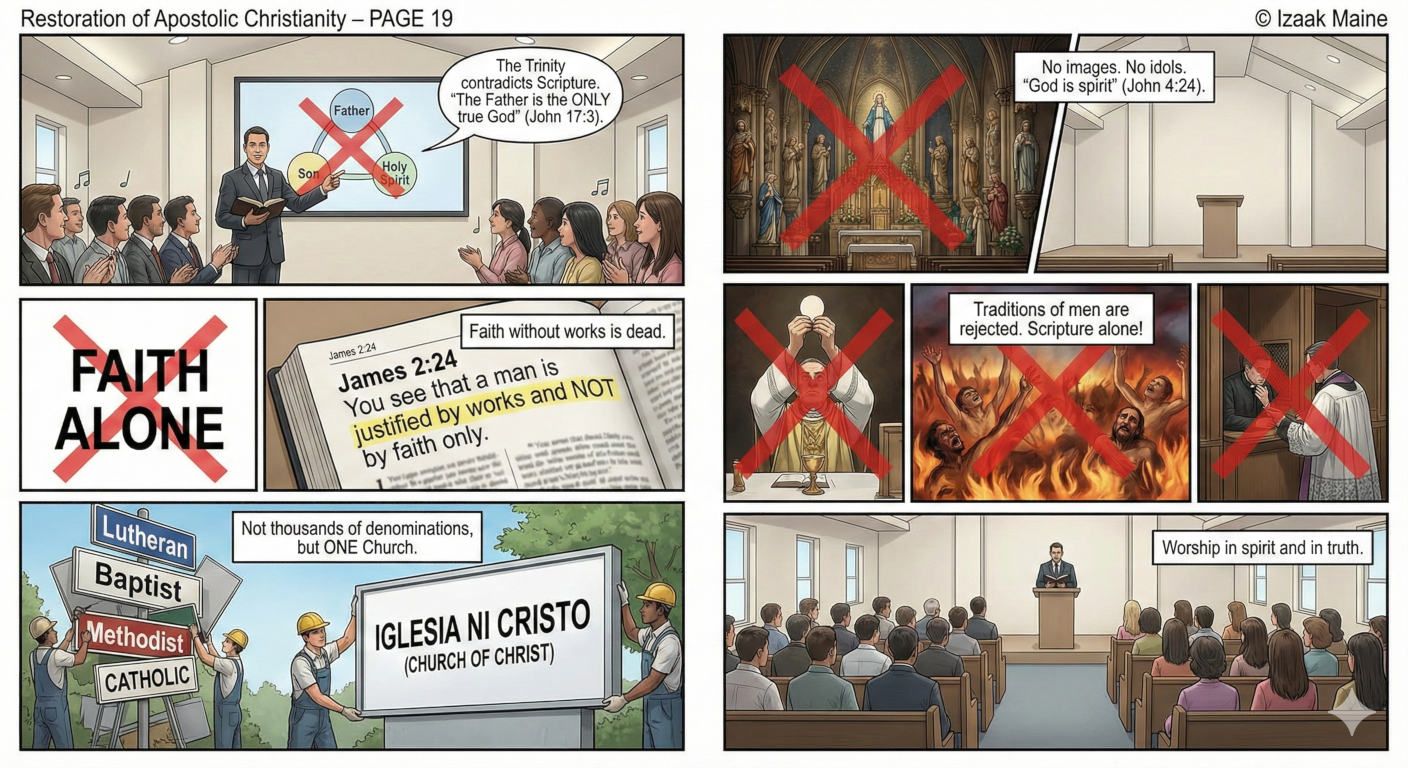
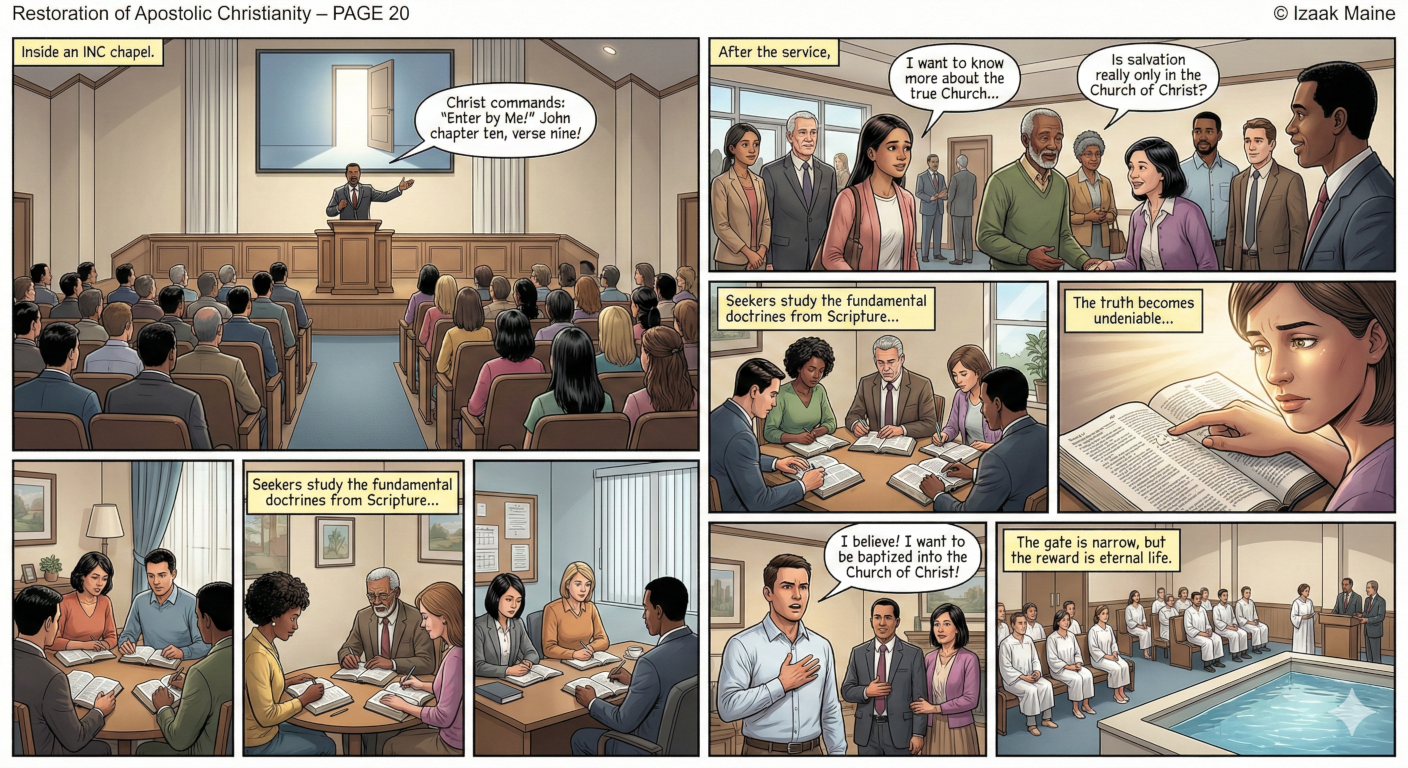
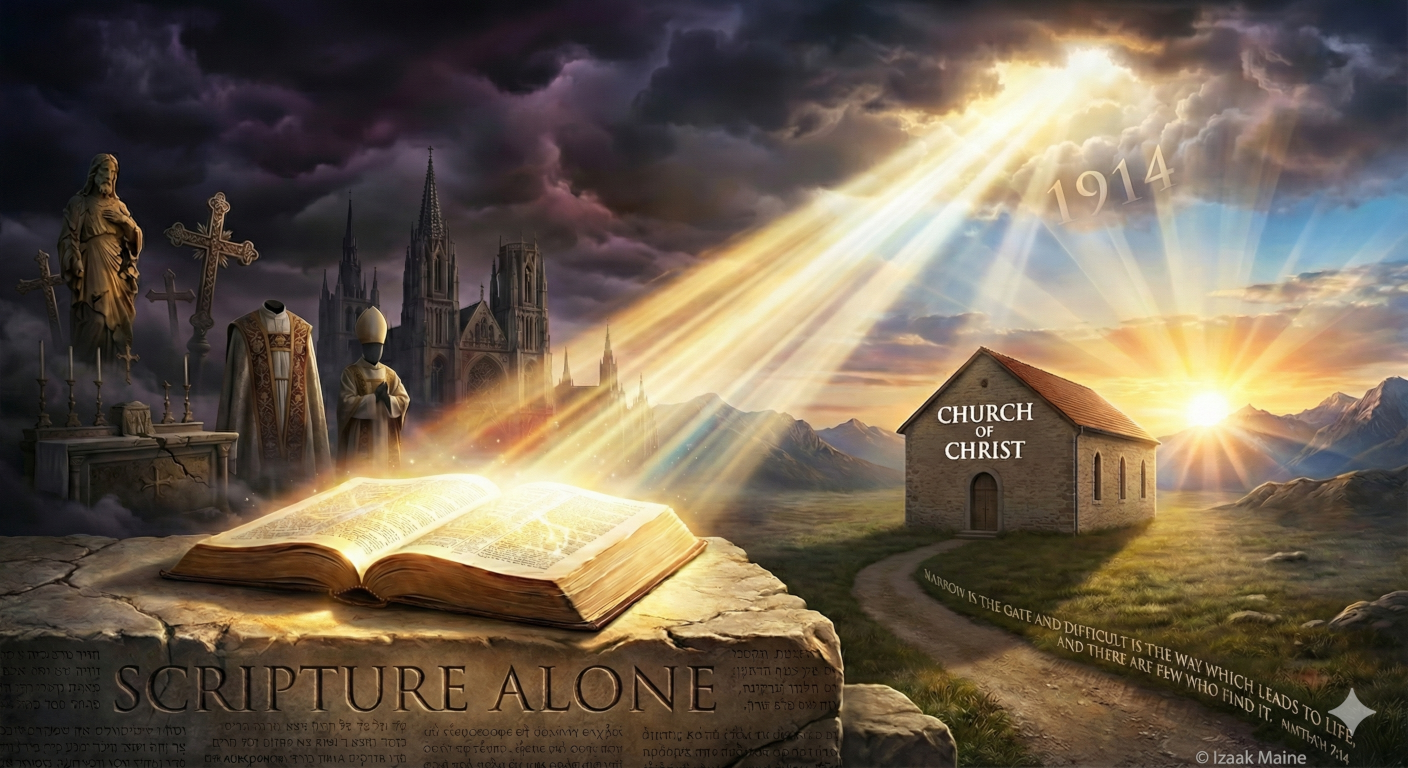
We proceed systematically:
- Establishing the immovable foundation: the authority of Scripture
- Building the core theology: the nature of God, Christ, and salvation
- Exposing the false doctrines that corrupted Christianity
- Demonstrating the restoration of apostolic faith
This exposition relies solely on biblical evidence, employing sound exegesis and logical reasoning to reveal what has been hidden by centuries of tradition and human innovation.
PART I: THE UNASSAILABLE FOUNDATION
Chapter 1: Scripture Alone as Authority
AXIOM 1: Divine Revelation Is Written in Scripture
Biblical Foundation:
- God spoke to humanity through prophets and ultimately through Christ (Hebrews 1:1-2)
- God commanded His words to be written for preservation (Jeremiah 30:2)
- The Holy Scriptures contain God’s inspired words (2 Timothy 3:15-17)
Theological Principle: Divine revelation must be accessible, verifiable, and preserved. Oral tradition is subject to corruption and loss. God therefore commanded that His words be committed to writing, creating an objective, permanent standard for faith.
AXIOM 2: Scripture Is Without Error
Biblical Foundation:
- The writers were divinely guided, preventing errors (Revelation 10:4)
- God’s word is truth (John 17:17)
- God’s words have perfect fulfillment (Isaiah 46:11)
Verification: Scripture proves itself through fulfilled prophecy:
- World wars followed by famine (Matthew 24:6-8) - fulfilled 1914-1918 and 1939-1945
- Increase in knowledge (Daniel 12:4) - fulfilled through technological revolution
- Perilous times with moral decay (2 Timothy 3:1-5) - fulfilled in modern era
AXIOM 3: Nothing Must Be Added or Subtracted
Biblical Foundation:
- “Do not go beyond what is written” (1 Corinthians 4:6)
- Severe warning against adding to or subtracting from God’s word (Revelation 22:18-19)
Implication: All human traditions, catechisms, creeds, and ecclesiastical pronouncements that add to or contradict Scripture must be rejected. This includes:
- The Catholic Catechism
- The Book of Mormon
- Protestant confessions that contradict Scripture
- Papal encyclicals and councils that innovate doctrine
- Any teaching not explicitly found in the Bible
AXIOM 4: Faith Based on Scripture Leads to Eternal Life
Biblical Foundation:
- Believing what is written leads to everlasting life (John 20:30-31)
- Scripture is profitable for doctrine, correction, and instruction in righteousness (2 Timothy 3:16-17)
Conclusion of Chapter 1: Scripture alone is the infallible, inerrant, sufficient, and final authority for Christian faith and practice. Any teaching that cannot be substantiated from Scripture must be rejected as human invention. This principle becomes the immovable foundation upon which all other truth rests.
Chapter 2: The Nature of the One True God
AXIOM 5: The Father Alone Is the Only True God
Biblical Foundation:
- Christ identified the Father alone as the only true God (John 17:1, 3)
- The apostles taught that the Father is the one God from whom all things come (1 Corinthians 8:6)
- Isaiah declared there is one God with no other besides Him (Isaiah 45:21)
Logical Structure:
- If the Father is “the only true God” (John 17:3)
- And “only” means “one and no other”
- Then no one else can be the true God
- Therefore, the Father alone is God
AXIOM 6: God Is Absolutely One - Not Three Persons
Biblical Foundation:
- “He is one God—there is no other God besides Him” (Isaiah 45:21)
- “Hear, O Israel: The LORD our God, the LORD is one” (Deuteronomy 6:4)
The Trinity Doctrine Contradicts Scripture:
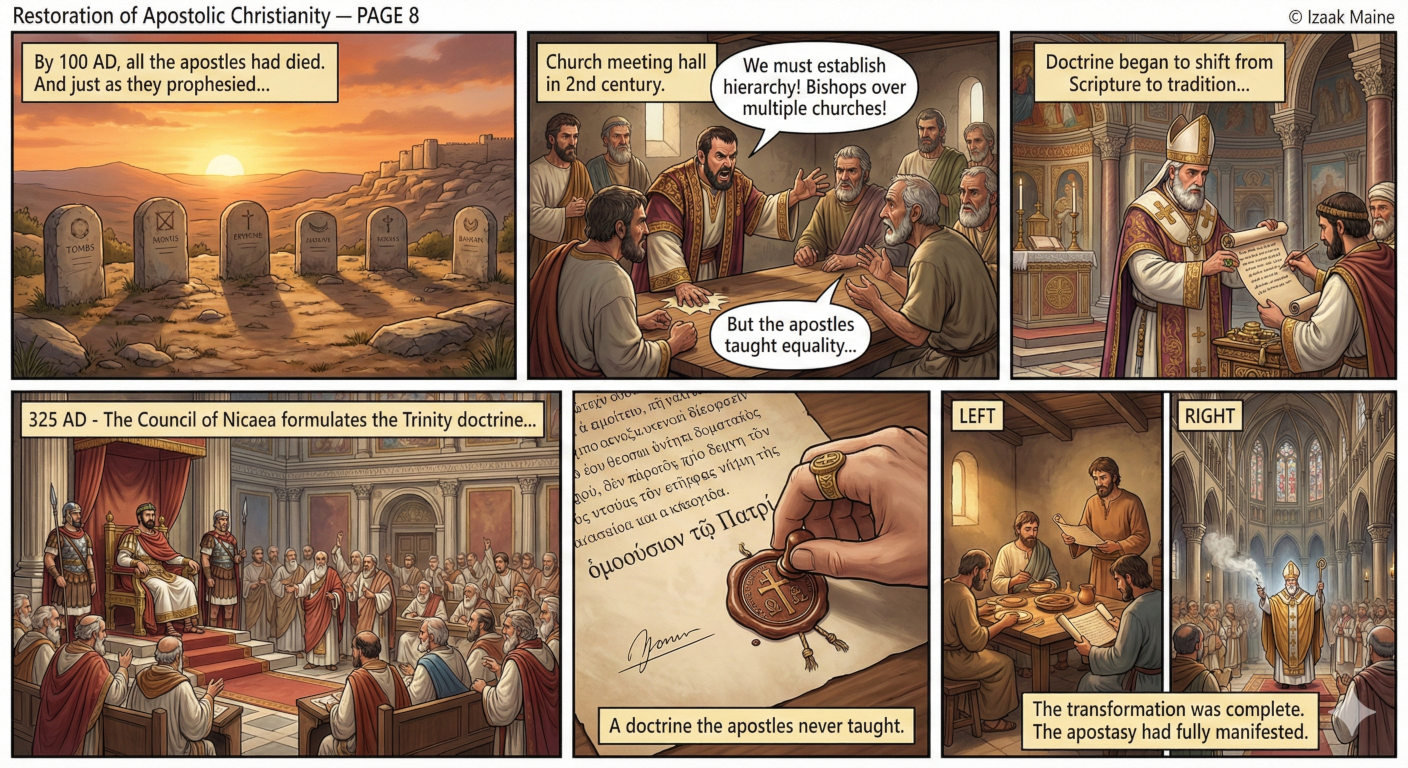
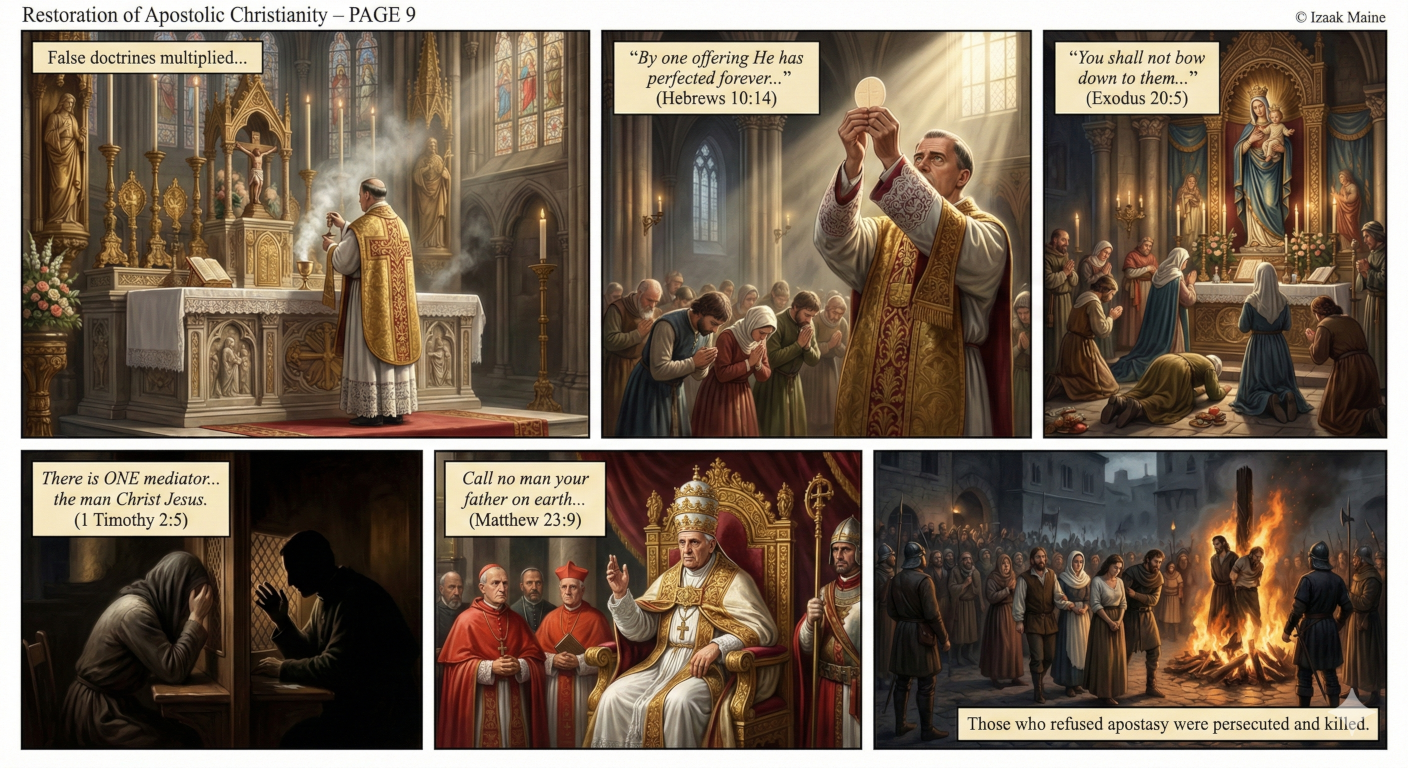
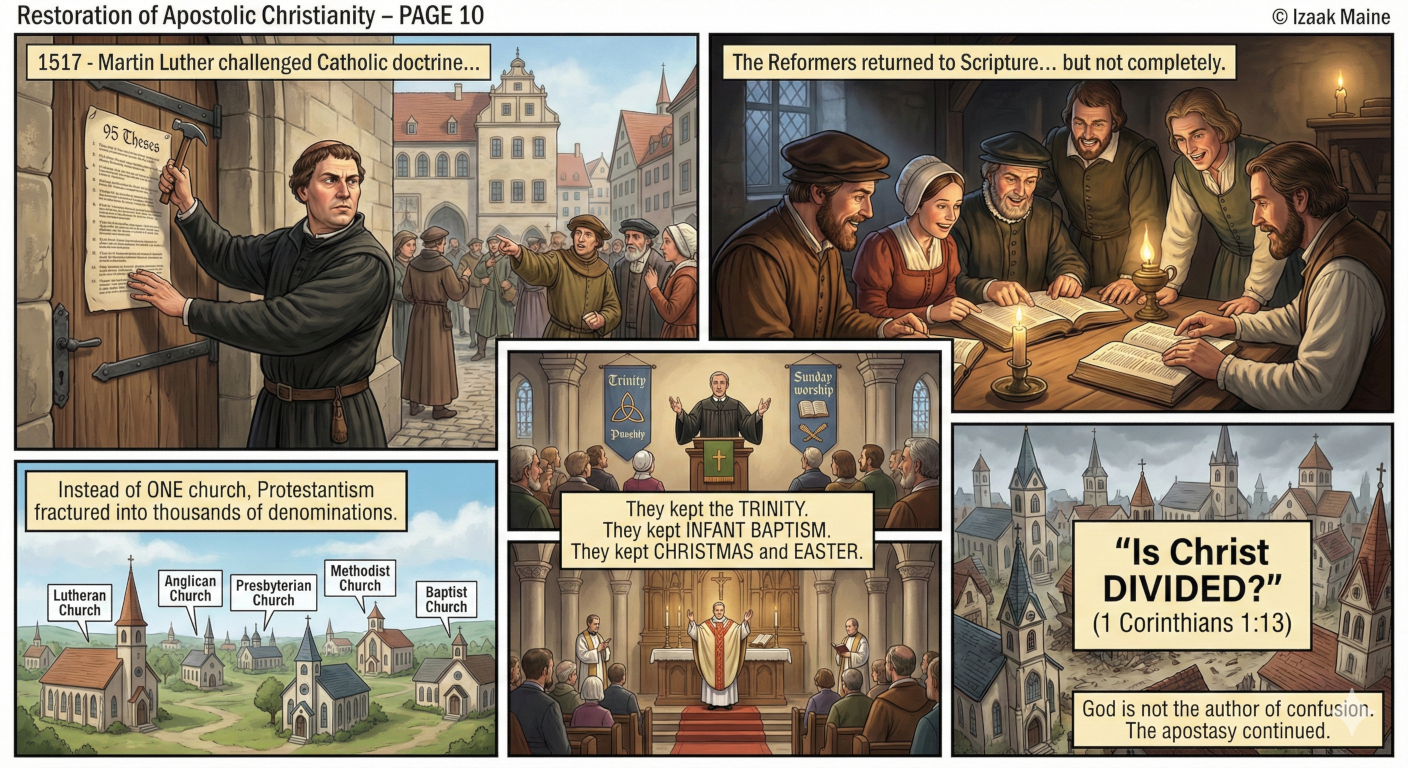
The doctrine that “God is three persons in one being” violates the clear teaching that God is absolutely one. The word “Trinity” does not appear in Scripture. The doctrine was formulated at the Council of Nicaea (325 AD) and Constantinople (381 AD), centuries after the apostles.
Historical Fact: The Trinity is a post-apostolic innovation, not apostolic teaching.
AXIOM 7: God Is Spirit Without Material Form
Biblical Foundation:
- “God is spirit” (John 4:24)
- A spirit does not have flesh and bones (Luke 24:39)
- Images for worship are forbidden (Acts 17:29; Exodus 20:4-5)
Implication: God cannot be represented by images, statues, icons, or any material form. All idolatry—whether Catholic veneration of statues or Orthodox icon worship—violates this fundamental truth.
AXIOM 8: God Must Be Worshipped in Spirit and Truth
Biblical Foundation:
- “True worshippers will worship the Father in spirit and truth” (John 4:23-24)
Requirements for Acceptable Worship:
- Must be directed to the Father
- Must be spiritual (not materialistic or ritualistic for its own sake)
- Must be according to truth (biblical teaching, not human tradition)
FALSE WORSHIP EXPOSED:
- Catholic Mass: Ritualistic, based on transubstantiation doctrine not found in Scripture
- Orthodox liturgy: Heavy emphasis on icons and ritualism contrary to spiritual worship
- Protestant “worship styles”: Often entertainment-focused rather than truth-focused
- Charismatic emotionalism: Emphasizes feelings over biblical truth
AXIOM 9: God’s Existence Is Proven by Creation
Biblical Foundation:
- God’s invisible attributes are clearly seen through creation (Romans 1:19-20)
- God is manifested through His almighty power in creation (Genesis 17:1; Psalm 19:1-4)
- God made the earth as humanity’s habitation (Isaiah 45:18; Job 12:7-10)
Theological Implication: The teleological argument: The order, complexity, and design evident in creation point to an intelligent Creator. This makes knowledge of God accessible to all humanity through general revelation, leaving humanity without excuse.
Chapter 3: The True Nature of Jesus Christ
AXIOM 10: Christ Is a Man, Not God
Biblical Foundation - Christ’s Own Testimony:
- “You are trying to kill me, a man who has told you the truth” (John 8:40)
Apostolic Testimony:
- “The man Christ Jesus” (1 Timothy 2:5)
- “Jesus of Nazareth, a man attested by God” (Acts 2:22)
- “Born of a woman” (Matthew 1:18, 20; Galatians 4:4)
Logical Principle: If Christ is a man according to His own testimony and the apostles’ testimony, and God is not man (Hosea 11:9; Numbers 23:19), then Christ cannot be God. The law of non-contradiction demands that Christ is either man or God, not both.
AXIOM 11: God and Christ Are Distinct Beings
Biblical Distinctions:
| God | Christ |
|---|---|
| Has no beginning (Psalm 90:2) | Came from God (John 8:42) |
| Is immortal (1 Timothy 1:17) | Died (John 19:30, 33) |
| Never tires (Isaiah 40:28) | Became tired (John 4:6) |
| Recognizes no other God (Isaiah 44:8) | Called upon God (Mark 15:34) |
| Cannot be tempted (James 1:13) | Was tempted (Hebrews 4:15) |
Conclusive Proof: Christ himself said “my Father and your Father, my God and your God” (John 20:17). If Christ has a God above Him, He cannot be the Most High God.
AXIOM 12: Christ Was Made Lord and Savior by God
Biblical Foundation:
- “God has made this Jesus… both Lord and Christ” (Acts 2:36)
- “God exalted him to His own right hand as Prince and Savior” (Acts 5:31)
- “God highly exalted Him and gave Him the name above every name” (Philippians 2:9-11)
Theological Implication: Christ received His position, authority, and titles from God the Father. He did not inherently possess these as the Second Person of the Trinity. The Father exalted, made, and gave—Christ received.
AXIOM 13: Christ Will Be Subjected to God
Biblical Foundation:
- “When all things are subjected to Him, then the Son Himself will also be subjected to the One who subjected all things to Him” (1 Corinthians 15:27-28)
Logical Conclusion: If Christ will be subjected to God at the end, He cannot be co-equal with God. Subjection implies subordination. Co-equal persons cannot be in subordinate relationship.
AXIOM 14: Christ Is Sinless Because the Father Sanctified Him
Biblical Foundation:
- Christ committed no sin (1 Peter 2:21-22; 2 Corinthians 5:21)
- He is holy because the Father sanctified Him (John 10:36)
Distinction: Christ’s sinlessness is not due to divine nature, but because God sanctified (set apart) Him. This maintains Christ’s humanity while explaining His unique moral perfection.
AXIOM 15: Christ Is the One Mediator Between God and Man
Biblical Foundation:
- “There is one God and one mediator between God and men, the man Christ Jesus” (1 Timothy 2:5)
Implications:
- Christ’s mediatorial role requires distinction from both God and humanity
- A mediator must be separate from both parties being mediated
- Catholic priests claiming mediatorial role violate this singular mediatorship
- No saint, Mary, or priest can mediate—only Christ
Chapter 4: Resolving High Christology Texts
Addressing John 1:1 “The Word Was God”
The Issue: This text appears to identify the Word with God, but must be understood in context of strict monotheism.
Resolution Through Divine Attribute Theology:
The Word as God’s Eternal Attribute:
- John 1:1 presents the Logos (Word/Wisdom) as God’s own attribute personified
- Jewish Wisdom literature (Proverbs 8:22-31) speaks of God’s Wisdom as “with God” at creation yet distinct from God
- Philo and Second Temple Judaism understood God’s Logos as divine power/wisdom without compromising monotheism
Greek Grammar: In John 1:1c, θεὸς (theos) lacks the article, which can indicate quality rather than identity:
- ὁ θεὸς (ho theos) = God Himself (the Father)
- θεὸς (theos) = divine quality, divine nature, godly
Better Translation Options:
- “The Word was divine” (reflects qualitative force)
- “The Word was God’s” (possessive, showing the Word belongs to God)
The Word Became Flesh:
- John 1:14 does not mean a pre-existent divine person became man
- Rather: God’s eternal plan/purpose (the Word) was incarnated in the man Jesus
- 1 Peter 1:20 Douay: Christ was “foreknown before the foundation of the world”—a plan in God’s mind
Parallel to Creation: Just as God’s Word brought forth creation (“Let there be light”—and there was light), God’s Word became embodied in Jesus. The Word is God’s creative and redemptive power, not a separate divine person.
Addressing John 20:28 “My Lord and My God”
The Issue: Thomas calls Jesus “my God”—does this make Jesus the Most High God?
Resolution Through Context and Usage:
Immediate Context: Jesus responds by pointing Thomas to “my Father and your Father, my God and your God” (John 20:17). Christ still acknowledges God above Him.
Functional Usage of “God” (Elohim/Theos): Scripture uses “god” in representative senses:
- Moses was made “God to Pharaoh” (Exodus 7:1)—representative authority
- Judges were called “gods” (Psalm 82:6; John 10:34-35)—bearers of divine authority
- Angels are called “gods” (Psalm 8:5 Hebrew)—divine messengers
Thomas’s Recognition: Thomas recognized in the resurrected Christ:
- The perfect image/representation of God (Colossians 1:15)
- The one bearing God’s full authority (Matthew 28:18)
- The confirmation of Christ’s claims to be God’s appointed Messiah
Type of Statement: Could be:
- Exclamation of amazement (“My Lord! My God!” directed to God, not Christ)
- Recognition of Christ as bearer of divine authority
- Acknowledgment of the “fullness” dwelling in Christ (see below)
Addressing Colossians 2:9 “Fullness of the Godhead”
The Issue: “In Him dwells all the fullness of the Godhead bodily”
Resolution Through Divine Delegation:
Preposition Analysis:
- Colossians 1:19: “All the fullness was pleased to dwell in Him”
- The fullness dwells in Christ—it was placed there, delegated to Him
Parallel Text:
- Ephesians 3:19: Believers being “filled with all the fullness of God”
- Obviously this doesn’t make believers ontologically God
- “Fullness” = complete divine authority, power, and presence
What “Fullness” Means:
- Christ has received all authority (Matthew 28:18: “All authority has been given to me”)
- The Father placed His complete power and authority in Christ
- Christ functions with full divine authority, but received it from the Father
Distinction Maintained: The one who fills is distinct from the one who is filled. The Father is the source; Christ is the recipient and steward of divine authority.
Addressing Creation “Through” Christ (John 1:3; Colossians 1:16)
The Issue: These texts say all things were made “through” Christ—doesn’t this require His pre-existence as God?
Resolution Through Agency vs. Source:
Prepositional Precision:
- 1 Corinthians 8:6: “One God, the Father, from whom (ἐκ - ek) are all things… one Lord Jesus Christ, through whom (διά - dia) are all things”
Two Different Roles:
- ἐκ (from/out of): Indicates source, origin—the Father
- διά (through/by means of): Indicates agency, instrumentality—Christ
Illustration: A carpenter builds a house using a hammer:
- Source of creation: the carpenter
- Instrument of creation: the hammer
- We don’t say “the hammer created the house”—the carpenter did, through the hammer
Christ as Wisdom/Word:
- Proverbs 8:22-31: God’s Wisdom was “with Him” at creation
- God created all things through His Wisdom/Word
- Christ, as the incarnation of God’s Wisdom, is the instrument through which the Father created
Agency Maintains Monotheism: Christ as divine agent of creation maintains:
- The Father as ultimate source and Creator
- Christ as the mediatorial instrument
- Strict monotheism—one Creator (the Father) using one instrument (His Word/Wisdom embodied in Christ)
Addressing Worship of Christ
The Issue: If Christ is worshipped (Philippians 2:10-11; Hebrews 1:6), doesn’t this make Him God?
Resolution Through Types of Worship:
Greek Terminology:
- προσκυνέω (proskuneō): Bowing, obeisance, honor given to kings, authorities, representatives
- λατρεία (latreia): Religious service, exclusive worship due to God alone
Christ Receives Proskuneō:
- This is the honor given to kings, lords, and God’s appointed representatives
- Same word used for: bowing to kings (1 Samuel 24:8), honoring Joseph (Genesis 37:10), respecting masters
Ultimate Glory to the Father:
- Philippians 2:10-11: Every knee bows to Christ “to the glory of God the Father”
- The worship directed to Christ ultimately glorifies the Father
- Christ is honored as God’s appointed Lord and King
Hebrews 1:6 Context: “Let all God’s angels worship Him” refers to Christ as God’s appointed Heir and King (v. 2), not as the Most High God. Angels worship Christ as God’s supreme representative.
Final Subjection: 1 Corinthians 15:28 proves Christ’s worship is delegated, not inherent—He will ultimately subject Himself to God, and “God may be all in all.”
PART II: THE CHURCH AND SALVATION
Chapter 5: The Necessity of the Church
AXIOM 16: All Humanity Needs Salvation
Biblical Foundation:
- All have sinned (Romans 3:23; 5:12)
- Sin separates humanity from God (Isaiah 59:2)
- The wages of sin is death—the second death (Romans 6:23; Revelation 20:14)
Divine Justice Principle:
- Each person must die for their own sin (Deuteronomy 24:16)
- God’s righteousness demands punishment for sin
The Human Dilemma: Humanity is trapped: all have sinned, all deserve death, yet no sinful human can save themselves or others.
AXIOM 17: Christ Made the Church His Body
Biblical Foundation:
- Christ is the head; the Church is His body (Ephesians 5:23; Colossians 1:18)
- Before God, Christ and His Church stand as “one new man” (Ephesians 2:15)
- “That we might become the righteousness of God in Him” (2 Corinthians 5:21)
The Substitutionary Mechanism:
The Problem: How can Christ die for sinners without violating God’s law that each person dies for their own sin?
The Solution:
- Christ made believers His own body
- In God’s sight, Head and body are one entity
- As one corporate person, Christ can answer for the sins of His body
- This satisfies divine justice: the corporate “person” (Christ + Church) receives punishment
Illustration: Like a husband and wife becoming “one flesh,” Christ and His Church become one new man before God. The sinless head atones for the sins of the body members.
AXIOM 18: The Church Was Purchased with Christ’s Blood
Biblical Foundation:
- “Feed the church of God which He purchased with His own blood” (Acts 20:28 Lamsa)
- “Christ loved the church and gave Himself up for her” (Ephesians 5:25)
Implication: The Church has infinite value in God’s economy—it cost the blood of Christ. This is not merely a voluntary association but the very entity Christ died to redeem.
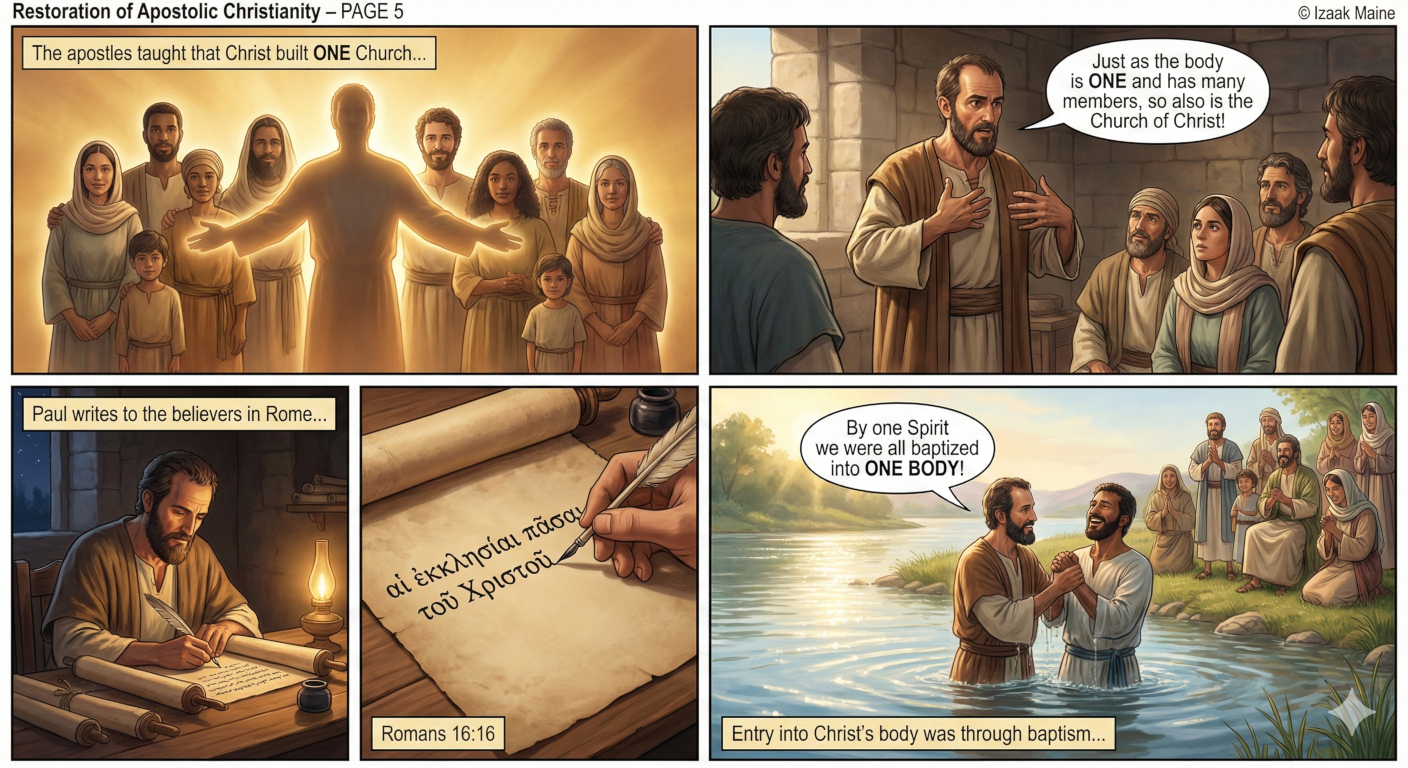
AXIOM 19: There Is Only One Church
Biblical Foundation:
- “One body” (Ephesians 4:4)
- “One flock” (John 10:16)
- Members of “one body” (Romans 12:4-5; 1 Corinthians 12:12-13)
Logical Necessity: If Christ’s body is the Church, and a person has only one body, then there is only one true Church. Multiple denominations cannot all be Christ’s body—a body divided against itself cannot stand.
AXIOM 20: Salvation Is Only in the Church
Biblical Foundation:
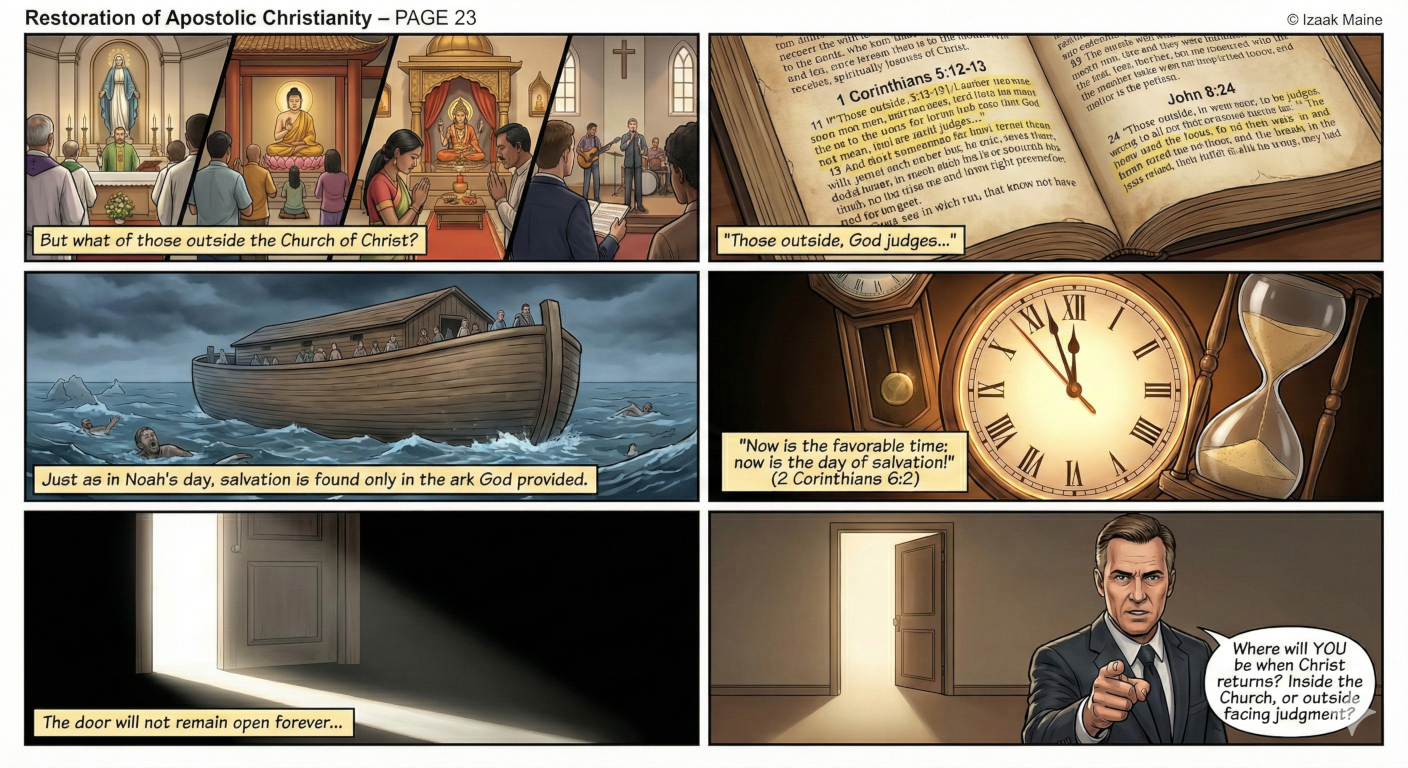
- “Those outside will be judged” (1 Corinthians 5:12-13)
- Those who refuse to enter Christ’s body will die in their sins (John 8:24)
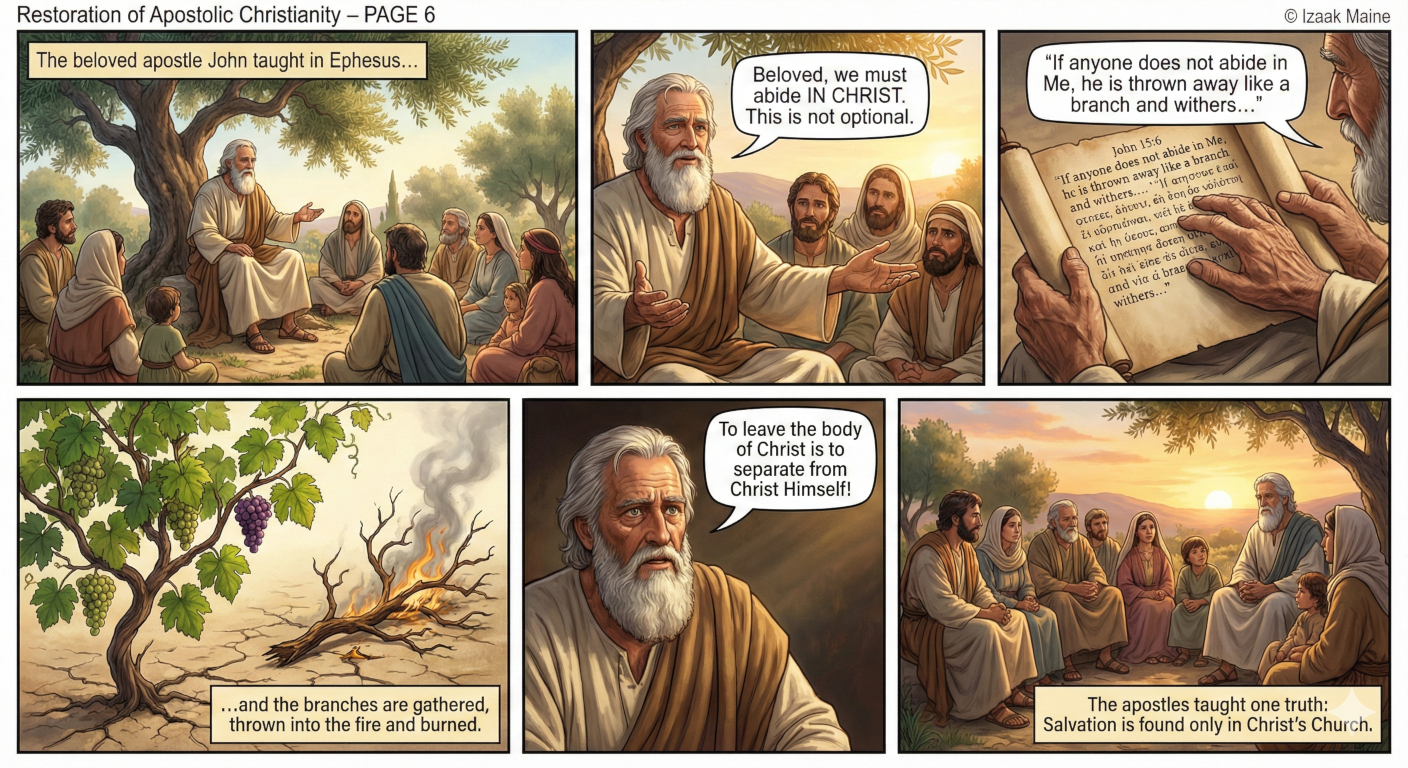
- Separated from Christ, they will be burned (John 15:6)
- Those outside have no right to serve God (Ephesians 2:12)
Theological Logic:
- Christ is the Savior (Acts 5:31)
- The Church is Christ’s body (Ephesians 5:23)
- Salvation is in Christ (Acts 4:12)
- Therefore, salvation is in Christ’s body (the Church)
- Those outside the body are outside Christ
- Those outside Christ have no salvation
This Is Not Optional:
- Entering Christ is a command (John 10:9)
- God’s will is that all be gathered in Christ (Ephesians 1:9-10)
- This gathering occurs through membership in the one body (Romans 12:4-5)
Chapter 6: The True Church Identity
AXIOM 21: The True Church Is Called “Church of Christ”
Biblical Foundation:
- “Churches of Christ” (Romans 16:16)
- “Church of God” (Acts 20:28; 1 Corinthians 1:2)—God’s church, Christ’s church
Name Significance: The name identifies ownership and origin:
- “Lutheran” church = Martin Luther’s church
- “Catholic” (universal) = claiming universality, not ownership
- “Methodist” = John Wesley’s methodical approach
- “Baptist” = emphasizing baptism practice
- “Church of Christ” = Christ’s own church
Biblical Pattern: Believers were first called “Christians” (followers of Christ) at Antioch (Acts 11:26). Similarly, Christ’s church bears His name.
AXIOM 22: The Church Originated in the First Century
Biblical Foundation:
- Christ built His church during His earthly ministry (Matthew 16:18)
- Started as a “little flock” (Luke 12:32)
- The flock is the Church of Christ (Acts 20:28 Lamsa)
Historical Development:
- Ministry of Christ: Little flock established
- Pentecost: Birth of the Church, 3,000 added (Acts 2:41)
- Apostolic Era: Rapid growth despite persecution (Acts 6:7)
- Geographic Expansion: Reached the Gentiles (Romans 16:4)
- Universal Scope: “Churches of Christ” throughout the known world (Romans 16:16)
Chapter 7: The Great Apostasy
AXIOM 23: Christ Prophesied the Church Would Be Led Astray
Biblical Foundation:
- “See that no one leads you astray” (Matthew 24:4 RSV)
- “Many will be led astray” by false prophets (Matthew 24:11 RSV)
- “False prophets… will arise from among your own selves” (Acts 20:29-30)
The Inevitability: Christ didn’t say the church might be led astray—He prophesied that many would be led astray. This apostasy was certain to occur.
AXIOM 24: False Prophets Would Arise After the Apostles
Biblical Foundation:
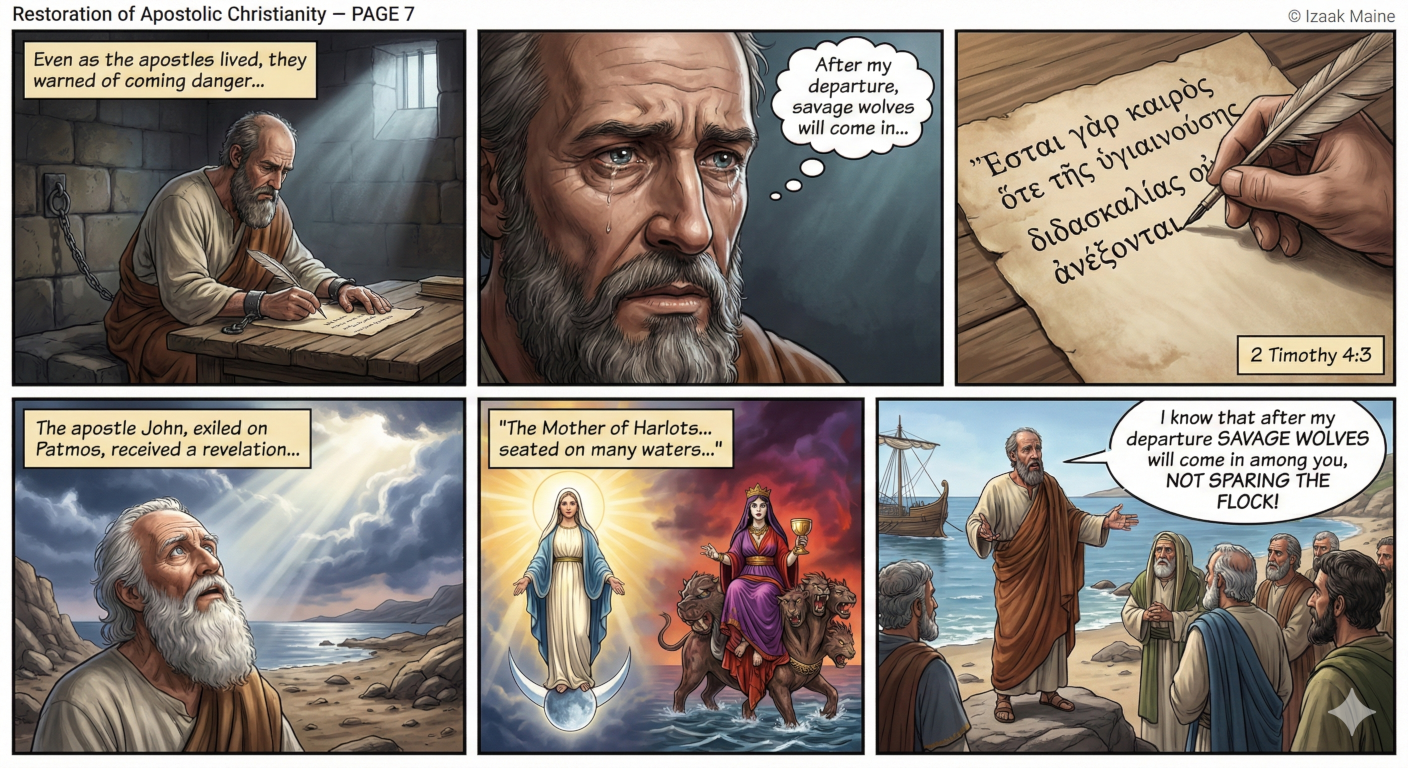
- “After my departure savage wolves will come in” (Acts 20:29)
- Paul warned while he was still alive, implying the corruption would come after his death
Historical Fact: The apostolic age ended with John’s death (c. 100 AD). Church history records the subsequent rise of:
- Monarchical episcopacy (bishops claiming authority over multiple churches)
- Development of sacramentalism (salvation through rituals)
- Veneration of martyrs and saints
- Emergence of Roman primacy
AXIOM 25: The Apostasy Involved Doctrines of Demons
Biblical Foundation:
- “In later times some will depart from the faith by giving heed to deceitful spirits and doctrines of demons” (1 Timothy 4:1, 3 KJV)
Specific Demonic Doctrines Identified:
- “Forbidding to marry” (1 Timothy 4:3)—celibacy requirement for clergy
- “Commanding to abstain from foods” (1 Timothy 4:3)—dietary restrictions, fish on Friday, Lenten fasting
Who Practices These? The Catholic Church:
- Requires priestly celibacy
- Commands abstinence from meat on certain days
- These are the exact “doctrines of demons” Paul prophesied
AXIOM 26: False Prophets Dressed in Sheep’s Clothing
Biblical Foundation:
- “Beware of false prophets who come to you in sheep’s clothing” (Matthew 7:15)
- The Lamb is Christ (John 1:29)
- False prophets would imitate Christ’s appearance
Historical Fulfillment: Catholic priests wear vestments deliberately imitating Christ:
- Claim to represent Christ (Vicar of Christ)
- Wear ceremonial garments like the Jewish priesthood (which Christ fulfilled and ended)
- Present themselves as mediators between God and man (violating 1 Timothy 2:5)
AXIOM 27: The Apostasy Involved Exalting Man to God’s Position
Biblical Foundation:
- The man of lawlessness “opposes and exalts himself above every so-called god or object of worship, so that he takes his seat in the temple of God, proclaiming himself to be God” (2 Thessalonians 2:3-4)
Specific Violation: Catholic priests violate Christ’s direct command:
- Christ commanded: “Call no man your father on earth, for you have one Father, who is in heaven” (Matthew 23:9)
- Catholic practice: Priests are called “Father”
- Papal claim: The Pope is called “Holy Father”—a title belonging to God alone (John 17:11)
The Nature of the Claim:
- Hebrews 12:9 identifies God as “Father of spirits”
- Catholic teaching: Priests are “spiritual fathers”
- This is claiming God’s unique Fatherhood—making themselves like God
AXIOM 28: The Apostate Church Became the Mother of Harlots
Biblical Foundation:
- The faithful church is a “chaste virgin” (2 Corinthians 11:2)
- The apostate church is “the mother of harlots” (Revelation 17:1, 5)
- She sits on “many waters” meaning universal scope (Revelation 17:15)
Identity of the Mother of Harlots:
- Claims universality: Catholic means “universal”
- Has offspring: Protestant denominations that came out of her
- Historical record: The Catholic Church claims to be the original universal church
AXIOM 29: The Apostate Church Persecuted the Faithful
Biblical Foundation:
- “Savage wolves will come… not sparing the flock” (Acts 20:29)
- “They will put you to death” (Matthew 24:9)
Historical Fulfillment: The Catholic Church’s Inquisition:
- Tortured and executed those who refused Catholic teachings
- Burned “heretics” at the stake
- Persecuted Bible translators and reformers
- Historical records document millions killed in religious persecution
This fulfills the prophecy that the apostate church would not spare the flock.
Chapter 8: The False Doctrines of Catholicism
FALSE DOCTRINE #1: The Trinity
Catholic Teaching: Three divine persons (Father, Son, Holy Spirit) in one God—co-equal, co-eternal, consubstantial.
Biblical Refutation:
- Father alone is “the only true God” (John 17:3)
- Christ is subordinate (1 Corinthians 15:28; John 14:28 “the Father is greater than I”)
- Holy Spirit is sent by God (John 14:26), not a co-equal person
Historical Origin:
- Council of Nicaea (325 AD) formulated Trinity doctrine
- Council of Constantinople (381 AD) finalized it
- Not taught by Christ or apostles
- A post-apostolic innovation from Greco-Roman philosophy
Logical Problem: If the Father is “the only true God,” then by definition no one else can be the true God. “Only” excludes all others.
FALSE DOCTRINE #2: Idolatry - Images for Worship
Catholic Teaching: Veneration (not worship) of images and statues is acceptable.
Biblical Refutation:
- “You shall not make for yourself a graven image… You shall not bow down to them or serve them” (Exodus 20:4-5)
- Images for worship are forbidden (Acts 17:29)
- Kneeling is an act of worship (Psalm 95:6)
Catholic Practice: Catholics kneel before statues and icons—this is worship regardless of semantic distinctions between “veneration” and “worship.”
God’s Nature: God is spirit without form (John 4:24). Any physical representation violates His nature and commands.
FALSE DOCTRINE #3: The Mass - Re-sacrificing Christ
Catholic Teaching: The Mass is an unbloody re-presentation of Christ’s sacrifice; the priest offers Christ to God.
Biblical Refutation:
- Christ offered Himself “once for all” (Hebrews 7:27)
- “By one offering He has perfected forever those who are being sanctified” (Hebrews 10:10-14)
- No need for repeated sacrifices
Catholic Violation: By offering Christ repeatedly in every Mass, Catholics contradict Hebrews’ clear teaching that Christ’s sacrifice was once for all time. To repeat it is to say it was insufficient.
Distinction from the Lord’s Supper:
- Christ instituted a memorial: “Do this in remembrance of Me” (1 Corinthians 11:24-25)
- A memorial is not a re-sacrifice
- The Catholic Mass transforms the memorial into a propitiatory sacrifice
FALSE DOCTRINE #4: Transubstantiation
Catholic Teaching: The bread and wine literally become the body and blood of Christ (substance changes, accidents remain).
Biblical Refutation:
- Christ spoke figuratively: “I am the bread” (John 6:35), “I am the vine” (John 15:5), “I am the door” (John 10:9)—all symbolic
- At the Last Supper, Christ was physically present holding bread, saying “This is my body”—obviously figurative
- “Do this in remembrance” (1 Corinthians 11:24)—a memorial, not literal transformation
Logical Problem: If the bread becomes Christ’s literal body, then at the Last Supper Christ was holding His own body while still in His body—an absurdity.
FALSE DOCTRINE #5: Papal Primacy and Infallibility
Catholic Teaching: The Pope is the Vicar of Christ with supreme authority and can teach infallibly.
Biblical Refutation:
- Christ cannot be substituted or replaced (Hebrews 7:24-25: “He holds His priesthood permanently, because He continues forever”)
- Christ is the only head of the Church (Ephesians 5:23; Colossians 1:18)
- Christ promised to be with His Church always (Matthew 28:20)—no vicar needed
Historical Fact: Papal supremacy developed gradually from the 4th-6th centuries, not from apostolic times. Peter never claimed supremacy over other apostles.
FALSE DOCTRINE #6: Confession to Priests
Catholic Teaching: Sins must be confessed to a priest for absolution.
Biblical Refutation:
- “Confess your sins to God” (Psalm 32:5)
- Only one Mediator: “the man Christ Jesus” (1 Timothy 2:5)
- Christ alone has authority to forgive sins (Mark 2:7)
Catholic Violation: By making priests mediators for forgiveness, Catholicism violates the unique mediatorship of Christ and makes priests functionally divine.
FALSE DOCTRINE #7: Purgatory
Catholic Teaching: A temporary state of purification for souls not yet worthy of heaven.
Biblical Refutation:
- “The dead know nothing” (Ecclesiastes 9:5-6)
- David is “in his tomb to this day” (Acts 2:29, 34)—not in heaven
- No consciousness after death until resurrection
Where Did It Come From? Purgatory is not in the Bible. It developed from medieval theology and was used to justify indulgences and fundraising for the Catholic Church.
FALSE DOCTRINE #8: Intercession of Saints
Catholic Teaching: Dead saints in heaven can intercede for the living.
Biblical Refutation:
- All the dead are in their graves (Psalm 88:5; Acts 2:29, 34)
- “The dead know nothing” (Ecclesiastes 9:5)
- Only one Mediator (1 Timothy 2:5)
Logical Problem: If the dead are unconscious in their graves awaiting resurrection, they cannot hear prayers or intercede. Catholic teaching requires a conscious intermediate state not found in Scripture.
FALSE DOCTRINE #9: Mary’s Perpetual Virginity and Co-Redemptrix
Catholic Teaching: Mary remained a perpetual virgin and participates in redemption.
Biblical Refutation:
- Jesus had brothers (Matthew 13:55-56; Mark 6:3)
- Mary and Joseph had normal marital relations after Jesus’ birth (Matthew 1:25: “knew her not until she had given birth”)
- Only Christ is Savior (Acts 4:12)—no co-redemptrix
Marian Dogmas: All the Marian dogmas (Immaculate Conception, Assumption, etc.) are post-biblical traditions invented centuries after the apostles.
FALSE DOCTRINE #10: Infant Baptism
Catholic Teaching: Infants should be baptized to remove original sin.
Biblical Refutation:
- “He who believes and is baptized will be saved” (Mark 16:16)—belief must precede baptism
- “Those who believed were baptized” (Acts 18:8)—belief first, then baptism
- Infants cannot believe or repent (Acts 2:38)
What About Infants?
- Jesus blessed and prayed for children (Matthew 19:13-14)—He did not baptize them
- Believers’ children are “holy” (1 Corinthians 7:14)—already sanctified through their parents’ faith
Historical Fact: Infant baptism developed in the 3rd-4th centuries as original sin doctrine emerged. It was not apostolic practice.
Chapter 9: The False Doctrines of Protestantism
FALSE DOCTRINE #11: Faith Alone (Sola Fide)
Protestant Teaching: Salvation is by faith alone, apart from works.
Biblical Refutation:
- “Faith without works is dead” (James 2:17, 20)
- “A man is justified by works and not by faith only” (James 2:24)
- “Faith made perfect by works” (James 2:22)
What Faith Requires:
- Believe in Jesus (Acts 16:30-31)
- Hear the Gospel preached (Acts 16:32)
- Be baptized (Acts 16:33; Mark 16:16)
- Obey Christ’s commands (Luke 6:46; John 14:15)
Protestant Error: By eliminating works, Protestantism makes faith purely mental assent rather than active trust that produces obedience.
FALSE DOCTRINE #12: “Once Saved, Always Saved”
Protestant Teaching: True believers cannot lose their salvation.
Biblical Refutation:
- “If anyone does not abide in Me, he is thrown away like a branch and withers; and the branches are gathered, thrown into the fire and burned” (John 15:6)
- “Those who were once enlightened… if they fall away, to restore them again to repentance” (Hebrews 6:4-6)
- “You must endure to the end to be saved” (Matthew 24:13)
Implication: Salvation requires endurance and continued faithfulness. Those who depart from Christ lose their salvation.
FALSE DOCTRINE #13: Denominationalism Is Acceptable
Protestant Practice: Multiple denominations are seen as acceptable diversity within Christianity.
Biblical Refutation:
- “There is one body” (Ephesians 4:4)—not thousands of denominations
- “I appeal to you… that there be no divisions among you” (1 Corinthians 1:10)
- Paul rebuked division: “Is Christ divided?” (1 Corinthians 1:13)
Protestant Origins:
- Lutheran (1517) - Martin Luther
- Anglican (1534) - King Henry VIII
- Presbyterian (1560) - John Knox
- Baptist (1609) - John Smyth
- Methodist (1739) - John Wesley
Each Protestant Church Has Human Founder: None can claim apostolic origin. Each is the result of breaking away from Catholicism or another Protestant group, perpetuating the division Christ prayed against (John 17:21).
FALSE DOCTRINE #14: Bible Interpretation Is Private
Protestant Teaching: “Priesthood of all believers” means every individual interprets Scripture for themselves.
Biblical Refutation:
- “No prophecy of Scripture is a matter of one’s own interpretation” (2 Peter 1:20)
- The Ethiopian eunuch needed Philip to explain Scripture (Acts 8:30-31)
- “How can I [understand], unless someone guides me?” (Acts 8:31)
Result of Private Interpretation: Over 45,000 Protestant denominations, each with different interpretations—proving private interpretation leads to confusion and division, not truth.
God Is Not Confused: “God is not a God of confusion but of peace” (1 Corinthians 14:33). The denominational chaos proves private interpretation is wrong.
FALSE DOCTRINE #15: Baptism Is Not Essential
Some Protestant Teaching: Baptism is merely symbolic, not necessary for salvation.
Biblical Refutation:
- “He who believes and is baptized will be saved” (Mark 16:16)—both required
- “Baptism now saves you” (1 Peter 3:21)
- “Repent and be baptized… for the forgiveness of your sins” (Acts 2:38)
- Baptized “into Christ” (Galatians 3:27)
Baptism’s Significance:
- Baptism into Christ’s death (Romans 6:3)
- Buried with Him in baptism (Romans 6:4)
- United with Him in His death (Romans 6:5)
Baptism is not optional symbolism—it is the means by which believers are united with Christ in His death and resurrection.
FALSE DOCTRINE #16: Prosperity Gospel
Some Protestant Teaching: God wants all believers to be wealthy and healthy; faith guarantees prosperity.
Biblical Refutation:
- Jesus had no permanent home (Matthew 8:20: “foxes have holes… but the Son of Man has nowhere to lay His head”)
- Paul endured poverty and hardship (2 Corinthians 11:23-27)
- “Godliness with contentment is great gain” (1 Timothy 6:6)
- “Those who desire to be rich fall into temptation” (1 Timothy 6:9)
True Promise: Christ promised persecution, not prosperity (John 15:20). Believers will suffer for His name (Acts 5:41).
Chapter 10: The False Doctrines of Other Religions
MORMONISM (Latter-day Saints)
False Scripture: The Book of Mormon claims to be “another testament of Jesus Christ.”
Biblical Refutation:
- Revelation 22:18-19 forbids adding to Scripture
- Galatians 1:8-9: “If anyone preaches a gospel contrary to what we preached, let him be accursed”
False Doctrines:
- Polytheism (many gods)
- God was once a man who progressed to godhood
- Humans can become gods
Biblical Refutation:
- “Before Me there was no God formed, and there will be none after Me” (Isaiah 43:10)
- God is unchanging (Malachi 3:6)
- Humans cannot become God (Ezekiel 28:2)
JEHOVAH’S WITNESSES
False Scripture: The New World Translation deliberately mistranslates to support their doctrines.
False Doctrines:
- Jesus is Michael the Archangel
- No hell; the wicked are annihilated
- 144,000 go to heaven; rest stay on earth
Biblical Refutation:
- Christ is superior to angels (Hebrews 1:4-14)
- Hell is real and eternal (Matthew 25:46; Revelation 20:10)
- All believers have heavenly inheritance (1 Peter 1:3-4)
ISLAM
False Prophet: Muhammad claimed to be the final prophet; the Quran supersedes the Bible.
Contradictions with Scripture:
- Denies Christ’s crucifixion (yet Scripture centers on the cross)
- Denies Christ’s deity (yet Scripture affirms He is Lord)
- Denies the Trinity (agrees with INC on this point, but for wrong reasons)
Test of a Prophet:
- “If the prophet speaks in the name of the LORD, but the thing does not happen, that is a word the LORD has not spoken” (Deuteronomy 18:22)
- Muhammad’s failed prophecies disqualify him
BUDDHISM / HINDUISM
False Worldview: Multiple gods, reincarnation, karma, path to enlightenment through self-effort.
Biblical Refutation:
- One God only (Deuteronomy 6:4)
- “It is appointed for man to die once, and after that comes judgment” (Hebrews 9:27)—no reincarnation
- Salvation is by grace through Christ, not self-effort (Ephesians 2:8-9)
PART III: THE RESTORATION OF APOSTOLIC TRUTH
Chapter 11: The Prophecy of Restoration
AXIOM 30: Christ Prophesied “Other Sheep”
Biblical Foundation:
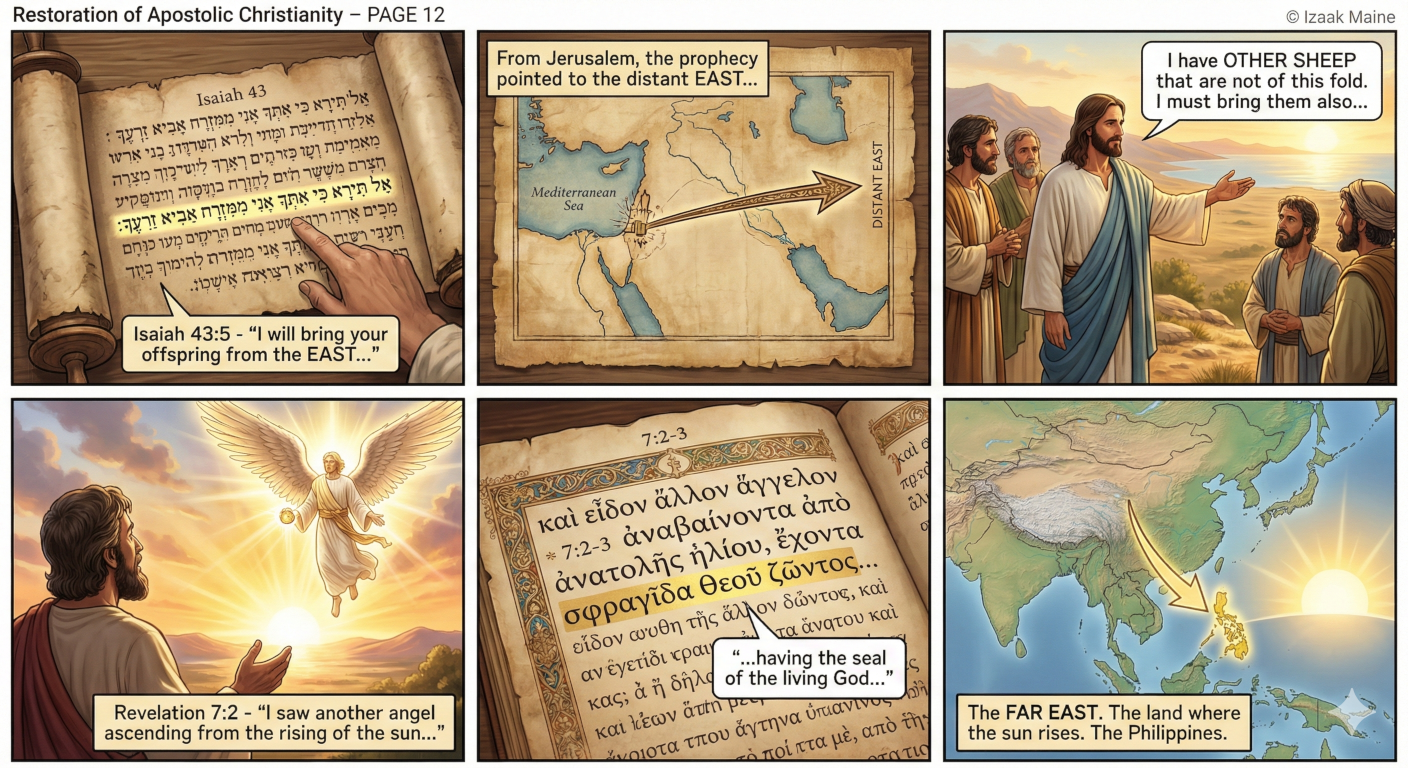
- “I have other sheep that are not of this fold. I must bring them also… so there will be one flock, one shepherd” (John 10:16)
Interpretation:
- First sheep: Jews who believed in Christ during His earthly ministry
- Other sheep: Those who would be brought into the fold later
- Result: One flock (one Church)
AXIOM 31: The Other Sheep Are From a Far-Off Place
Biblical Foundation:
- “The promise is for you and your children and for all who are far off” (Acts 2:39)
Geographic Indicator: The phrase “far off” indicates geographic distance from Jerusalem where Peter preached this. The Gospel would reach distant lands.
AXIOM 32: The Far East Is Specifically Named
Biblical Foundation:
- “I will bring your offspring from the east” (Isaiah 43:5 Moffatt)
Prophetic Pattern: Isaiah’s prophecies have multiple fulfillments:
- Original referent: Return from Babylonian exile (east of Israel)
- Typological fulfillment: Spiritual gathering in the Church age from the east
The Far East: The extreme east from Israel’s perspective is Asia, specifically the Far East region including the Philippines.
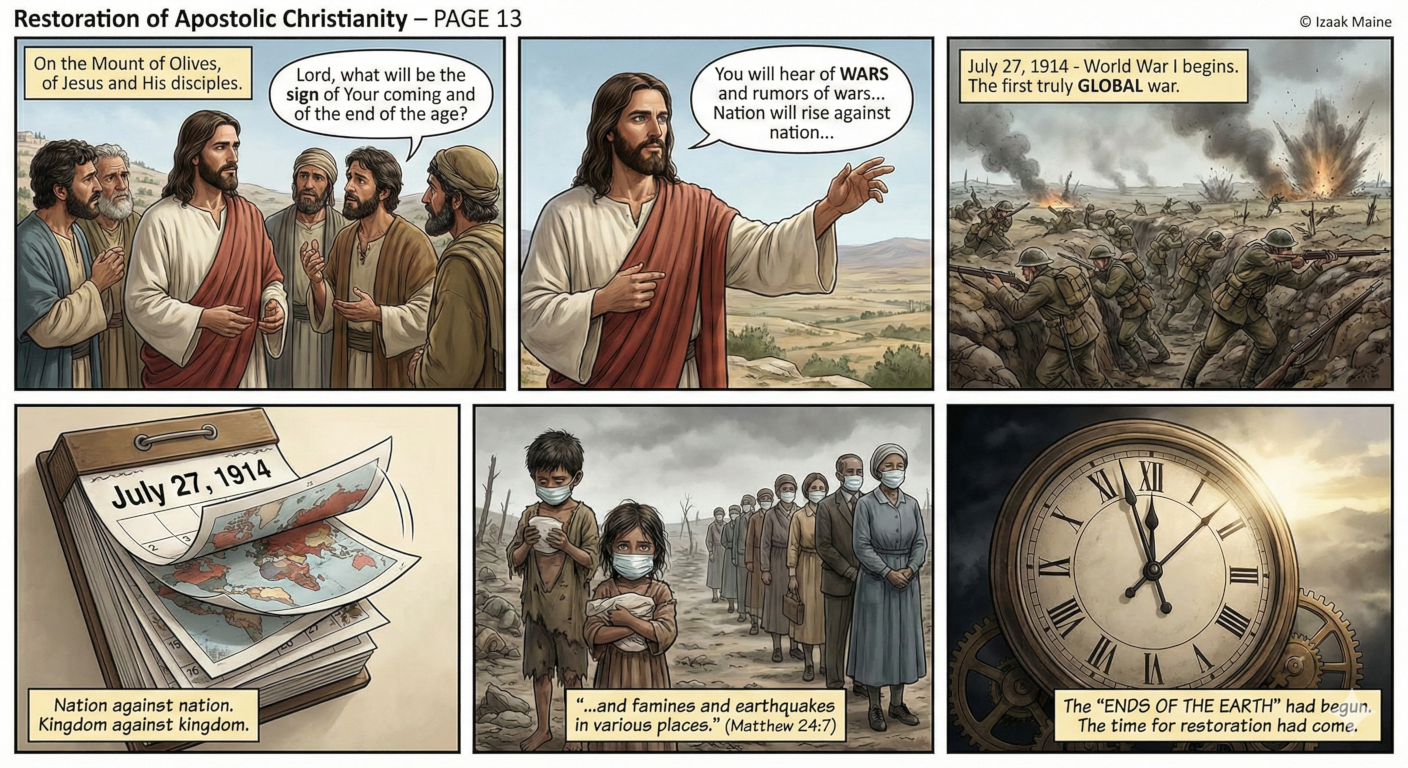
AXIOM 33: The Time Is “The Ends of the Earth”
Biblical Foundation:
- “What will be the sign of Your coming and of the end of the age?” (Matthew 24:3)
- “This gospel of the kingdom will be preached… and then the end will come” (Matthew 24:14)
Time Marker - World War:
- “You will hear of wars and rumors of wars” (Matthew 24:6)
- “Nation will rise against nation” (Matthew 24:7)
Historical Fulfillment: World War I broke out on July 27, 1914—the first truly global war. This marked the beginning of “the ends of the earth.”
AXIOM 34: God Sent a Messenger in the Last Days
Biblical Foundation - The Angel from the East:
- “I saw another angel ascending from the rising of the sun, with the seal of the living God” (Revelation 7:2-3)
Characteristics:
- From the east (rising sun)
- In the last days (before the great tribulation, v. 14)
- Has God’s seal
- Seals God’s servants
The Seal Is the Gospel:
- “You were sealed with the promised Holy Spirit when you believed the gospel” (Ephesians 1:13-14)
- Sealing = Gospel preaching that brings people to salvation
AXIOM 35: The Messenger Fits the Prophetic Pattern
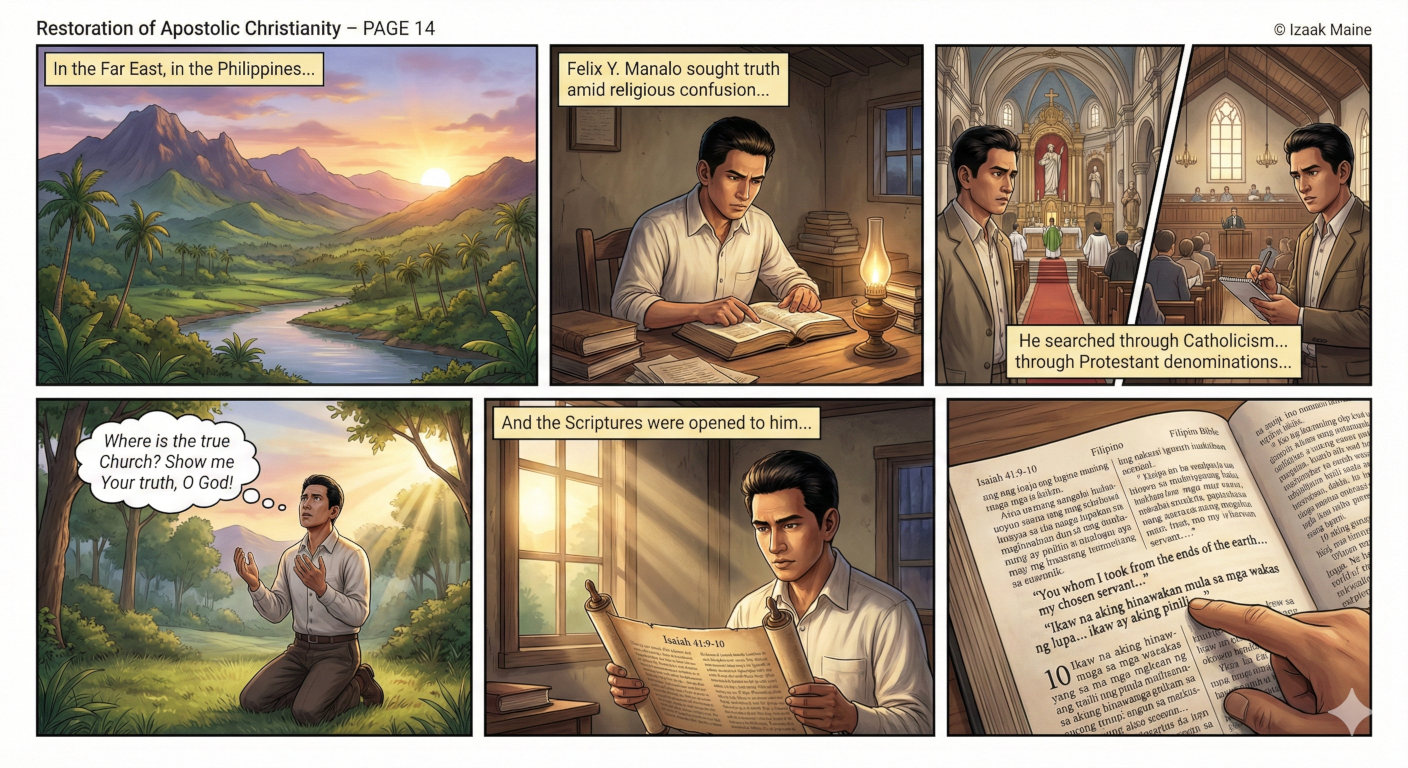
Prophetic Pattern in Isaiah:
Isaiah 41:9-10:
- “You whom I took from the ends of the earth”
- “Called from its farthest corners”
- “My chosen servant”
- “I will uphold you with My righteous right hand”
Isaiah 46:11:
- “Calling a bird of prey from the east”
- “The man of My purpose from a far country”
- “I have spoken, and I will bring it to pass”
Pattern Application: God has always called servants from distant places for specific missions:
- Abraham from Ur
- Moses from Midian
- Prophets from various regions
The pattern continues: A messenger called from the Far East (ends of the earth) in the last days to proclaim the Gospel and gather God’s people.
AXIOM 36: The Messenger Brings People to Righteousness
Biblical Foundation:
- “I bring near My righteousness” (Isaiah 46:13)
- The righteousness of God is the Gospel (Romans 1:16-17)
Mission: Like a bird of prey swooping to snatch people from danger, the messenger would proclaim the Gospel with urgency, bringing people to salvation through the Church.
Chapter 12: The Church of Christ - Restoration in the Philippines
HISTORICAL FULFILLMENT
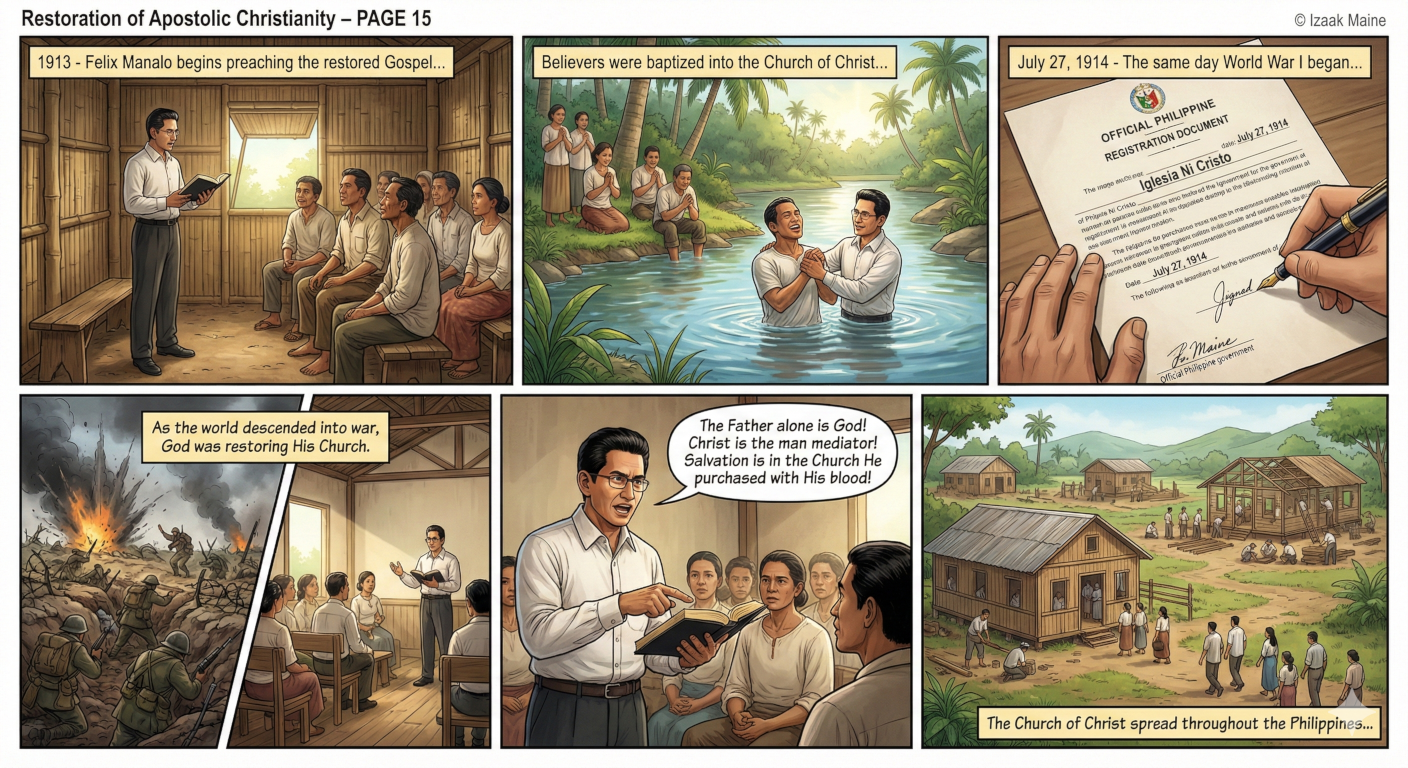
The Convergence:
- Geography: The Philippines is in the Far East
- Time: 1914 marked the beginning of the “ends of the earth” (WWI)
- Messenger: Felix Y. Manalo began preaching in 1913, officially registered July 27, 1914
- Message: The Gospel of the Kingdom—calling people into the Church of Christ
- Result: The Church of Christ (Iglesia ni Cristo) was established
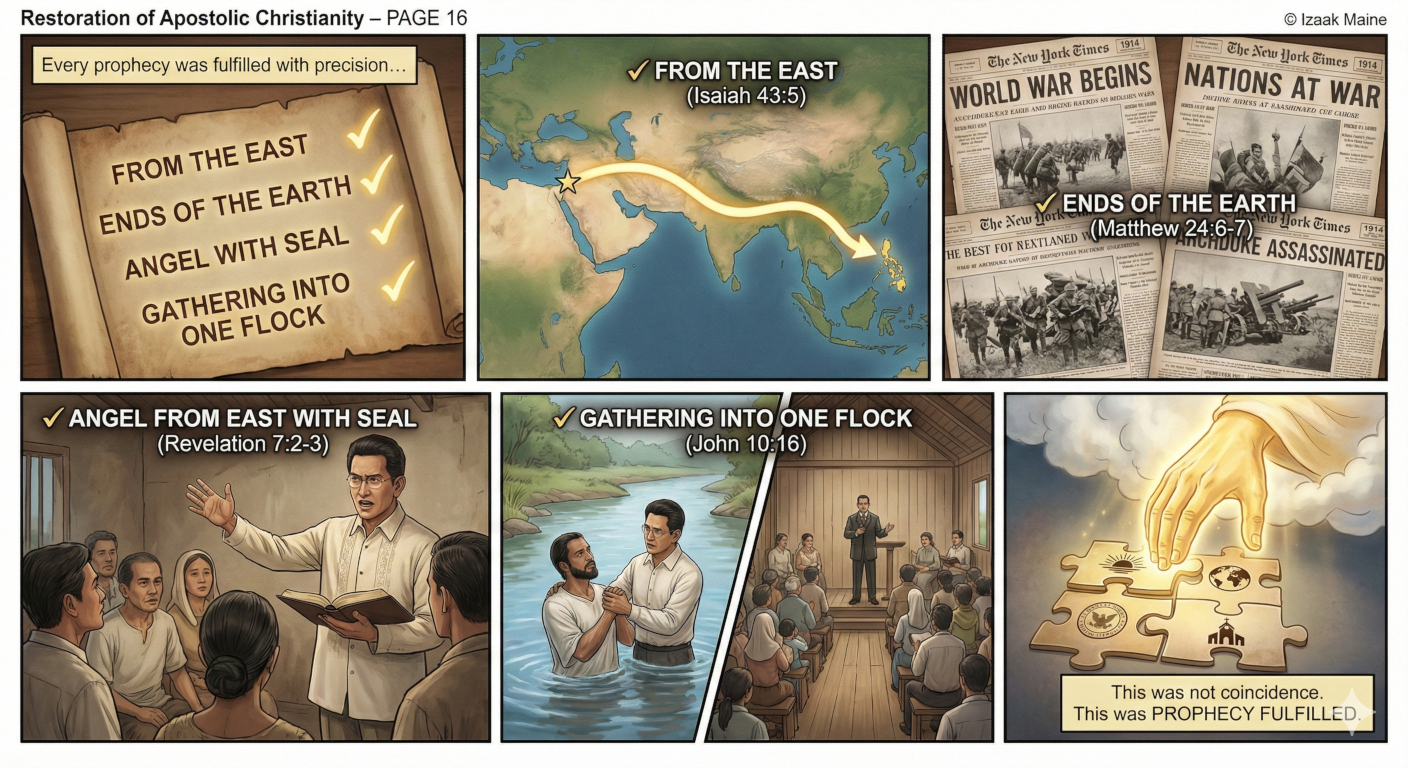
Not Coincidence, But Prophecy: The convergence of:
- Geographic location (Far East/Philippines)
- Time period (1914/WWI/“ends of the earth”)
- Message content (Gospel/Church of Christ)
- Prophetic patterns (messenger from the east)
This convergence is not coincidental but prophetic fulfillment.
THE MESSENGER: BROTHER FELIX Y. MANALO
Not as Exclusive Literal Fulfillment, But Prophetic Pattern:
The biblical prophecies about servants called from distant places establish a pattern that Felix Y. Manalo exemplifies:
- Called from the ends of the earth (Isaiah 41:9)—from the Philippines
- Upheld by God’s righteousness (Isaiah 41:10)—preaching the Gospel (Romans 1:16-17)
- Likened to a bird of prey (Isaiah 46:11)—urgent mission to rescue people
- Brings people to righteousness (Isaiah 46:13)—gathering people into the Church
The Angel from the East (Revelation 7:2-3):
- Felix Y. Manalo came from the east (Philippines)
- Bore the seal of God (the Gospel, Ephesians 1:13-14)
- Sealed God’s servants (preached the Gospel, bringing people to salvation)
Historical Context: Felix Y. Manalo emerged at the precise prophetic moment—1914, when WWI broke out, marking the “ends of the earth.” His location (Far East), timing (1914), and message (Gospel/Church of Christ) align with prophetic patterns.
THE CHURCH OF CHRIST IN THE PHILIPPINES
Distinctive Characteristics:
- Biblical Name: “Church of Christ” (Romans 16:16)
- Biblical Time: Established in the “ends of the earth” (1914)
- Biblical Place: Far East (Philippines)
- Biblical Message: The Gospel of salvation through the Church
- Biblical Practice: Following apostolic teachings without Catholic or Protestant innovations
The Restoration: The Church of Christ represents the restoration of apostolic Christianity:
- Pure biblical doctrine (no Trinity, no idolatry, no human traditions)
- Original Church structure (with administration and discipline)
- Apostolic practices (baptism by immersion for believers, Lord’s Supper as memorial)
- Strict adherence to Scripture alone
PRIVILEGE OF MEMBERSHIP
Biblical Foundation:
- “I will bring your offspring from the east… Bring My sons from afar and My daughters from the ends of the earth” (Isaiah 43:5-6)
- “My sons… My daughters” = God’s children
The Promise:
- “If children, then heirs—heirs of God and fellow heirs with Christ” (Romans 8:16-17)
Members of the Church of Christ Are:
- God’s children (Isaiah 43:6)
- Heirs of eternal life (Romans 8:17)
- Part of the one flock Christ will save (John 10:16)
- The body of Christ, destined for glory (Ephesians 5:27)
Chapter 13: Entering the Church of Christ
AXIOM 37: Entry Requires Faith
Biblical Foundation:
- “We have obtained access by faith” (Romans 5:2 Jerusalem Bible)
- “Without faith it is impossible to please Him” (Hebrews 11:6)
What Is Faith?
- “Faith is confidence in what we hope for and assurance about what we do not see” (Hebrews 11:1)
Faith Must Be In:
- God and Christ: “Believe in God, believe also in Me” (John 14:1)
- The Gospel: “Whoever believes and is baptized will be saved” (Mark 16:16)
- God’s Messenger: “Whoever receives you receives Me” (John 13:20)
AXIOM 38: Faith Must Be Tested
Biblical Foundation:
- “The testing of your faith produces steadfastness” (James 1:3)
- “So that the tested genuineness of your faith… may be found to result in praise and glory” (1 Peter 1:6-7)
The Probation Period: Those who have heard God’s word must prove:
- They will not be overcome by persecution (Mark 4:17)
- They will not be choked by worldly concerns (Mark 4:19)
- They will bear fruit (Mark 4:20)
- They will lead a new life (Ephesians 4:21-24)
Testing Ensures Genuine Faith: Not mere emotional response or superficial interest, but genuine commitment to follow Christ regardless of cost.
AXIOM 39: Faith Expressed Through Baptism
Biblical Foundation:
- “Whoever believes and is baptized will be saved” (Mark 16:16)
- “Repent and be baptized every one of you… for the forgiveness of sins” (Acts 2:38)
The Mode of Baptism:
- Baptism represents burial with Christ (Romans 6:4)
- Requires immersion (going down into water, coming up out of water)
- Jesus was baptized where there was “much water” (John 3:23)
Who Should Be Baptized:
- Those who have been taught (Matthew 28:19)
- Those who believe (Mark 16:16; Acts 8:37)
- Those who repent (Acts 2:38)
Not infants—they cannot believe, be taught, or repent.
AXIOM 40: Baptism Incorporates Into the Body
Biblical Foundation:
- “By one Spirit we were all baptized into one body” (1 Corinthians 12:13)
- “The body is the church” (Colossians 1:18)
- Baptized into “churches of Christ” (Romans 16:16 context)
The Mechanism: Baptism is the means by which believers are incorporated into Christ’s body, the Church. Outside of baptism into the Church, one remains outside of Christ.
Chapter 14: Living as Members of the Church
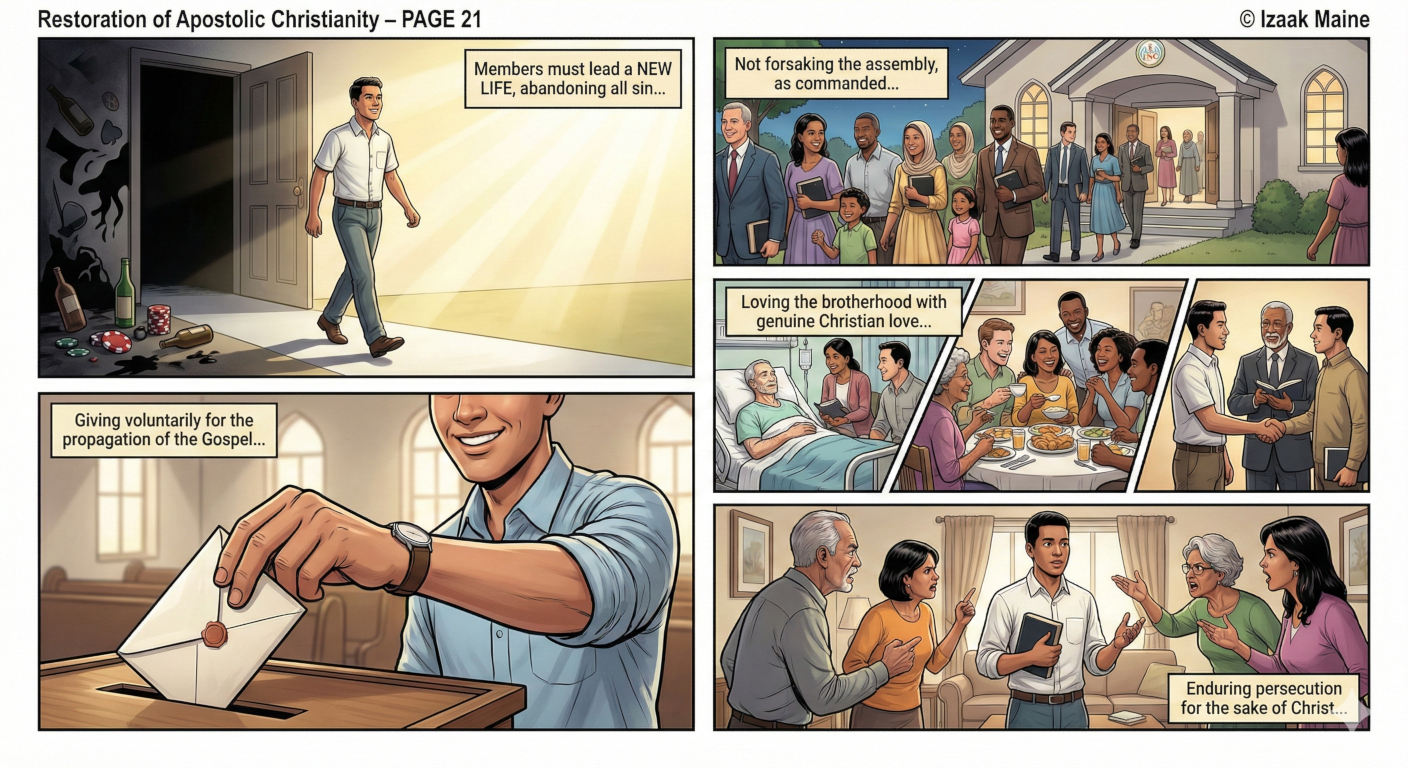
AXIOM 41: Members Must Lead a New Life
Biblical Foundation:
- “If anyone is in Christ, he is a new creation. The old has passed away; behold, the new has come” (2 Corinthians 5:17)
- “Put off your old self… and put on the new self” (Ephesians 4:22-24)
What Must Be Left Behind:
- Sexual immorality (fornication, adultery)
- Impurity and sensuality
- Idolatry
- Enmity, strife, jealousy
- Drunkenness
- Carousing and gambling
- All forms of sin (Galatians 5:19-21; Colossians 3:5-9)
The Standard: “The unrighteous will not inherit the kingdom of God” (1 Corinthians 6:9-10). Members must turn from sin completely.
AXIOM 42: Members Must Worship Regularly
Biblical Foundation:
- “Not neglecting to meet together” (Hebrews 10:25)
- The early Church gathered “on the first day of the week” (Acts 20:7)
- They also gathered daily (Acts 2:46)
The Purpose:
- To worship God corporately (Psalm 95:6-7)
- To be taught (1 Corinthians 14:26)
- To encourage one another (Hebrews 10:25)
Warning: “If we go on sinning deliberately after receiving the knowledge of the truth, there no longer remains a sacrifice for sins, but a fearful expectation of judgment” (Hebrews 10:26-27). Neglecting worship is deliberate sin.
AXIOM 43: Members Must Give Offerings
Biblical Foundation:
- “Do not neglect to do good and to share what you have” (Hebrews 13:16)
- “Each one must give as he has decided in his heart, not reluctantly or under compulsion” (2 Corinthians 9:7)
How to Prepare:
- “On the first day of every week, each of you is to put something aside and store it up, as he may prosper” (1 Corinthians 16:2)
- Prepare in advance to make it voluntary, not forced
The Purpose:
- Propagation of the Gospel (2 Corinthians 9:12-13)
- Helping those in need (2 Corinthians 9:12)
- Building houses of worship (Haggai 1:8)
- Supporting ministers (Galatians 6:6)
AXIOM 44: Members Must Love One Another
Biblical Foundation:
- “Love one another. By this all people will know that you are My disciples” (John 13:34-35)
- “Love the brotherhood” (1 Peter 2:17)
How to Show Love:
- Help those in need (1 John 3:17)
- Do not hold grudges (James 5:9)
- Do not return evil for evil (1 Peter 3:9)
- Do not defraud anyone (1 Corinthians 6:8)
Resolving Conflicts:
- Go privately first (Matthew 18:15)
- Take witnesses if needed (Matthew 18:16)
- Bring to the Church if unresolved (Matthew 18:17)
- Do not sue brethren in civil court (1 Corinthians 6:6)
Warning: “Everyone who hates his brother is a murderer” (1 John 3:15). Harboring hatred is as serious as murder in God’s eyes.
AXIOM 45: Members Must Not Marry Unbelievers
Biblical Foundation:
- “Do not be unequally yoked with unbelievers” (2 Corinthians 6:14-15)
- God forbade His people from marrying outside the faith (Deuteronomy 7:3-4)
- Intermarriage with unbelievers is “a great sin” (Nehemiah 13:27)
The Reason:
- “If you love the world, the love of the Father is not in you” (1 John 2:15)
- Marriage to an unbeliever shows greater love for the person than for God
- It jeopardizes one’s faith and salvation
AXIOM 46: Members Must Not Eat Blood
Biblical Foundation:
- God forbade eating blood from Noah’s time (Genesis 9:4)
- The prohibition continued in the Christian era (Acts 15:29; 21:25)
The Reason:
- “The life of the flesh is in the blood” (Leviticus 17:11)
- Blood was reserved for atonement, foreshadowing Christ’s blood
Distinction from Other Dietary Laws:
- Other dietary laws were ceremonial (clean/unclean animals)
- Blood prohibition is universal (given to Noah before the Law of Moses)
- It was reaffirmed by the apostles for Gentile Christians (Acts 15:20)
Implication: Foods like blood sausage, dinuguan, blood pudding, and rare steaks with blood must be avoided.
AXIOM 47: Members Must Submit to Church Administration
Biblical Foundation:
- “Obey your leaders and submit to them, for they are keeping watch over your souls” (Hebrews 13:17)
- “What you bind on earth shall be bound in heaven” (Matthew 18:18)
The Structure:
- Ministers are given the task of making known God’s word (Colossians 1:25)
- The Church Administration sets decisions and rules (Acts 16:4)
- Members must be registered with the Church (Daniel 12:1—those whose names are written will be saved)
Discipline:
- Those who persist in sin are expelled (1 Corinthians 5:13)
- Expulsion from the Church = being “loosed” (Matthew 18:18)
- Outside the Church, there is no salvation
AXIOM 48: Members Must Maintain Unity
Biblical Foundation:
- “Be perfectly joined together in the same mind and in the same judgment” (1 Corinthians 1:10)
- “God has put the body together… that there should be no division” (1 Corinthians 12:24-25)
Unity in All Things:
- One doctrine (Ephesians 4:4-6)
- One practice (following Church decisions)
- One judgment (acting together, not divided)
Application: The Church must be united even in practical matters. Division weakens witness and contradicts the nature of the body. Therefore, the Church provides guidance for unity in all areas of life, including civic responsibilities.
The Principle: “Let nothing be done through strife” (Philippians 2:3). Whatever might cause strife or division must be avoided through unified action.
AXIOM 49: Members Must Endure Persecution
Biblical Foundation:
- “Through many tribulations we must enter the kingdom of God” (Acts 14:22)
- “If they persecuted Me, they will persecute you” (John 15:20)
- “Your adversaries will be your own household” (Matthew 10:36)
The Response:
- Rejoice in suffering for Christ (Acts 5:41)
- Do not be ashamed of Christ (Mark 8:38)
- Remember the promise: eternal life (Luke 18:28-30)
In the Kingdom:
- No more hunger or thirst (Revelation 7:16)
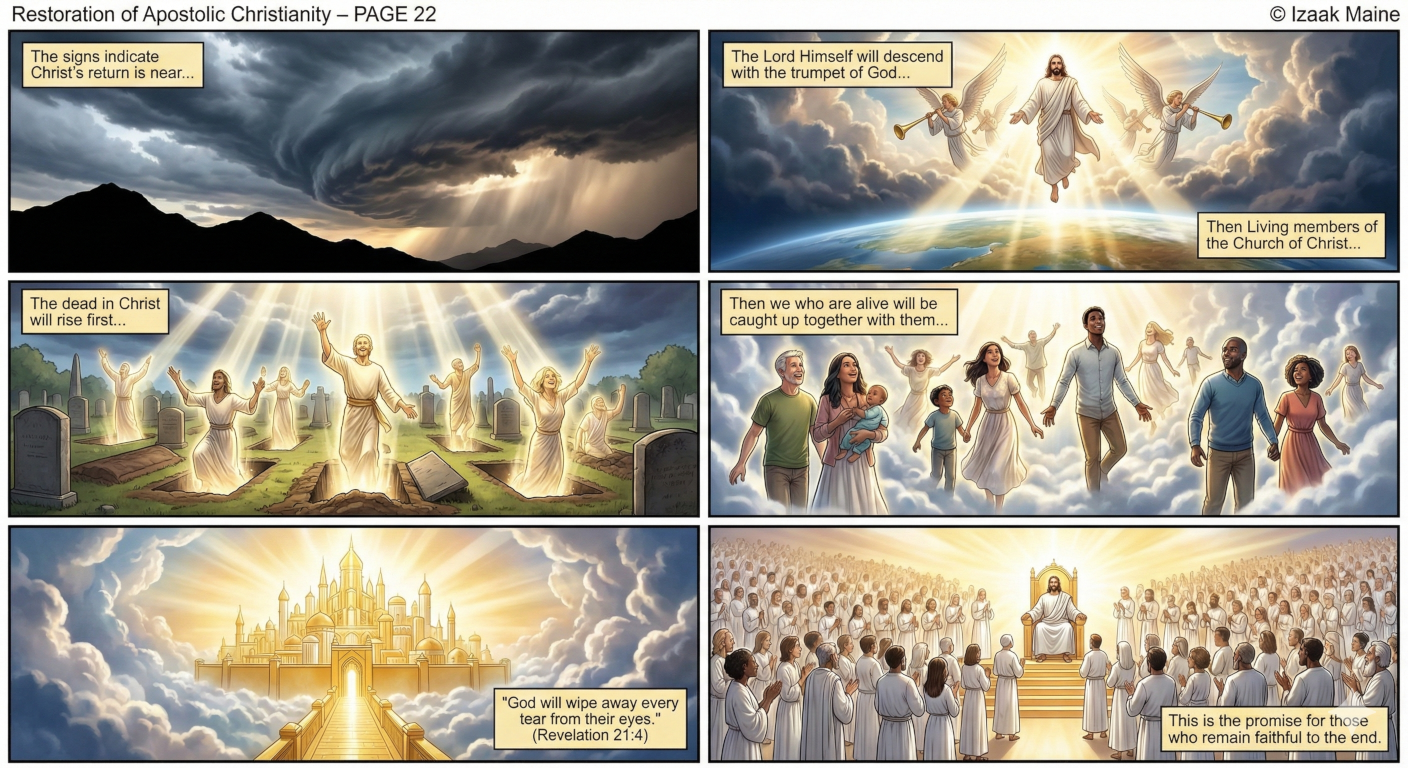
- No more pain (Revelation 21:4)
- God will wipe away every tear (Revelation 7:17)
AXIOM 50: Members Must Endure to the End
Biblical Foundation:
- “The one who endures to the end will be saved” (Matthew 24:13)
- “Remain in Me” (John 15:4)
- “Continue in My word” (John 8:31)
Until When:
- Until death (Revelation 2:10: “Be faithful unto death”)
- Until Christ’s return (1 Corinthians 1:8: “sustain you to the end”)
No Turning Back: Those who depart from Christ will be burned (John 15:6). Salvation requires perseverance, not just initial belief.
Chapter 15: The Promise and the Judgment
AXIOM 51: Christ Will Return
Biblical Foundation:
- “This Jesus… will come in the same way as you saw Him go” (Acts 1:11)
- “The Son of Man is coming at an hour you do not expect” (Matthew 24:44)
The Signs:
- Wars and rumors of wars (Matthew 24:6) ✓ Fulfilled
- Nation against nation (Matthew 24:7) ✓ Fulfilled
- Earthquakes and famines (Matthew 24:7) ✓ Fulfilled
- Increase in knowledge (Daniel 12:4) ✓ Fulfilled
- Perilous times (2 Timothy 3:1-5) ✓ Fulfilled
We Are in the Last Days: The convergence of all prophetic signs indicates Christ’s return is imminent.
AXIOM 52: The Resurrection of the Dead
Biblical Foundation:
- “The dead in Christ will rise first” (1 Thessalonians 4:16)
- “There will be a resurrection of both the just and the unjust” (Acts 24:15)
The Order:
- Christ’s return (1 Thessalonians 4:16)
- Resurrection of believers (1 Thessalonians 4:16)
- Living believers transformed (1 Thessalonians 4:17)
- Together meet Christ (1 Thessalonians 4:17)
AXIOM 53: The Judgment Day
Biblical Foundation:
- God “has fixed a day on which He will judge the world” (Acts 17:31)
- “We must all appear before the judgment seat of Christ” (2 Corinthians 5:10)
The Outcome:
For Members of the Church of Christ:
- Resurrection to eternal life (1 Thessalonians 4:16-17)
- Dwelling in the New Jerusalem (Revelation 21:2-4)
- No more death, mourning, crying, or pain (Revelation 21:4)
- Eternal inheritance (1 Peter 1:3-4)
For Those Outside:
- Judgment and condemnation (1 Corinthians 5:12-13)
- Second death in the lake of fire (Revelation 20:14-15)
- Eternal punishment (Matthew 25:46)
AXIOM 54: Only Members of the Church Will Be Saved
Biblical Foundation:
- “The Lord added to their number day by day those who were being saved” (Acts 2:47)
- Being saved = being added to the Church
- Outside the Church = outside salvation
Christ Will Save His Church:
- “Christ loved the church and gave Himself up for her… to present the church to Himself in splendor” (Ephesians 5:25-27)
- Christ is the Savior of the body (Ephesians 5:23)
- The body is the Church (Colossians 1:18)
Conclusion: Salvation is exclusively through membership in the Church of Christ. All outside—regardless of sincerity, good works, or religious affiliation—will face judgment.
CONCLUSION: THE CALL TO ENTER
The Unassailable Truth
We have established through Scripture alone:
- The Foundation: Scripture is the sole, inerrant, sufficient authority
- The Nature of God: The Father alone is the only true God
- The Nature of Christ: Jesus is the man appointed by God as Lord, Savior, and Mediator
- The Necessity of the Church: Salvation is only through membership in Christ’s body
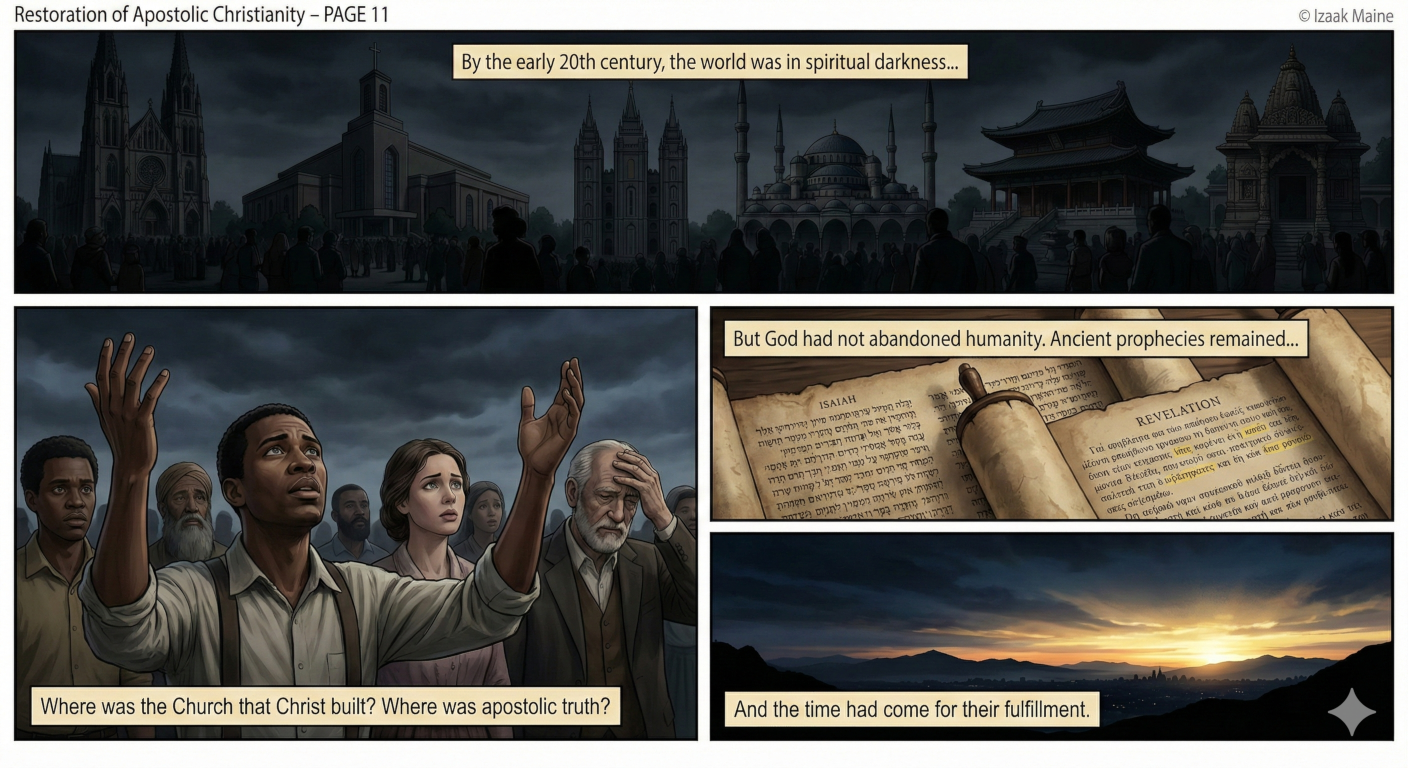
- The Apostasy: The first-century church apostatized into Catholicism and later Protestantism
- The Restoration: God restored the Church of Christ in the Far East (Philippines) in 1914
- The Requirements: Faith, baptism, new life, worship, obedience, and endurance
- The Promise: Eternal life for faithful members when Christ returns
Every Other Religion Is False
Catholicism: Teaches Trinity, idolatry, Mass, purgatory, papal authority—all unbiblical innovations
Protestantism: Maintains Trinity and other Catholic errors while adding faith-alone and once-saved-always-saved heresies; fractured into thousands of denominations contradicting the “one body”
Mormonism: Adds false scripture, teaches polytheism and human deification
Jehovah’s Witnesses: Mistranslates Scripture, teaches false eschatology
Islam: Denies Christ’s crucifixion and deity, follows false prophet
Buddhism/Hinduism: Polytheism, reincarnation, self-salvation—all contradicting Scripture
Only the Church of Christ holds the pure, apostolic faith without addition or subtraction from Scripture.
The Command
God’s Will: “That He might gather together in one all things in Christ” (Ephesians 1:10)
Christ’s Command: “Enter by Me” (John 10:9)
The Warning:
- “He who does not obey the Son shall not see life, but the wrath of God abides on him” (John 3:36)
- “Those outside, God judges” (1 Corinthians 5:13)
- “If anyone does not abide in Me, he is thrown away… and burned” (John 15:6)
The Invitation
The Church of Christ stands today as the restoration of apostolic Christianity—pure, biblical, and uncompromised. The same Church Christ built in the first century has been restored in these last days.
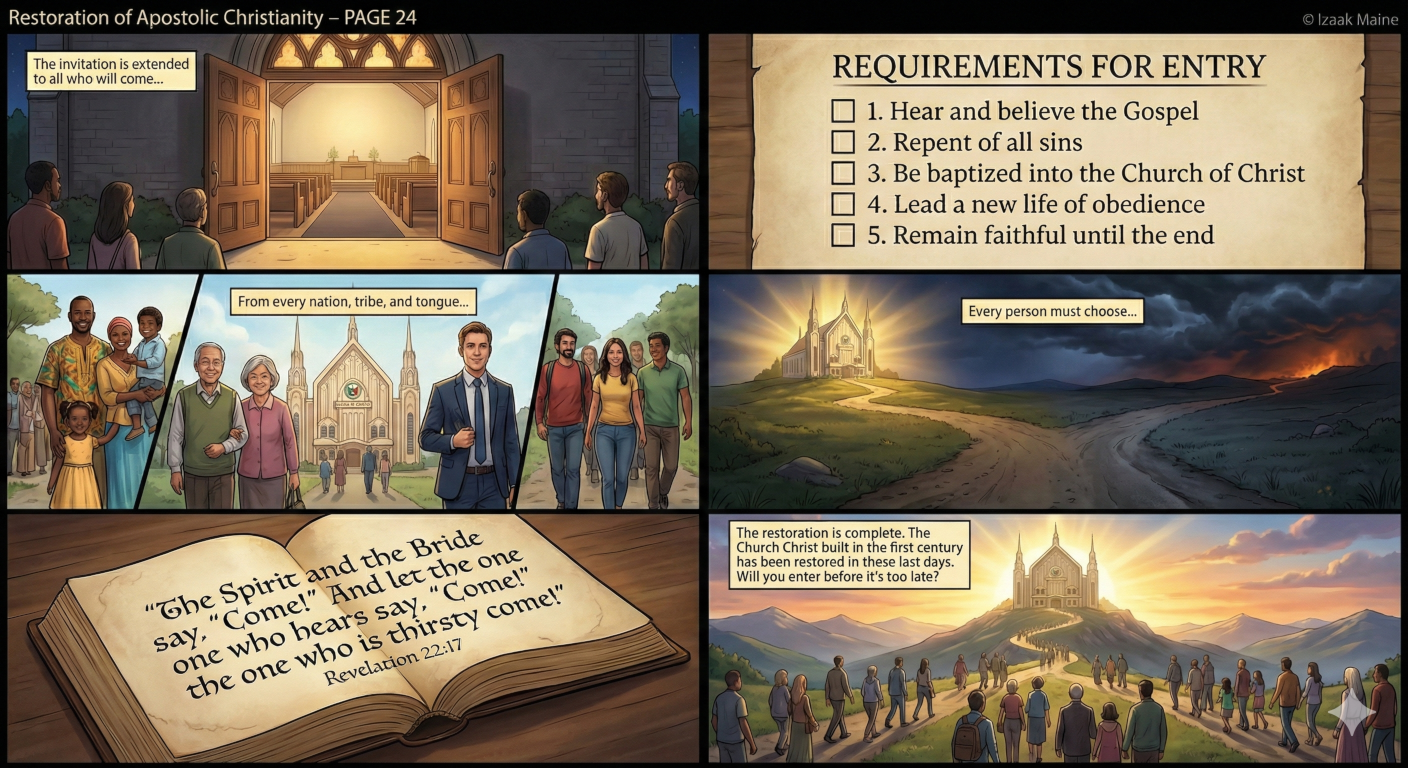
The invitation is extended to all who will:
- Believe the Gospel message
- Repent of sins and commit to a new life
- Be baptized into the Church of Christ
- Remain faithful until death or Christ’s return
Time Is Short: The signs indicate Christ’s return is near. The door of salvation is open now, but it will not remain open forever. Noah’s ark had a door, and when God closed it, those outside perished (Genesis 7:16).
The Choice:
- Enter the Church of Christ and receive eternal life
- Remain outside and face judgment and the second death
The apostle Paul’s words echo through the ages: “Behold, now is the favorable time; behold, now is the day of salvation” (2 Corinthians 6:2)
APPENDIX: Summary of Core Axioms
Scripture
- Divine revelation is written in Scripture (Heb 1:1-2; Jer 30:2; 2 Tim 3:15-17)
- Scripture is without error (Rev 10:4; John 17:17; Isa 46:11)
- Nothing must be added or subtracted (1 Cor 4:6; Rev 22:18-19)
- Faith based on Scripture leads to eternal life (John 20:30-31)
God
- The Father alone is the only true God (John 17:3; 1 Cor 8:6; Isa 45:21)
- God is absolutely one, not three persons (Isa 45:21; Deut 6:4)
- God is spirit without material form (John 4:24; Luke 24:39; Acts 17:29)
- God must be worshipped in spirit and truth (John 4:23-24)
- God’s existence is proven by creation (Rom 1:19-20; Ps 19:1-4)
Christ
- Christ is a man, not God (John 8:40; 1 Tim 2:5; Acts 2:22)
- God and Christ are distinct beings (Ps 90:2 vs John 8:42; 1 Tim 1:17 vs John 19:30)
- Christ was made Lord and Savior by God (Acts 2:36; 5:31; Phil 2:9-11)
- Christ will be subjected to God (1 Cor 15:27-28)
- Christ is sinless because the Father sanctified Him (1 Pet 2:21-22; John 10:36)
- Christ is the one mediator (1 Tim 2:5)
Church and Salvation
- All humanity needs salvation (Rom 3:23; 5:12; 6:23)
- Christ made the Church His body (Eph 5:23; Col 1:18; Eph 2:15)
- The Church was purchased with Christ’s blood (Acts 20:28)
- There is only one Church (Eph 4:4; John 10:16)
- Salvation is only in the Church (1 Cor 5:12-13; John 8:24; 15:6)
Apostasy
- Christ prophesied the Church would be led astray (Matt 24:4, 11)
- False prophets would arise after the apostles (Acts 20:29-30)
- The apostasy involved doctrines of demons (1 Tim 4:1, 3)
- False prophets dressed in sheep’s clothing (Matt 7:15)
- The apostasy involved exalting man to God’s position (2 Thess 2:3-4; Matt 23:9)
Restoration
- Christ prophesied “other sheep” (John 10:16)
- The other sheep are from a far-off place (Acts 2:39)
- The Far East is specifically named (Isa 43:5)
- The time is “the ends of the earth” (Matt 24:3, 6-7)
- God sent a messenger in the last days (Rev 7:2-3; Isa 41:9-10; 46:11)
Practice
- Entry requires faith (Rom 5:2; Heb 11:6)
- Faith must be tested (Jas 1:3; 1 Pet 1:6-7)
- Faith expressed through baptism (Mark 16:16; Acts 2:38)
- Baptism incorporates into the body (1 Cor 12:13)
- Members must lead a new life (2 Cor 5:17; Eph 4:22-24)
- Members must worship regularly (Heb 10:25; Acts 20:7)
- Members must give offerings (Heb 13:16; 2 Cor 9:7)
- Members must love one another (John 13:34-35; 1 Pet 2:17)
- Members must not marry unbelievers (2 Cor 6:14-15; Deut 7:3-4)
- Members must not eat blood (Gen 9:4; Acts 15:29; Lev 17:11)
- Members must submit to Church Administration (Heb 13:17; Matt 18:18)
- Members must maintain unity (1 Cor 1:10; 12:24-25)
- Members must endure persecution (Acts 14:22; John 15:20)
- Members must endure to the end (Matt 24:13; John 15:4)
Eschatology
- Christ will return (Acts 1:11; Matt 24:44)
- The resurrection of the dead (1 Thess 4:16; Acts 24:15)
- The judgment day (Acts 17:31; 2 Cor 5:10)
- Only members of the Church will be saved (Acts 2:47; Eph 5:23-27)
“The Spirit and the Bride say, ‘Come.’ And let the one who hears say, ‘Come.’ And let the one who is thirsty come; let the one who desires take the water of life without price.” — Revelation 22:17
This document presents the unassailable truths of apostolic Christianity as restored through the Church of Christ (Iglesia ni Cristo). All doctrines are substantiated solely by Scripture, which is the final and sufficient authority for faith and practice.